This website uses cookies
We use cookies to personalise content and ads, to provide social media features and to analyse our traffic. We also share information about your use of our site with our social media, advertising and analytics partners who may combine it with other information that you’ve provided to them or that they’ve collected from your use of their services.
Consent Selection
Details
  • Necessary cookies help make a website usable by enabling basic functions like page navigation and access to secure areas of the website. The website cannot function properly without these cookies.
  • Preference cookies enable a website to remember information that changes the way the website behaves or looks, like your preferred language or the region that you are in.
    • We do not use cookies of this type.

  • Statistic cookies help website owners to understand how visitors interact with websites by collecting and reporting information anonymously.
    • We do not use cookies of this type.

  • Marketing cookies are used to track visitors across websites. The intention is to display ads that are relevant and engaging for the individual user and thereby more valuable for publishers and third party advertisers.
    • We do not use cookies of this type.

  • Unclassified cookies are cookies that we are in the process of classifying, together with the providers of individual cookies.
    • __emg_sidPending
      Maximum Storage Duration: 1 dayType: HTTP Cookie
      __emg_vidPending
      Maximum Storage Duration: 1 yearType: HTTP Cookie
      nl-read-countPending
      Maximum Storage Duration: PersistentType: HTML Local Storage
Cookie declaration last updated on 8/12/26 by Cookiebot
[#IABV2_TITLE#]
[#IABV2_BODY_INTRO#]
[#IABV2_BODY_LEGITIMATE_INTEREST_INTRO#]
[#IABV2_BODY_PREFERENCE_INTRO#]
[#IABV2_BODY_PURPOSES_INTRO#]
[#IABV2_BODY_PURPOSES#]
[#IABV2_BODY_FEATURES_INTRO#]
[#IABV2_BODY_FEATURES#]
[#IABV2_BODY_PARTNERS_INTRO#]
[#IABV2_BODY_PARTNERS#]
About
Cookies are small text files that can be used by websites to make a user's experience more efficient.

The law states that we can store cookies on your device if they are strictly necessary for the operation of this site. For all other types of cookies we need your permission.

This site uses different types of cookies. Some cookies are placed by third party services that appear on our pages.

You can at any time change or withdraw your consent from the Cookie Declaration on our website.

Learn more about who we are, how you can contact us and how we process personal data in our Privacy Policy.

Please state your consent ID and date when you contact us regarding your consent.
NewsLayer

Install NewsLayer

Get the app experience — one tap from your home screen, instant loads and breaking-news alerts.

NewsLayer.com
NewsLayer PulseLIVEBTC$63,655+0.38%ETH$1,886+0.45%SOL$76.09+0.70%XRP$1.01+0.70%DOGE$0.0703+1.03%ADA$0.1857+1.84%Total Cap$2.28T+0.07%Layer Index42 Neutral
External ReportingĐăng 5 giờ trước

Does Ukraine Need Bitcoin Mining for Its Post-War Reconstruction?

Ukraine’s reconstruction may create a limited but practical role for Bitcoin mining within its damaged electricity system. Rather than directly financing rebuilding, mining could instead act as a flexible buyer for electricity that…

Does Ukraine Need Bitcoin Mining for Its Post-War Reconstruction?
Source Cryptonews.net 3 phút đọc
NewsLayer editorial artwork

Market Context

Bitcoin

BTC

$63,655

+0.38% 24h

Layer Index

42

↑ 7 pts in 24h

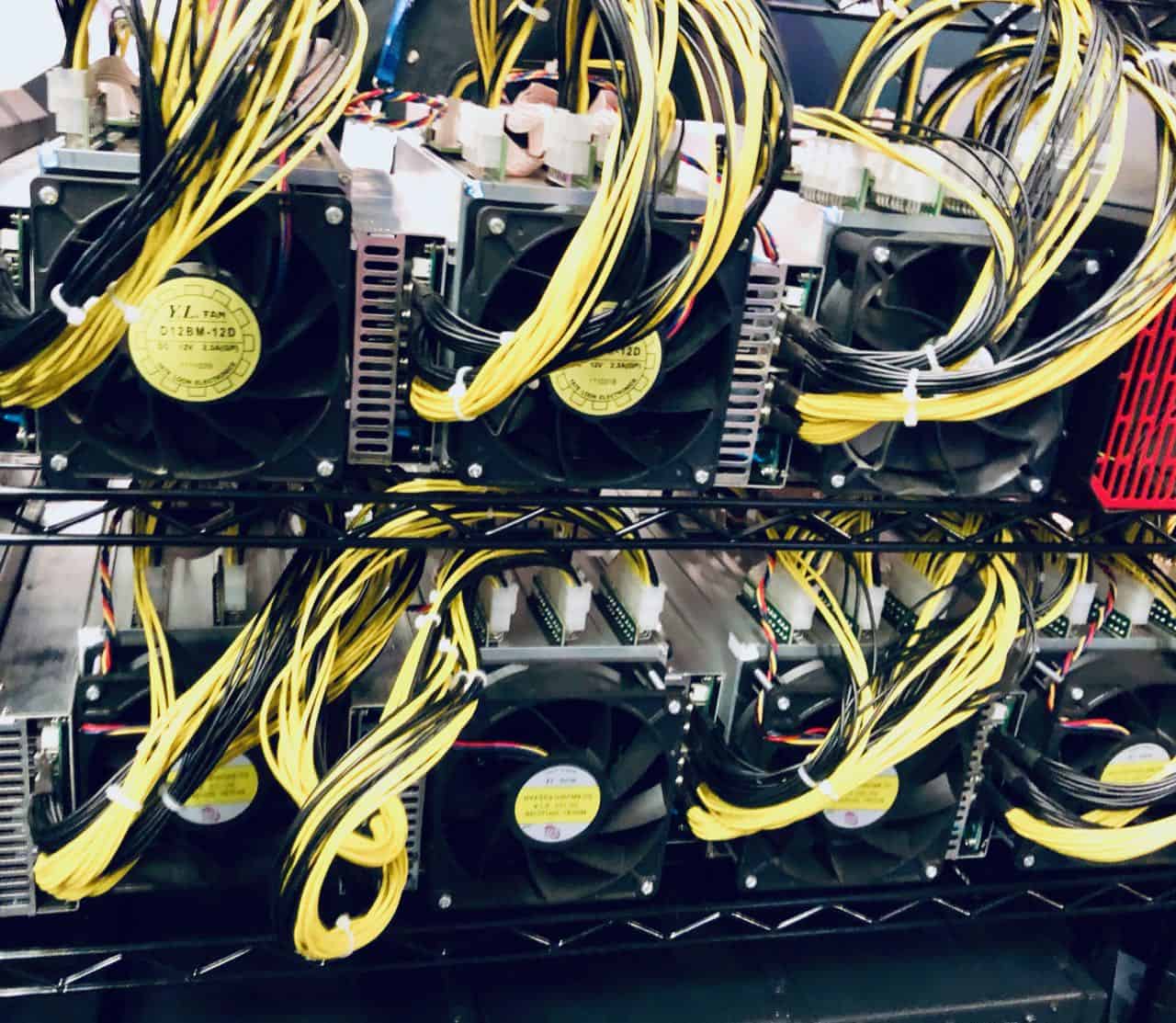
Ukraine’s reconstruction may create a limited but practical role for Bitcoin mining within its damaged electricity system. Rather than directly financing rebuilding, mining could instead act as a flexible buyer for electricity that cannot yet reach homes, businesses, or industrial users.

In that context, the Bitcoin Policy Institute argues that miners could operate near power plants, consume stranded electricity, and reduce or halt usage when demand rises elsewhere. Such flexibility could be particularly relevant during reconstruction, given the scale of Ukraine’s energy damage and broader rebuilding needs.

Bitcoin Mining’s Role in Ukraine’s $588 Billion Rebuild

The World Bank, European Commission, United Nations, and Ukrainian government estimated recovery needs at almost $588 billion over ten years. Of that total, nearly $91 billion relates to energy, while damage to energy assets rose roughly 21% between assessments.

Against that scale, Bitcoin mining would represent a narrow infrastructure tool rather than a primary reconstruction strategy. BPI specifically points to Ukraine’s three operating nuclear plants, where damaged transmission infrastructure can leave electricity underused.

Because miners can operate beside generation sites, they do not require the same grid access as industry. As a result, the institute estimates that 750 MW of stranded electricity could produce about $1 billion over five years through power sales.

Research Tests Mining’s Value for Stranded Electricity

Academic evidence supports parts of that argument, although benefits depend on equipment, location, and operating rules. An August Energy Economics study modeled Bitcoin mining alongside curtailed wind generation in Ireland using hourly 2024 electricity data.

In the study, researchers tested a 100 MW wind farm with mining installations using efficient 16 J/TH machines. A 20 MW mining site absorbed 83% of dispatch-down energy, while increasing total system revenue by 32% and raising capacity utilization.

As a result, the effective capacity factor increased from 29% to 32%, while a 30 MW mining facility absorbed 93% of curtailed energy. However, the study found that older 98 J/TH mining hardware was uneconomic under every scenario examined.

In addition, profitability depended on Bitcoin price growth relative to network-hashrate growth. Consequently, any electricity-sales projections would remain exposed to both cryptocurrency-market conditions and changes in mining competition.

Grid Benefits Depend on Curtailment and Efficient Hardware

That dependence on market conditions also strengthens the case for carefully designed operating rules. At the same time, research from Texas shows why Ukraine could not assume that every mining project would automatically strengthen its power system.

A 2023 electricity-market study found Bitcoin mining could encourage more renewable generation while also increasing carbon emissions. Those emissions were largely reduced when miners participated in demand-response programs and curtailed consumption during stressed grid conditions.

Separate Texas research found flexible mining loads could reduce reliability and price problems when location and curtailment rules were carefully designed. However, a 2026 analysis found that miners did not always reduce consumption predictably when electricity prices increased.

Instead, their response weakened when hash price, or expected mining revenue, rose, limiting their usefulness as guaranteed reserve demand.

Overall, the evidence suggests that Ukraine would benefit most from targeted contracts requiring rapid shutdowns, efficient hardware, and priority access for households and industry. Such projects could fit the IEA’s recommendation for a more decentralized, resilient, and flexible electricity system.

Ultimately, Ukraine does not need Bitcoin mining to directly finance reconstruction. Nevertheless, where electricity is genuinely stranded, tightly regulated mining could convert otherwise unused generation into temporary revenue during grid repairs.

Follow the Story

  1. Aug 13Does Ukraine Need Bitcoin Mining for Its Post-War Reconstruction?
  2. Aug 13🚨𝗝𝗨𝗦𝗧 𝗜𝗡: 🇺🇸Bitcoin spot ETFs recorded a net outflow of $61.1M on August 12.
  3. Aug 13Seller Exhausted, Buyers Absent: Bitcoin Awaits a 'Game-Changer' Below $68.7K
  4. Aug 13Bitcoin whales short $225.79M – THIS level could trigger BTC squeeze

Attribution

Originally reported by Cryptonews.net

Get stories like this, daily.

Daily crypto + regulation intelligence, straight to your inbox. Free.

Tin Liên Quan