
This website uses cookies
We use cookies to personalise content and ads, to provide social media features and to analyse our traffic. We also share information about your use of our site with our social media, advertising and analytics partners who may combine it with other information that you’ve provided to them or that they’ve collected from your use of their services.
Consent Selection
Details
  • Necessary cookies help make a website usable by enabling basic functions like page navigation and access to secure areas of the website. The website cannot function properly without these cookies.
  • Preference cookies enable a website to remember information that changes the way the website behaves or looks, like your preferred language or the region that you are in.
    • We do not use cookies of this type.

  • Statistic cookies help website owners to understand how visitors interact with websites by collecting and reporting information anonymously.
    • We do not use cookies of this type.

  • Marketing cookies are used to track visitors across websites. The intention is to display ads that are relevant and engaging for the individual user and thereby more valuable for publishers and third party advertisers.
    • We do not use cookies of this type.

  • Unclassified cookies are cookies that we are in the process of classifying, together with the providers of individual cookies.
    • __emg_sidPending
      Maximum Storage Duration: 1 dayType: HTTP Cookie
      __emg_vidPending
      Maximum Storage Duration: 1 yearType: HTTP Cookie
      nl-read-countPending
      Maximum Storage Duration: PersistentType: HTML Local Storage
Cookie declaration last updated on 8/12/26 by Cookiebot
[#IABV2_TITLE#]
[#IABV2_BODY_INTRO#]
[#IABV2_BODY_LEGITIMATE_INTEREST_INTRO#]
[#IABV2_BODY_PREFERENCE_INTRO#]
[#IABV2_BODY_PURPOSES_INTRO#]
[#IABV2_BODY_PURPOSES#]
[#IABV2_BODY_FEATURES_INTRO#]
[#IABV2_BODY_FEATURES#]
[#IABV2_BODY_PARTNERS_INTRO#]
[#IABV2_BODY_PARTNERS#]
About
Cookies are small text files that can be used by websites to make a user's experience more efficient.

The law states that we can store cookies on your device if they are strictly necessary for the operation of this site. For all other types of cookies we need your permission.

This site uses different types of cookies. Some cookies are placed by third party services that appear on our pages.

You can at any time change or withdraw your consent from the Cookie Declaration on our website.

Learn more about who we are, how you can contact us and how we process personal data in our Privacy Policy.

Please state your consent ID and date when you contact us regarding your consent.
NewsLayer.com
NewsLayer PulseLIVEBTC$78,992+1.95%ETH$2,507+1.95%SOL$96.1+0.75%XRP$1.51-0.46%DOGE$0.0927-1.08%ADA$0.2249-1.99%Total Cap$2.79T+1.39%Layer Index67 Greed

FAMU-FSU College Of Engineering Designs Qubit With Floating Electrons Above Chip

Researchers at the FAMU-FSU College of Engineering have designed a qubit using electrons that float above a chip surface. The work explores a quantum-computing architecture based on controlling these floating electrons.

Quantum Zeitgeist

Publisher

Aug 21, 2026 at 2:02 PM UTC · Updated 3 ngày trước · 3 phút đọc
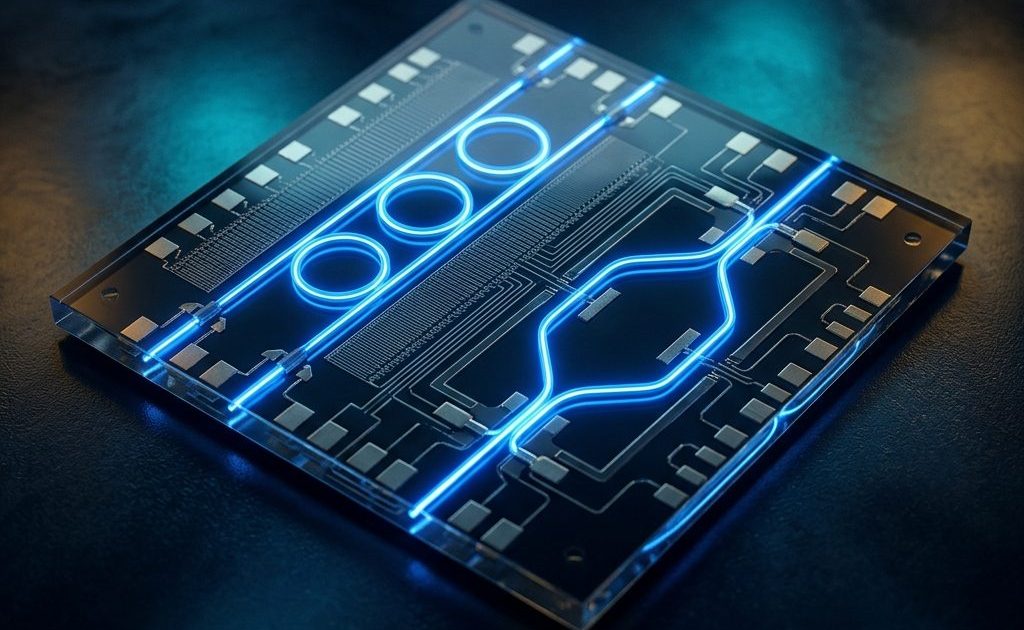
FAMU-FSU College Of Engineering Designs Qubit With Floating Electrons Above Chip
Image via Quantum Zeitgeist
Đang dịch…

Researchers at the FAMU-FSU College of Engineering have designed a novel qubit architecture that suspends quantum information using magnetic levitation. The team utilizes superconducting loops to hold tiny neon particles aloft, addressing the problem of electron instability caused by imperfections on qubit surfaces.

“Instead of hoping that the right nanoscale feature appears in the right place, we want to decide where each electron qubit sits,” explains study co-author Wei Guo, a professor at Florida State University, the FAMU-FSU College of Engineering and the National High Magnetic Field Laboratory. Published in PRX Quantum, the research details a path toward building more reliable and scalable quantum computers by engineering qubit placement by design.

Magnetic Levitation Addresses Electron Trapping in Neon Qubit Devices

Superconducting loops now suspend individual neon particles in a novel qubit architecture developed by researchers, directly addressing the issue of electron trapping caused by surface imperfections. This innovative approach moves beyond relying on chance nanoscale features and instead allows for the deliberate placement of electron qubits, a strategy co-author Wei Guo describes as a shift from chance to design. Instead of directly depositing solid neon onto a chip, where inherent surface roughness can disrupt electron behavior, the researchers propose levitating nearly spherical neon microparticles above the chip’s surface.

Article Intelligence

Topics

Sponsored

Ad

House — Advertise on NewsLayer
NewsLayerLearn more

NewsLayer Premium

Unlock deeper intelligence.

Ad-free reading, exclusive research, and real-time onchain insights.

Go Premium