

This website uses cookies
We use cookies to personalise content and ads, to provide social media features and to analyse our traffic. We also share information about your use of our site with our social media, advertising and analytics partners who may combine it with other information that you’ve provided to them or that they’ve collected from your use of their services.
Consent Selection
Details
  • Necessary cookies help make a website usable by enabling basic functions like page navigation and access to secure areas of the website. The website cannot function properly without these cookies.
  • Preference cookies enable a website to remember information that changes the way the website behaves or looks, like your preferred language or the region that you are in.
    • We do not use cookies of this type.

  • Statistic cookies help website owners to understand how visitors interact with websites by collecting and reporting information anonymously.
    • We do not use cookies of this type.

  • Marketing cookies are used to track visitors across websites. The intention is to display ads that are relevant and engaging for the individual user and thereby more valuable for publishers and third party advertisers.
    • We do not use cookies of this type.

  • Unclassified cookies are cookies that we are in the process of classifying, together with the providers of individual cookies.
    • __emg_sidPending
      Maximum Storage Duration: 1 dayType: HTTP Cookie
      __emg_vidPending
      Maximum Storage Duration: 1 yearType: HTTP Cookie
      nl-read-countPending
      Maximum Storage Duration: PersistentType: HTML Local Storage
Cookie declaration last updated on 8/12/26 by Cookiebot
[#IABV2_TITLE#]
[#IABV2_BODY_INTRO#]
[#IABV2_BODY_LEGITIMATE_INTEREST_INTRO#]
[#IABV2_BODY_PREFERENCE_INTRO#]
[#IABV2_BODY_PURPOSES_INTRO#]
[#IABV2_BODY_PURPOSES#]
[#IABV2_BODY_FEATURES_INTRO#]
[#IABV2_BODY_FEATURES#]
[#IABV2_BODY_PARTNERS_INTRO#]
[#IABV2_BODY_PARTNERS#]
About
Cookies are small text files that can be used by websites to make a user's experience more efficient.

The law states that we can store cookies on your device if they are strictly necessary for the operation of this site. For all other types of cookies we need your permission.

This site uses different types of cookies. Some cookies are placed by third party services that appear on our pages.

You can at any time change or withdraw your consent from the Cookie Declaration on our website.

Learn more about who we are, how you can contact us and how we process personal data in our Privacy Policy.

Please state your consent ID and date when you contact us regarding your consent.
NewsLayer.com

From Beaches to Bits to Qubits – Silicon’s Journey in Quantum Computing

Humanity’s ability to make things has dictated its progress over the ages. From the Stone Age to the Bronze and the Iron Age, we have leaped from one material to the next, each letting us do what we couldn’t before. Over time, these…

The Quantum Insider

Publisher

Aug 17, 2026 at 9:47 PM UTC · 7 phút đọc
From Beaches to Bits to Qubits – Silicon’s Journey in Quantum Computing
NewsLayer editorial artwork

Key Signal

2010 first spin readout

Last Updated

2 ngày trước

Đang dịch…

Insider Brief

  • Silicon’s path from beach sand to quantum processor traces an unbroken arc from 1950s transistor doping to purified spin qubits.
  • Two 1998 proposals, Loss-DiVincenzo’s quantum-dot qubit and Kane’s phosphorus-donor qubit, wagered that silicon’s manufacturing base could build quantum hardware industrially.
  • Diraq, imec, and Silicon Quantum Computing now match trapped-ion fidelity benchmarks, though physical qubit counts still lag behind competing platforms.

Humanity’s ability to make things has dictated its progress over the ages. From the Stone Age to the Bronze and the Iron Age, we have leaped from one material to the next, each letting us do what we couldn’t before. Over time, these leaps have grown ever more sophisticated in discovery, process, and production.

​The defining material of the modern age, like its predecessors, can be found everywhere: sand. But sand alone is inert. Push it through a process more exacting than any age before it and out comes something no prior age’s material could offer: a substrate pure enough to think with, silicon.

Two Silicon Threads 

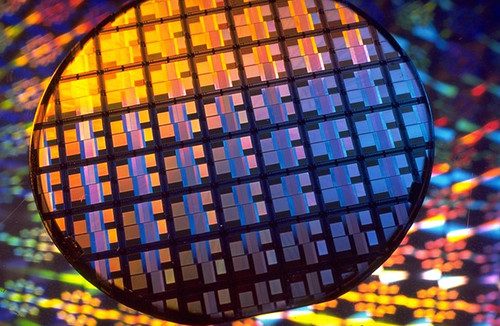
Today, the semiconductor industry produces more transistors each day than there are cells in the human body. From our smartphones to data centers, practically every technology we come across runs on silicon chips manufactured using processes refined over several decades.

Article Intelligence

Topics

Sponsored

Ad

House — Advertise on NewsLayer
NewsLayerLearn more

NewsLayer Premium

Unlock deeper intelligence.

Ad-free reading, exclusive research, and real-time onchain insights.

Go Premium