

Google’s quantum researchers have significantly narrowed the resource gap between today’s quantum computers and the kind capable of breaking the cryptography that secures Bitcoin, Ethereum and most other blockchains — a finding that has reopened debate over how much time the digital-asset industry actually has to prepare.
Google study shows Bitcoin’s cryptography could fall in minutes, not decades
Google’s quantum researchers have significantly narrowed the resource gap between today’s quantum computers and the kind capable of breaking the cryptography that secures Bitcoin, Ethereum and most other blockchains — a finding that has…
MM News
Publisher
Aug 16, 2026 at 3:41 AM UTC · 3 phút đọc

Key Signal
<1,200 Logical qubits required
Entities
bitcoin
Market Impact
BTC+0.74%$82,339
Last Updated
2 tháng trước
Đang dịch…
In a whitepaper published by Google Quantum AI, in collaboration with researchers from the Ethereum Foundation and Stanford University, the team presented new resource estimates for breaking the 256-bit Elliptic Curve Discrete Logarithm Problem (ECDLP-256) — the mathematical problem underlying the secp256k1 curve that protects nearly every major cryptocurrency’s private keys.
The paper’s authors, led by Ryan Babbush and Hartmut Neven of Google Quantum AI, said an optimised version of Shor’s algorithm could solve the problem using either fewer than 1,200 logical qubits and 90 million Toffoli gates, or fewer than 1,450 logical qubits and 70 million Toffoli gates — whichever pairing reflects a trade-off between qubit count and gate operations.
On error-corrected superconducting hardware, the researchers estimated this could translate into an attack completed in minutes using fewer than half a million physical qubits.
Market Context
Bitcoin
BTC
$82,340
+0.74% (24H)
Market Cap
$1.66T
24H Volume
$31.0B
24H High
$82,538
Article Intelligence
Key Entities
Related Coverage
 CryptoUS Hoovers up Bitcoin While the World Runs on Its Digital Dollars: Reportmột giờ trước · 2 min read
 CryptoGoogle Searches for Bitcoin Plunge to Multi-Year Lowsmột giờ trước · 1 min read
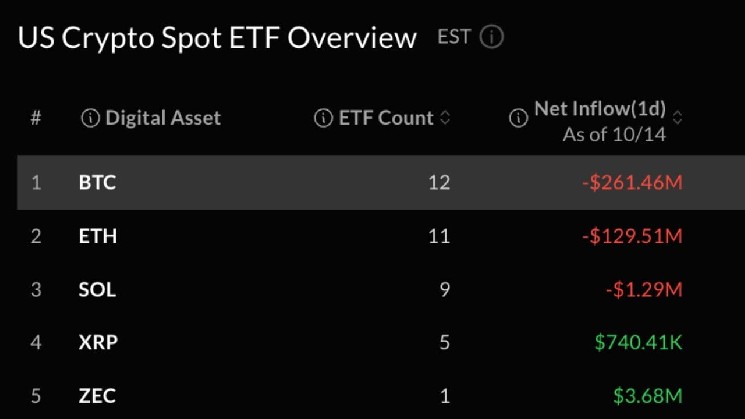 CryptoBitcoin, Ether ETFs Lose $391M as Single-Day Rebound Vanishesmột giờ trước · 2 min read
Sponsored
Ad
NewsLayerLearn more
NewsLayer Premium
Unlock deeper intelligence.
Ad-free reading, exclusive research, and real-time onchain insights.
Go Premium