

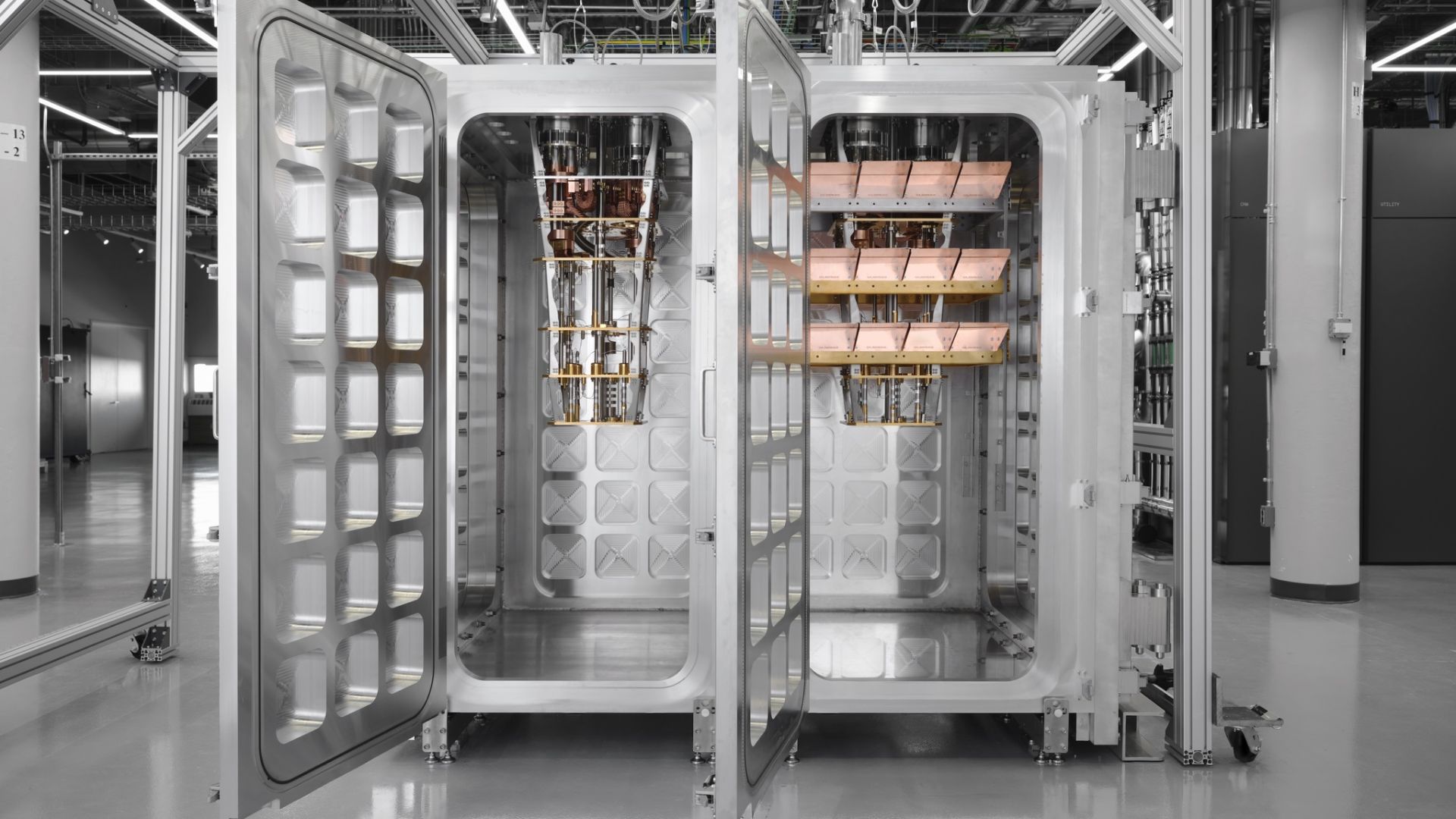
Computing major IBM has unveiled its first modular cryogenic quantum fridge, which can be joined to create a single cooled environment that can handle hundreds of quantum chips. The cryogenic system, capable of cooling below 15 milliKelvin, is an important milestone as IBM works to release its large-scale fault-tolerant quantum computer by 2029.
IBM's new modular cryogenic system for fault-tolerant quantum computer
Computing major IBM has unveiled its first modular cryogenic quantum fridge, which can be joined to create a single cooled environment that can handle hundreds of quantum chips. The cryogenic system, capable of cooling below 15…
Interesting Engineering
Publisher
Aug 19, 2026 at 12:25 PM UTC · 2 phút đọc
Key Signal
Below 15 mK Final demonstrated temperature
Last Updated
2 tháng trước
Đang dịch…
Quantum computers are regarded as the next frontier of computing, promising large-scale computations in a fraction of the time needed by the fastest supercomputers today. Unlike silicon-based computers that use binary bits, which can store only 0 or 1, quantum computers use quantum bits, which can store multiple values between 0 and 1 and carry out computations in parallel, exponentially increasing their computing power.
Quantum bits, or qubits, usually work at extremely low temperatures, near absolute zero. Achieving this is a challenge but one that researchers have perfected using multi-stage devices called dilution refrigerators. The qubits operate inside chambers where temperatures are ultra-low, but the complex architecture of refrigeration and computing infrastructure make it difficult to build large-scale quantum computers.
How IBM is solving this problem
Article Intelligence
Topics
Sponsored
Ad
NewsLayerLearn more
NewsLayer Premium
Unlock deeper intelligence.
Ad-free reading, exclusive research, and real-time onchain insights.
Go Premium