

NewsLayer

Install NewsLayer

Get the app experience — one tap from your home screen, instant loads and breaking-news alerts.

NewsLayer.com
LatestDaily BriefMarkets
NewsLayer PulseLIVE₿BTC$83,620+0.24%ΞETH$2,524-1.01%◎SOL$108.08-3.16%✕XRP$1.38-1.99%ÐDOGE$0.0847-2.91%₳ADA$0.2379-5.24%Total Cap$2.79T+0.02%24H Vol$132.9BLayer Index31 Fear
BreakingThe Bybit $1.46 Billion Hack Shows Why Tracing Stolen Crypto Is Only Half the Battle2 giờ trước
Markets
HomeArtificial Intelligence

Artificial Intelligence

OpenAI Dot Vs. Meta Muse: How Do These AI Agents Compare?

Engadget examines how OpenAI Dot and Meta Muse compare as AI agents. The excerpt does not provide details on their features, availability, performance or underlying technology.

Engadget

Publisher

Oct 12, 2026 at 12:04 AM UTC · 3 phút đọc

OpenAI Dot Vs. Meta Muse: How Do These AI Agents Compare?
Image via Engadget

Key Signal

$20/month Muse Power tier price

Last Updated

một ngày trước

OpenAI Dot vs. Meta Muse: How do these AI agents compare?

Both agents can keep working after you leave, but they differ considerably on price, permissions and where they can work.

Image by Husain Parvez (Meta, OpenAI)

Meta and OpenAI now have AI agents that are meant to do more than just wait for the next prompt. Meta released Muse on September 8, followed by OpenAI's new always-on agents in ChatGPT three weeks later. Both can continue to work after you leave, run their own cloud computers and connect to outside services.

The promise is enticing: Provide an AI with a task and then stop checking on it every five minutes. Muse can go shopping, complete forms, make travel plans, send emails and monitor things such as prices. Dots can manage ongoing research, work across connected applications and perform recurring tasks, and OpenAI is closely integrating them with ChatGPT, Work and Codex.

Reach crypto's most engaged readers — advertise mid-article on NewsLayer
Sponsored

Reach crypto's most engaged readers — advertise mid-article on NewsLayer

NewsLayer

Ad

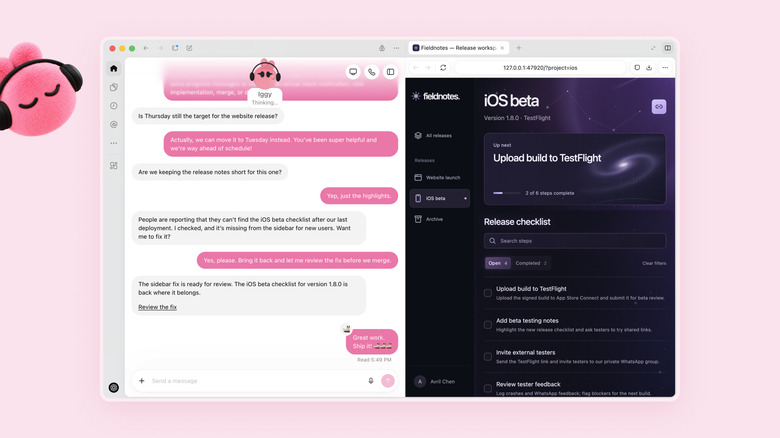
Dots and Muse can do similar jobs, but the experience is different
OpenAI

Muse runs on a dedicated Secure VM with its own browser and is designed to feel a lot like messaging another person. It can be used via Muse's apps, the web or WhatsApp, and then linked with services like email and your calendar when you're ready to make it more powerful. In Engadget's hands-on, Muse turned saved Instagram and Facebook posts into organized recipe and restaurant collections.

Article Intelligence

Topics

ai

Sponsored

Ad
House — Advertise on NewsLayer
NewsLayerLearn more

NewsLayer Premium

Unlock deeper intelligence.

Ad-free reading, exclusive research, and real-time onchain insights.

Go Premium
NewsLayer.com

The front page of the onchain economy. Crypto, Web3 and regulation intelligence — live prices, original research and policy tracking in one layer.

Follow on XTelegram

News

  • Latest News
  • The Daily Brief
  • Crypto
  • DeFi
  • Policy
  • Web3
  • Blockchain
  • Explainers

Markets

  • Market News
  • Layer Index
  • Live Charts
  • DeFi Protocols
  • Regulation Tracker
  • Regulation Radar

Company

  • About NewsLayer
  • Advertise
  • PR Publication
  • Become an Author
  • Our Authors
  • Create Account
  • Sign in

Resources

  • Research
  • NewsLayer Originals
  • My Feed
  • Search
  • AI Sector
  • Quantum Sector

NewsLayer Premium

Read the full layer.

Unlock premium intelligence, original research and an ad-free reading experience.

  • Premium Intelligence briefings
  • Ad-free reading experience
  • Members-only research & data
Go Premium

© 2026 NewsLayer.com — The front page of the onchain economy

Privacy Policy·Terms of Service
NewsLayer

Get the signal, not the noise.

Markets, regulation and onchain intelligence in a 5-minute morning read — plus breaking alerts and Layer Index flips as they happen.

The Daily Brief

Breaking alerts

Index flips

Free · No spam · Unsubscribe anytime
