

Electron microscopes can reveal structures far smaller than anything visible with ordinary light. But researchers in Austria say conventional electron microscopes may be leaving valuable information on the table.
Scientists are building a microscope powered by a quantum computer
Electron microscopes can reveal structures far smaller than anything visible with ordinary light. But researchers in Austria say conventional electron microscopes may be leaving valuable information on the table.
Science Daily
Publisher
Sep 13, 2026 at 12:06 PM UTC · 4 phút đọc
Đang dịch…
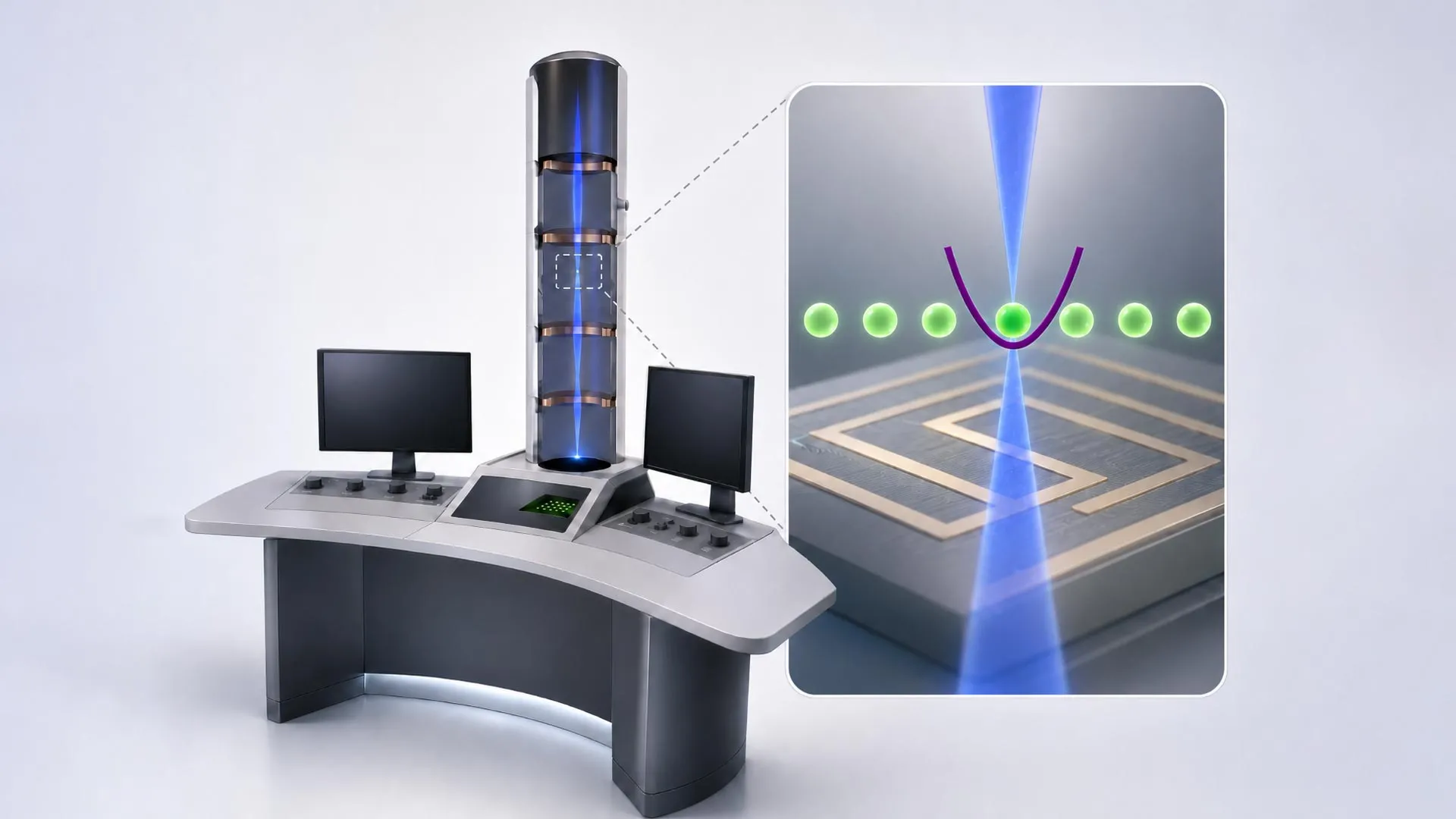
In a standard system, electrons are mainly counted to build an image. Yet each electron also carries quantum information that normally goes unused. Researchers at TU Wien, working with teams from the University of Vienna, JKU Linz and the University of Innsbruck, have developed a new approach designed to capture and process some of that extra information.
Their idea is to connect an electron microscope to a quantum computer. By doing so, the researchers hope to extract more useful information from each electron, potentially allowing scientists to form clearer images while exposing delicate samples to fewer electrons. That could be especially valuable for biological materials that are easily damaged. A quantum computer electron microscope based on the concept is now being constructed at TU Wien.
Using Quantum Entanglement to Get More From Each Electron
Modern electron microscopes already achieve extraordinary resolution.
"Today, we can image tiny details on the atomic scale," says Philipp Haslinger from the Institute of Atomic and Subatomic Physics at TU Wien. "However, this requires a large number of electrons. And not every sample can be exposed to so many electrons without being damaged. This is often a problem, particularly when imaging biological samples such as individual proteins."
Article Intelligence
Topics
Sponsored
Ad
NewsLayerLearn more
NewsLayer Premium
Unlock deeper intelligence.
Ad-free reading, exclusive research, and real-time onchain insights.
Go Premium