
Insider Brief
Students Use Quantum Computing to Address Electric Grid Challenges at Tennessee Hackathon
Insider Brief PRESS RELEASE — A team of students from Tennessee State University and Vanderbilt University took first place and a $2,500 prize at the Tennessee Quantum Hackathon, a 36-hour, in-person competition that challenged college…
Mohib Ur Rehman
Publisher The Quantum Insider
Nov 19, 2026 at 4:16 PM UTC · Updated một giờ trước · 5 phút đọc
Đang dịch…
- Nearly 60 students from 13 colleges and universities competed in the Tennessee Quantum Hackathon, applying quantum and hybrid computing methods to challenges facing the electric grid.
- The first-place team, Qtopia, developed an early-warning system using quantum key distribution to detect eavesdroppers on utility fibre networks and protect grid communications.
- Teams also explored power plant scheduling and sensor placement, with at least four of the six finalist teams running part of their projects on real quantum computing resources.
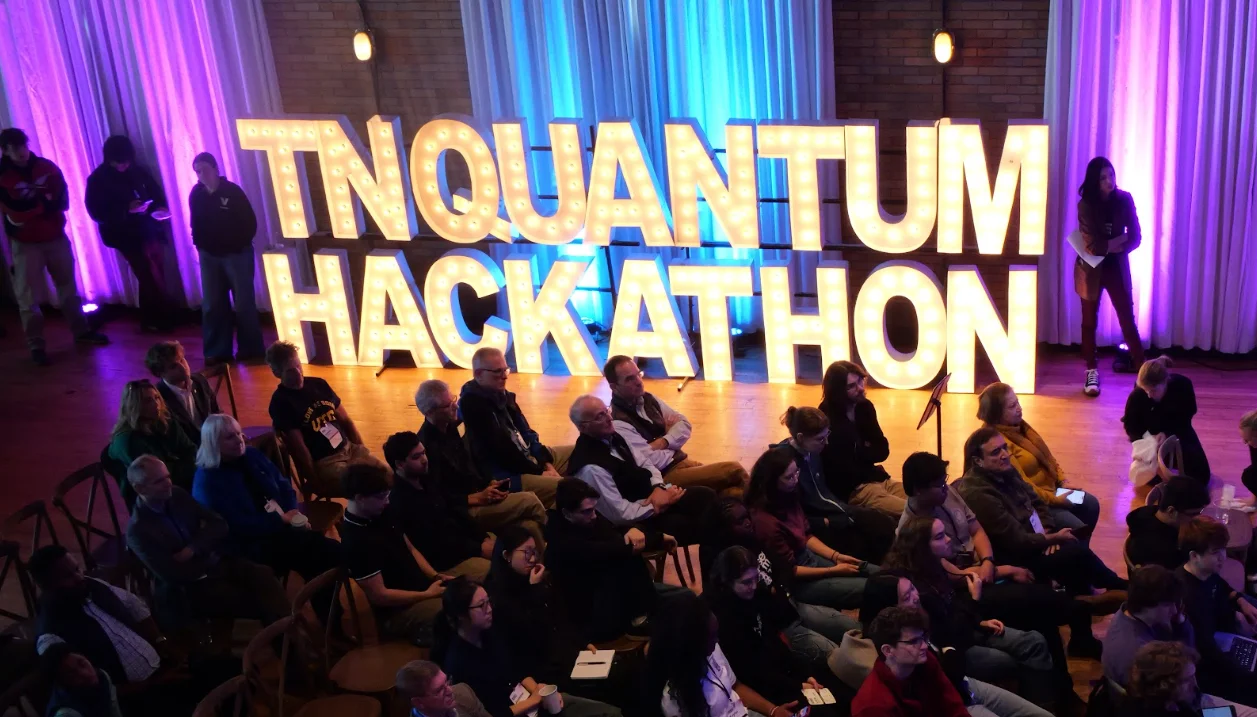
PRESS RELEASE — A team of students from Tennessee State University and Vanderbilt University took first place and a $2,500 prize at the Tennessee Quantum Hackathon, a 36-hour, in-person competition that challenged college students to use quantum technology to solve real problems facing the electric grid. The Chattanooga Quantum Collaborative (CQC) and CO.LAB presented the event Nov. 13-15 on the campus of the University of Tennessee at Chattanooga (UTC).
Most competitors had little or no quantum experience when they arrived. Students didn’t need a quantum background to apply, and among those who reported their experience, 87% described themselves as beginners or brand new to quantum. Only two were physics majors; most studied computer science, cybersecurity or engineering. By Sunday, at least four of the six finalist teams had run a portion of their work on real quantum computing resources.
Article Intelligence
Topics
Related Coverage
View all related
Sponsored
Ad
NewsLayerLearn more
NewsLayer Premium
Unlock deeper intelligence.
Ad-free reading, exclusive research, and real-time onchain insights.
Go Premium