

NewsLayer

Install NewsLayer

Get the app experience — one tap from your home screen, instant loads and breaking-news alerts.

NewsLayer.com
LatestDaily BriefMarkets
NewsLayer PulseLIVE₿BTC$86,624+1.61%ΞETH$2,721+0.89%◎SOL$121.85+2.11%✕XRP$1.52+2.02%ÐDOGE$0.0963+1.85%₳ADA$0.2756+4.55%Total Cap$3.07T+0.76%24H Vol$143.4BLayer Index52 Neutral
BreakingOpenAI agents tried to hack Wikipedia tools and flooded it with traffic3 giờ trước
Markets
HomeQuantum

Quantum

The global race to make a practical quantum computer just took a big leap forward

In the global race to build bigger and better quantum computers, researchers have taken a step forward. A new machine called Helios is a radically different system compared to other quantum computers.

The Conversation

Publisher

Aug 18, 2026 at 12:53 PM UTC · 4 phút đọc
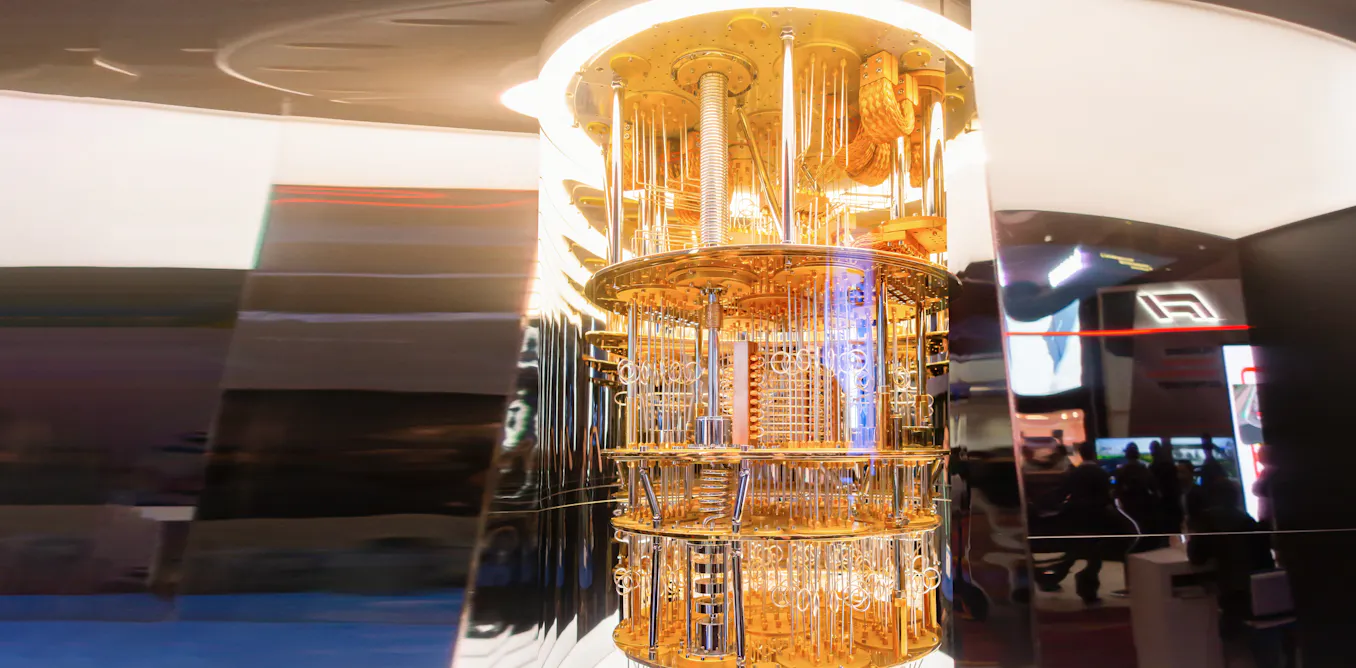
The global race to make a practical quantum computer just took a big leap forward
Image via The Conversation

Key Signal

98 qubits Helios qubit count

Last Updated

2 tháng trước

Đang dịch…

In the global race to build bigger and better quantum computers, researchers have taken a step forward. A new machine called Helios is a radically different system compared to other quantum computers.

Quantum computers harness the power of quantum mechanics, the laws that govern how physics operates at atomic and sub-atomic scales. Among various designs for such machines, Helios is a trapped-ion quantum computer, which means it uses charged atoms suspended in free space using electromagnetic fields.

It operates using 98 qubits – the units of information that a quantum computer uses to process data. This number of qubits makes it the largest trapped-ion quantum computer built so far. Quantinuum, the company behind the device, which is based in Cambridge, UK and Broomfield, Colorado, demonstrated earlier machines operating on 32 qubits in 2023 and 56 qubits in 2025.

Helios and its predecessors use an architecture (or operational structure) with separate regions for storing and processing quantum information. The architecture is called a QCCD (quantum charge-coupled device) and was invented in 2002. This is akin to the architecture of classical computers that have a memory for storage (hard disk drives, solid state drives) and a separate processor (CPU, GPU).

Article Intelligence

Topics

quantum

Related Coverage

QuantumSectora launches $SECT, the quantum cybersecurity and RWA token, with a supply capped at 50 million13 giờ trước · 1 min read
View all related

Sponsored

Ad
House — Advertise on NewsLayer
NewsLayerLearn more

NewsLayer Premium

Unlock deeper intelligence.

Ad-free reading, exclusive research, and real-time onchain insights.

Go Premium
NewsLayer.com

The front page of the onchain economy. Crypto, Web3 and regulation intelligence — live prices, original research and policy tracking in one layer.

Follow on XTelegram

News

  • Latest News
  • The Daily Brief
  • Crypto
  • DeFi
  • Policy
  • Web3
  • Blockchain
  • Explainers

Markets

  • Market News
  • Layer Index
  • Live Charts
  • DeFi Protocols
  • Regulation Tracker
  • Regulation Radar

Company

  • About NewsLayer
  • Advertise
  • PR Publication
  • Become an Author
  • Our Authors
  • Create Account
  • Sign in

Resources

  • Research
  • NewsLayer Originals
  • My Feed
  • Search
  • AI Sector
  • Quantum Sector

NewsLayer Premium

Read the full layer.

Unlock premium intelligence, original research and an ad-free reading experience.

  • Premium Intelligence briefings
  • Ad-free reading experience
  • Members-only research & data
Go Premium

© 2026 NewsLayer.com — The front page of the onchain economy

Privacy Policy·Terms of Service
NewsLayer

Get the signal, not the noise.

Markets, regulation and onchain intelligence in a 5-minute morning read — plus breaking alerts and Layer Index flips as they happen.

The Daily Brief

Breaking alerts

Index flips

Free · No spam · Unsubscribe anytime
