
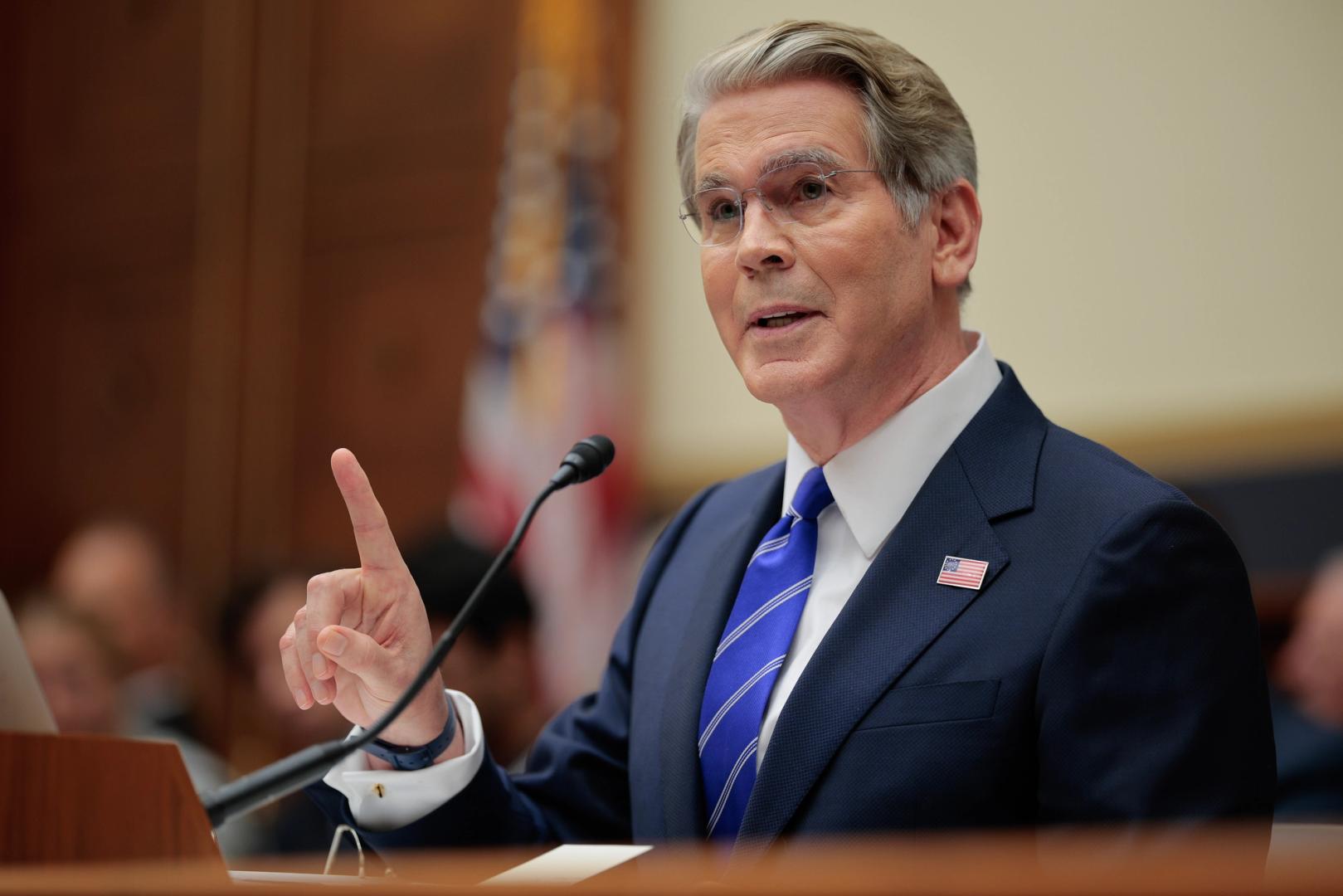
Treasury Secretary Scott Bessent leant on stablecoin adoption and dollar-denominated trade metrics to defend the strength of the U.S. economy, seeking to counter anxiety over surging government debt yields and shifting international payment rails.
Treasury Secretary Scott Bessent champions dollar dominance across global markets and stablecoins
Treasury Secretary Scott Bessent leant on stablecoin adoption and dollar-denominated trade metrics to defend the strength of the U.S. economy, seeking to counter anxiety over surging government debt yields and shifting international…
James Van Straten
Publisher CoinDesk
Sep 21, 2026 at 12:44 PM UTC · Updated 2 ngày trước · 1 phút đọc
Key Signal
89.2% FX transactions involving dollar
Last Updated
2 ngày trước
Đang dịch…
Bessent pushed back against a recent report by the New York Times which outlined structural risks in the country’s financial position. He highlighted data amplified by conservative commentator Lawrence Kudlow, to emphasize the greenback’s enduring global dominance in a post on X, noting that the U.S. dollar remains on one side of 89.2% of FX transactions, while the overwhelming majority of stablecoins are pegged to USD.
Bessent also highlighted record median household income, a historically low official poverty rate, continued employment growth and the Atlanta Fed’s 5.1% annualised estimate for third-quarter GDP.
The pushback from Bessent comes at a time where U.S. Treasury yields reach multiyear highs, with the 10-year yield hitting 5%. The Treasury has been repurchasing longer term bonds, leading critics to accuse Bessent of attempting to suppress yields. Bessent rejects that interpretation, maintaining that the buybacks are intended to improve liquidity and manage the maturity structure, rather than control a Treasury market worth more than $30 trillion.
Article Intelligence
Regulation Signal
in progressUpdated 2 tháng trước
SEC Crypto Asset Market Structure RulemakingRelated Coverage
 CryptoDOJ Sniffs Iran’s Crypto Bootlegged via Binance2 giờ trước · 7 min read
 CryptoUnited States Crypto Reserve: Treasury-Commerce Turf War Stalls Trump’s $20B Bitcoin Plan3 giờ trước · 4 min read
 DeFiEuropean Central Banks Push to Widen Stablecoin Yield Ban3 giờ trước · 2 min read
Sponsored
Ad
NewsLayerLearn more
NewsLayer Premium
Unlock deeper intelligence.
Ad-free reading, exclusive research, and real-time onchain insights.
Go Premium