
Insider Brief
Argonne and JPMorganChase Develop New Method to Study QAOA at Scale
Insider Brief PRESS RELEASE — Quantum computers have arisen as a possible solution for highly complex mathematical problems, offering “quantum advantage” over classical computers in certain cases. The Quantum Approximate Optimization…
Mohib Ur Rehman
Publisher The Quantum Insider
Sep 3, 2026 at 2:09 PM UTC · Updated 1 小时前 · 2 分钟阅读
Entities
polygon
Last Updated
1 小时前
翻译中…
- Researchers from JPMorganChase and Argonne National Laboratory developed a method to evaluate high-depth QAOA calculations for large Sherrington–Kirkpatrick model problems without running the algorithm end to end.
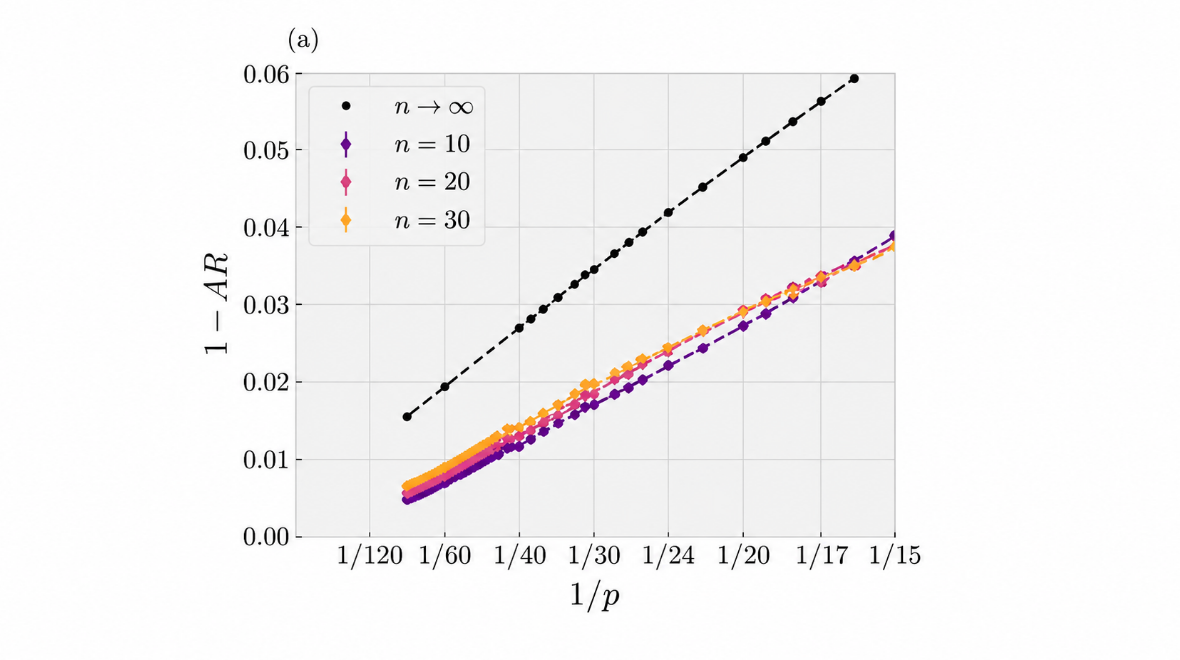
- The approach maps the QAOA state in the infinite-size limit to a spin-boson system, allowing researchers to use matrix product state simulations instead of more costly calculations.
- The researchers used supercomputers at DOE computing facilities to simulate the system and optimize QAOA parameters, providing a way to study the performance and limits of quantum optimization algorithms.
PRESS RELEASE — Quantum computers have arisen as a possible solution for highly complex mathematical problems, offering “quantum advantage” over classical computers in certain cases. The Quantum Approximate Optimization Algorithm (QAOA) is a leading candidate for realizing this advantage, and some success has been achieved for small problems. But demonstrations on large problems have remained too computationally costly to run on classical computers and current quantum hardware.
Researchers from JPMorganChase and the U.S. Department of Energy’s (DOE) Argonne National Laboratory have now found a way to make such calculations possible. Their results were published in Physical Review Letters.
Article Intelligence
Key Entities
Sponsored
Ad
NewsLayerLearn more
NewsLayer Premium
Unlock deeper intelligence.
Ad-free reading, exclusive research, and real-time onchain insights.
Go Premium