

Insider Brief
Berkeley Lab-Led Project Secures Funding to Develop a Transportable Muon Imager
Insider Brief PRESS RELEASE — The U.S. Department of Energy (DOE)’s Lawrence Berkeley National Laboratory (Berkeley Lab), in partnership with Ideon Technologies, has received funding from the DOE’s Advanced Research Projects…
Matt Swayne
Publisher The Quantum Insider
Aug 21, 2026 at 11:13 AM UTC · Updated 2 个月前 · 5 分钟阅读
翻译中…
- Berkeley Lab and Ideon Technologies received ARPA-E funding for a three-year project to develop an active muon imaging system designed to accelerate the discovery and characterization of critical mineral deposits.
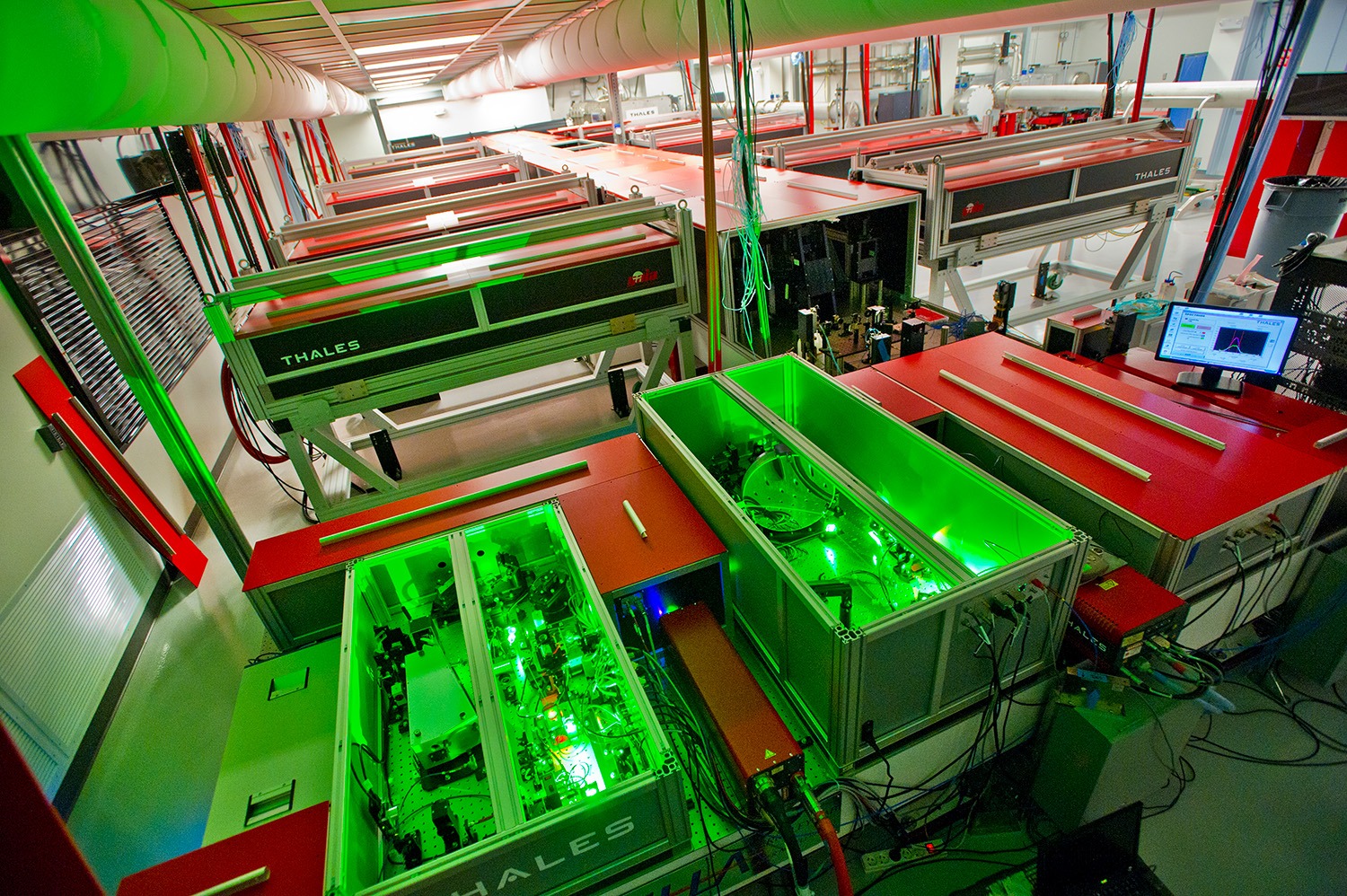
- The project will use compact laser-plasma accelerators to generate directed muon beams potentially thousands of times more intense than naturally occurring cosmic-ray muons, reducing some subsurface imaging times from months to hours.
- Researchers aim to demonstrate a two-stage, 12-GeV electron accelerator as a step toward 30-GeV to 100-GeV systems capable of producing muons that can penetrate roughly 50 to 150 meters of rock.
PRESS RELEASE — The U.S. Department of Energy (DOE)’s Lawrence Berkeley National Laboratory (Berkeley Lab), in partnership with Ideon Technologies, has received funding from the DOE’s Advanced Research Projects Agency-Energy (ARPA-E) through the Reliable Ore Characterization with Keystone Sensing (ROCKS) initiative. The three-year project aims to secure domestic supplies of critical minerals—materials essential to energy, industry, and national security—by imaging deep beneath the Earth’s surface with precision that conventional sensing techniques cannot match.
Article Intelligence
Topics
Regulation Signal
in progressUpdated 2 个月前
SEC Crypto Asset Market Structure RulemakingRelated Coverage
 QuantumQuEra Scientists Named Co-Principal Investigators on Three of Nine Teams in DOE’s Quantum Chemistry Program11 小时前 · 4 min read
 CryptoUNCX exploit exposes share-accounting flaw behind reported $1.5M loss4 小时前 · 1 min read
 CryptoDeutsche Bank prepares German crypto custody launch, eyes Asia: Report10 小时前 · 1 min read
Sponsored
Ad
NewsLayerLearn more
NewsLayer Premium
Unlock deeper intelligence.
Ad-free reading, exclusive research, and real-time onchain insights.
Go Premium