
Insider Brief
Choi Co-Leads Research on Quantum Intelligent Sensor Networks
Insider Brief PRESS RELEASE — The National Science Foundation (NSF) has awarded a $600,000 grant to Hyeongrak “Chuck” Choi, an assistant professor in the Department of Electrical and Computer Engineering at Stony Brook University, and…
Mohib Ur Rehman
Publisher The Quantum Insider
Oct 1, 2026 at 9:57 AM UTC · Updated 2 天前 · 4 分钟阅读
Key Signal
$600,000 NSF research grant
Last Updated
2 天前
- Stony Brook University and the University of Hawaiʻi at Mānoa researchers are collaborating on a three-year NSF-funded project to develop quantum intelligent sensor networks.
- The project will study how distributed quantum sensors can use entanglement, quantum information and coordinated network architectures to detect weak and spatially varying signals.
- The research will initially focus on photonic architectures using squeezed light and integrated optics, with potential applications in magnetic sensing, biomedical imaging, environmental monitoring, quantum radar and communications.
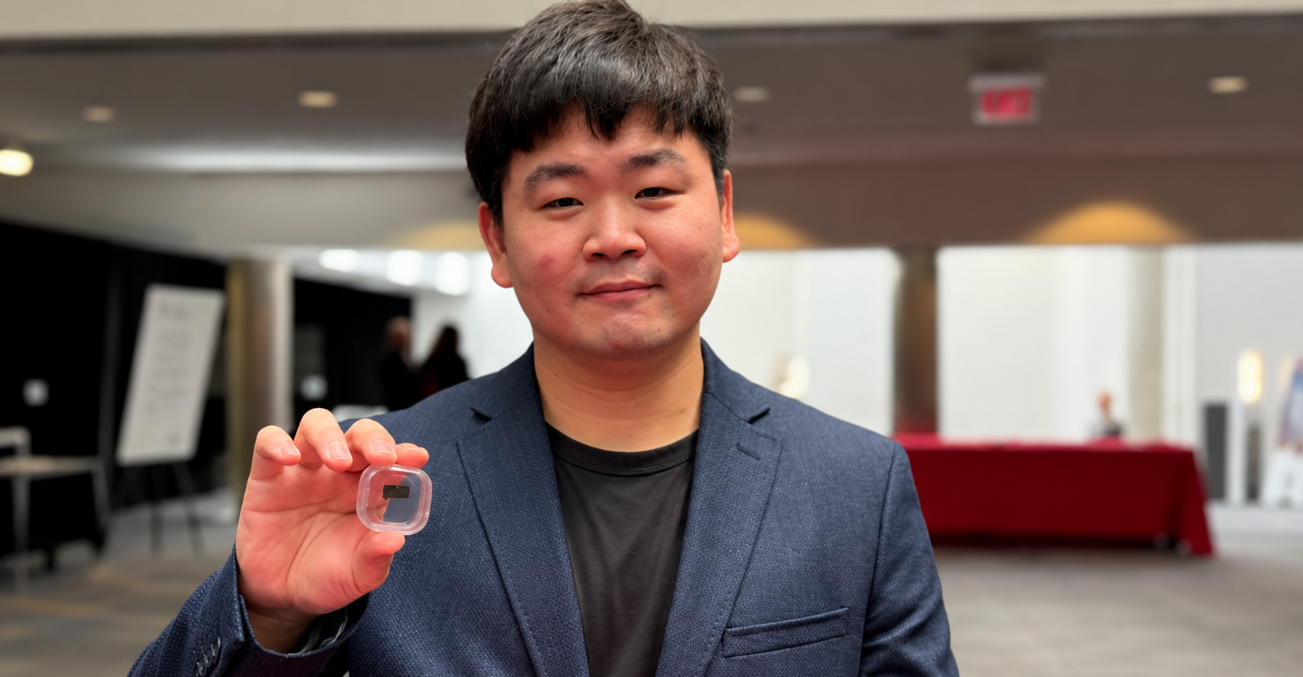
PRESS RELEASE — The National Science Foundation (NSF) has awarded a $600,000 grant to Hyeongrak “Chuck” Choi, an assistant professor in the Department of Electrical and Computer Engineering at Stony Brook University, and Bo-Han Wu, an assistant professor at the University of Hawaiʻi at Mānoa, to develop quantum intelligent sensor networks.
The three-year collaborative project, which began on June 1, 2026, will focus on building smarter quantum sensor networks. To do this, the researchers will investigate how spatially distributed quantum sensors can work together as a coordinated network. Rather than treating sensors as independent devices, they will study how entanglement and other quantum resources can be distributed across multiple sensing nodes to improve the extraction of weak and spatially varying signals. Their mission is to help sensors work together more efficiently and adapt to changing conditions.
Article Intelligence
Sponsored
Ad
NewsLayerLearn more
NewsLayer Premium
Unlock deeper intelligence.
Ad-free reading, exclusive research, and real-time onchain insights.
Go Premium