This website uses cookies
We use cookies to personalise content and ads, to provide social media features and to analyse our traffic. We also share information about your use of our site with our social media, advertising and analytics partners who may combine it with other information that you’ve provided to them or that they’ve collected from your use of their services.
Consent Selection
Details
  • Necessary cookies help make a website usable by enabling basic functions like page navigation and access to secure areas of the website. The website cannot function properly without these cookies.
  • Preference cookies enable a website to remember information that changes the way the website behaves or looks, like your preferred language or the region that you are in.
    • We do not use cookies of this type.

  • Statistic cookies help website owners to understand how visitors interact with websites by collecting and reporting information anonymously.
    • We do not use cookies of this type.

  • Marketing cookies are used to track visitors across websites. The intention is to display ads that are relevant and engaging for the individual user and thereby more valuable for publishers and third party advertisers.
    • We do not use cookies of this type.

  • Unclassified cookies are cookies that we are in the process of classifying, together with the providers of individual cookies.
    • __emg_sidPending
      Maximum Storage Duration: 1 dayType: HTTP Cookie
      __emg_vidPending
      Maximum Storage Duration: 1 yearType: HTTP Cookie
      nl-read-countPending
      Maximum Storage Duration: PersistentType: HTML Local Storage
Cookie declaration last updated on 8/12/26 by Cookiebot
[#IABV2_TITLE#]
[#IABV2_BODY_INTRO#]
[#IABV2_BODY_LEGITIMATE_INTEREST_INTRO#]
[#IABV2_BODY_PREFERENCE_INTRO#]
[#IABV2_BODY_PURPOSES_INTRO#]
[#IABV2_BODY_PURPOSES#]
[#IABV2_BODY_FEATURES_INTRO#]
[#IABV2_BODY_FEATURES#]
[#IABV2_BODY_PARTNERS_INTRO#]
[#IABV2_BODY_PARTNERS#]
About
Cookies are small text files that can be used by websites to make a user's experience more efficient.

The law states that we can store cookies on your device if they are strictly necessary for the operation of this site. For all other types of cookies we need your permission.

This site uses different types of cookies. Some cookies are placed by third party services that appear on our pages.

You can at any time change or withdraw your consent from the Cookie Declaration on our website.

Learn more about who we are, how you can contact us and how we process personal data in our Privacy Policy.

Please state your consent ID and date when you contact us regarding your consent.
NewsLayer

Install NewsLayer

Get the app experience — one tap from your home screen, instant loads and breaking-news alerts.

NewsLayer.com
NewsLayer PulseLIVEBTC$62,900-0.82%ETH$1,875-0.49%SOL$75.05-1.52%XRP$1-0.86%DOGE$0.0698-0.45%ADA$0.1795-1.47%Total Cap$2.26T-0.18%Layer Index39 Fear
External ReportingUpdated 2 天前

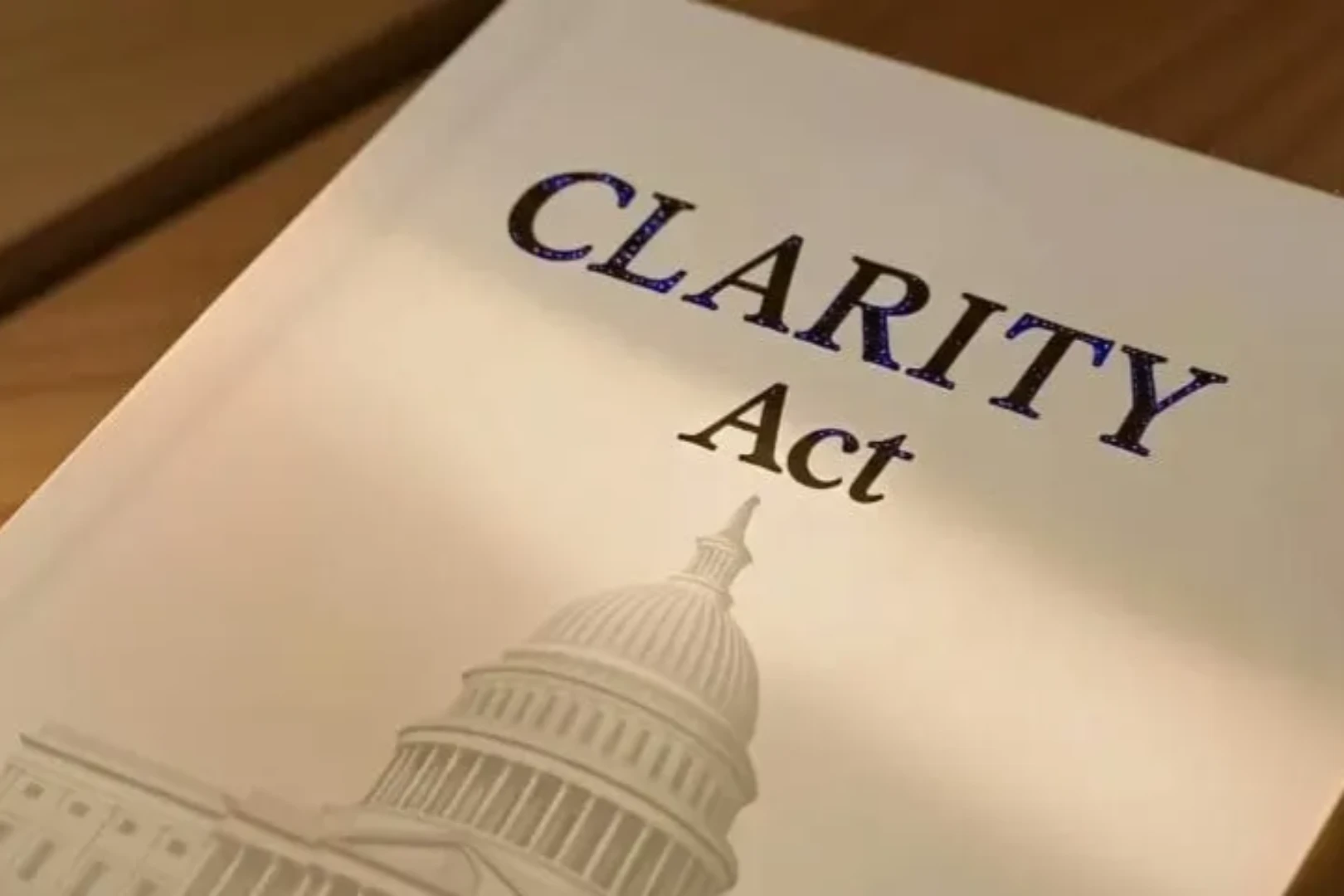
Congress is Stuck on the CLARITY Act, So the SEC Decided to Act on Its Own: Crypto Regulation Is Bypassing the Legislative Deadlock

On the evening of August 11, the SEC issued a notice: On Friday morning (August 14) at 10:00 AM, the Commission will hold a public meeting with a single agenda item: a vote on whether to formally propose a "tailored offering regime"…

Congress is Stuck on the CLARITY Act, So the SEC Decided to Act on Its Own: Crypto Regulation Is Bypassing the Legislative Deadlock
Publisher odaily.news 5 分钟阅读
Image via odaily.news

Regulation Context

SEC Crypto Asset Market Structure Rulemaking
JurisdictionUnited States
RegulatorSEC
Statusin progress
Updated7 天前

Layer Index

↓ 5 pts in 24h

Original Author: Xiaobing

On the evening of August 11, the SEC issued a notice: On Friday morning (August 14) at 10:00 AM, the Commission will hold a public meeting with a single agenda item: a vote on whether to formally propose a "tailored offering regime" (Regulation Crypto) for crypto asset investment contracts.

This marks the first formal crypto rulemaking under Paul Atkins' tenure as SEC Chairman, with only three business days between the announcement and the scheduled meeting.

All three commissioners are Republicans, and the step is expected to be approved. However, it's important to clarify: Friday's vote determines whether to "publish the proposal and solicit public comment," not the final rule. After a proposal is published, there is typically a 60 to 90-day public comment period, after which the SEC revises based on feedback. The earliest the rule could take effect is 2027.

For the market, the signal matters more than the timeline.

Where is the CLARITY Act Stuck?

The backdrop is legislative gridlock in Congress.

The CLARITY Act (Clear Location and Interpretation of Digital Assets Transactions Act) is currently the crypto market structure legislation closest to becoming law in the United States. The House passed it in July 2025 by a vote of 294:134, and the Senate Banking Committee passed it 15:9 in May. It seemed to be sailing smoothly, but it hit a wall at the full Senate vote stage.

Senate Majority Leader Thune had originally planned to push for a vote before the August recess. On August 6, he told reporters that Democrats were refusing to vote. At 4:52 AM on August 8, at the tail end of an overnight session, Thune filed a procedural motion pushing the vote to 2:15 PM on September 15, the first day senators return from recess.

The reasons for the stall are specific. Three contentious issues remain unresolved: the details of anti-money laundering and enforcement provisions, the regulatory jurisdiction over stablecoin yields, and government ethics clauses involving presidential crypto asset holdings. Elizabeth Warren's stance represents the Democratic opposition's position; she says this version of the bill was "written by the crypto industry, for the crypto industry."

The vote requires 60 votes. Republicans hold 53 seats, requiring at least 7 Democrats to cross party lines. TD Cowen analyst Jaret Seiberg gave a 75% probability of failure in a research note dated August 10. On Polymarket, the odds of the CLARITY Act being signed into law this year have fallen from 82% in February to 21%, with over $5.5 million wagered on this outcome.

SEC Fills the Void

The SEC's move comes right on the heels of the CLARITY Act's setback. The SEC isn't waiting for Congress; it's writing its own rules. TD Cowen characterized this meeting as "the starting point of a series of rulemakings the SEC is initiating to provide regulatory certainty after the Senate impasse."

The framework for Regulation Crypto comes from Atkins' public remarks in March. He proposed three categories of exemptions:

Startup Exemption: Would allow early-stage crypto projects to conduct limited fundraising under specific conditions without triggering full securities registration obligations. The reference figure Atkins used in March was no more than $75 million within 12 months.

Funding Exemption: Would provide a streamlined path for larger fundraising rounds, with disclosures potentially closer to crypto whitepaper formats rather than full S-1 prospectuses for public companies.

Investment Contract Safe Harbor: This is the most critical part, potentially offering a path for tokens to "exit securities regulation": when a project's development team no longer continuously dominates network operations, the token may no longer be considered an investment contract, thereby falling outside SEC jurisdiction.

If the safe harbor provision is written into the final rule, it would fundamentally change the compliance logic for crypto projects. The core issue in the past has been: once a token is deemed a security, it is always a security, and the project team must bear securities law obligations indefinitely. The safe harbor logic is that security status can recede as a project becomes more decentralized.

Two Tracks

There are now two parallel tracks advancing crypto regulation in Washington.

The CLARITY Act follows the legislative track. Its advantages are the highest authority (laws rank above administrative rules), broadest coverage (dividing jurisdiction between the SEC and CFTC simultaneously), and greatest durability. But it needs 60 votes, requires cross-party support, and must resolve three contentious issues. Moreover, even if it clears the procedural vote on September 15, debates, amendments, and a final vote still lie ahead—leaving an extremely narrow window to complete the entire process this year.

Regulation Crypto follows the administrative rulemaking track. It doesn't require a congressional vote—three Republican commissioners are enough to advance it. Once a final rule passes, it's harder for a future SEC to overturn than a staff statement, because overturning a formal rule requires going through the same notice-comment-vote process. Its disadvantage is its limited scope: it only covers SEC jurisdiction, doesn't involve the CFTC, and may face legal challenges.

Former SEC official Brett Redfearn's reaction on X captures the industry sentiment: "No more waiting for Congress to pass the CLARITY Act! It's time for regulators to take matters into their own hands."

The two tracks are not mutually exclusive. If the CLARITY Act ultimately passes, it would supersede Regulation Crypto; if CLARITY fails in Congress, Regulation Crypto would be the best outcome the industry can get. The SEC is using administrative power to create a safety net for Congress.

For the crypto industry, no compliance obligations will change in the short term. Friday's vote is just the starting point of the rulemaking process—at least six months remain from proposal to final effectiveness.

But the signal-level impact is immediate. Over the past year, the biggest uncertainty facing the crypto industry in the U.S. has been "when will the rules actually come." With Congress and the SEC moving forward simultaneously, even at different paces, it at least means Washington has shifted from the debate over "whether to regulate crypto" to the operational phase of "how to regulate it."

September 15 and August 14—two dates, two tracks, one direction.

突发新闻

Never miss a breaking story

Reader Poll

Will the SEC issue new crypto regulatory guidance before Congress advances the CLARITY Act?

Advertisement

House — Advertise on NewsLayer
NewsLayerAd

Sourced by

Originally reported by odaily.news

NewsLayer coverage based on externally reported material.

The Daily Brief

The onchain economy, before your day starts.

Curated markets, onchain insights, and key headlines — delivered every weekday morning.

Weekdays · Free · ~5 minute read

相关报道