
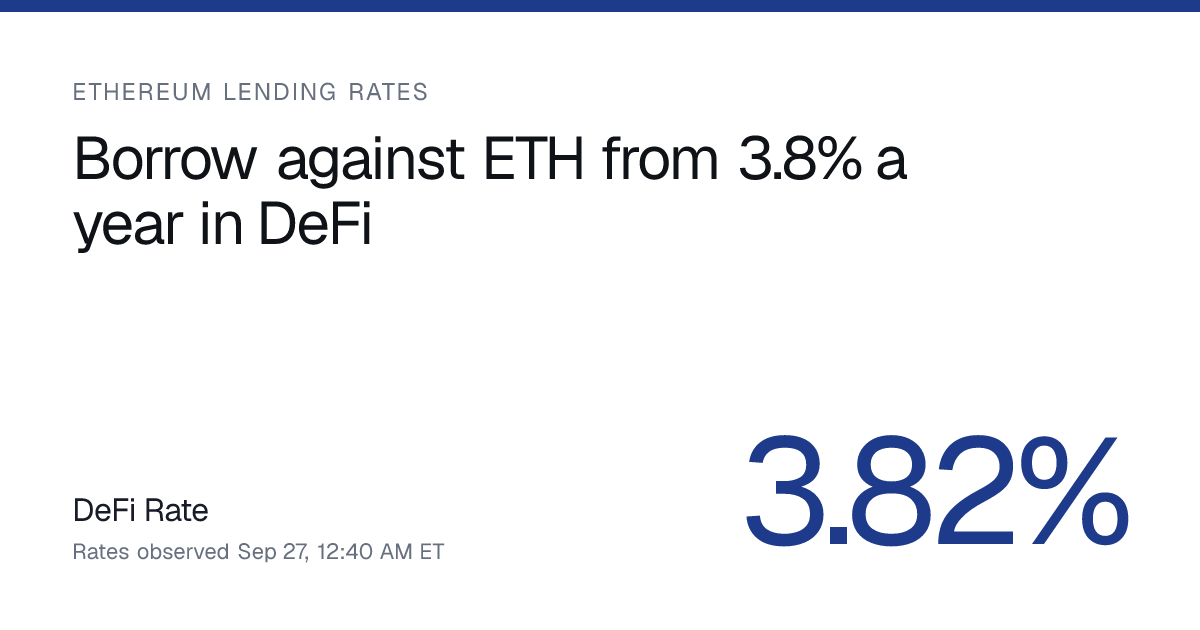
Ethereum Lending Rates: Borrow Against ETH or Earn
“Ethereum lending” means two things. Borrowing against ETH: you keep your ETH as collateral and borrow dollars or stablecoins, paying interest, without selling. Lending out ETH: you deposit ETH and earn interest from whoever borrows it.…
DeFi Rate
Publisher
Sep 27, 2026 at 3:06 AM UTC · 3 分钟阅读
Entities
ethereum
Market Impact
ETH+0.64%$2,703
Last Updated
2 小时前
“Ethereum lending” means two things. Borrowing against ETH: you keep your ETH as collateral and borrow dollars or stablecoins, paying interest, without selling. Lending out ETH: you deposit ETH and earn interest from whoever borrows it. Unlike Bitcoin, ETH is in steady demand to borrow, so lending it out pays a real, if modest, rate.
LTV and liquidation, in plain terms
Loan-to-value (LTV) is your loan divided by your collateral’s value. Borrow $5,000 against $10,000 of ETH and your LTV is 50%. If ETH falls, your LTV rises, and past the market’s liquidation level some of your ETH is sold to repay the loan. ETH moves a lot, so starting well below the maximum LTV gives you room.
How DeFi borrowing works
On protocols such as Aave, Spark and Compound, you deposit ETH (as WETH) and borrow a stablecoin like USDC from the same pool; the rate is that stablecoin’s variable borrow rate there. Morpho’s markets pair one collateral with one loan asset. Sky’s vaults (formerly Maker) mint DAI against your ETH for a stability fee, and Curve’s crvUSD converts collateral gradually instead of liquidating it all at once. There’s no application or credit check, and you pay network fees.
Market Context
Ethereum
ETH
$2,703
+0.64% (24H)
Market Cap
$329.6B
24H Volume
$4.3B
24H High
$2,710
Article Intelligence
Key Entities
Related Coverage
 CryptoCrypto address buys 9,158 ETH worth $24.34M, ho...2 小时前 · 1 min read
 CryptoCrypto News: Tokenized Assets Reach $46 Billion After CFTC Update While Pepeto and ETH Gain3 小时前 · 1 min read
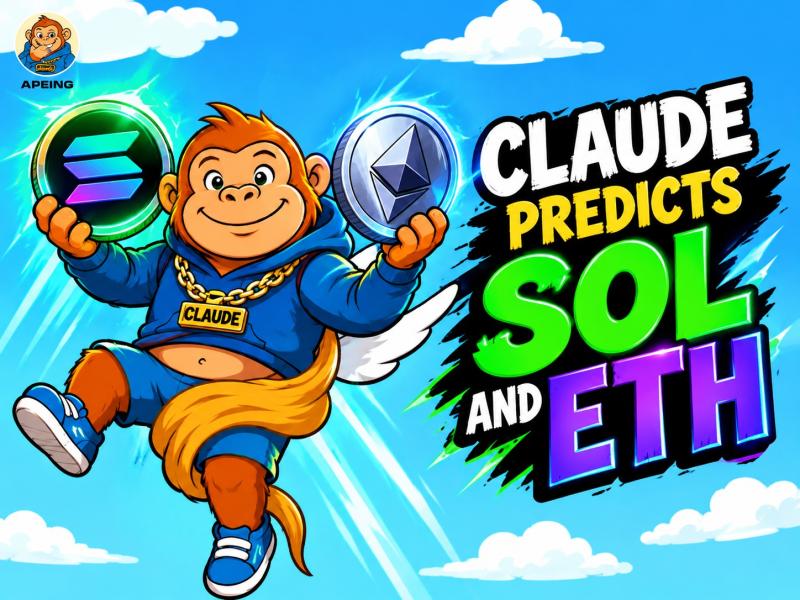 Artificial IntelligenceClaude Predicts SOL Could Reach $149 as ETH Targets $3,0003 小时前 · 7 min read
Sponsored
Ad
NewsLayerLearn more
NewsLayer Premium
Unlock deeper intelligence.
Ad-free reading, exclusive research, and real-time onchain insights.
Go Premium