

This website uses cookies
We use cookies to personalise content and ads, to provide social media features and to analyse our traffic. We also share information about your use of our site with our social media, advertising and analytics partners who may combine it with other information that you’ve provided to them or that they’ve collected from your use of their services.
Consent Selection
Details
  • Necessary cookies help make a website usable by enabling basic functions like page navigation and access to secure areas of the website. The website cannot function properly without these cookies.
  • Preference cookies enable a website to remember information that changes the way the website behaves or looks, like your preferred language or the region that you are in.
    • We do not use cookies of this type.

  • Statistic cookies help website owners to understand how visitors interact with websites by collecting and reporting information anonymously.
    • We do not use cookies of this type.

  • Marketing cookies are used to track visitors across websites. The intention is to display ads that are relevant and engaging for the individual user and thereby more valuable for publishers and third party advertisers.
    • We do not use cookies of this type.

  • Unclassified cookies are cookies that we are in the process of classifying, together with the providers of individual cookies.
    • __emg_sidPending
      Maximum Storage Duration: 1 dayType: HTTP Cookie
      __emg_vidPending
      Maximum Storage Duration: 1 yearType: HTTP Cookie
      nl-read-countPending
      Maximum Storage Duration: PersistentType: HTML Local Storage
Cookie declaration last updated on 8/12/26 by Cookiebot
[#IABV2_TITLE#]
[#IABV2_BODY_INTRO#]
[#IABV2_BODY_LEGITIMATE_INTEREST_INTRO#]
[#IABV2_BODY_PREFERENCE_INTRO#]
[#IABV2_BODY_PURPOSES_INTRO#]
[#IABV2_BODY_PURPOSES#]
[#IABV2_BODY_FEATURES_INTRO#]
[#IABV2_BODY_FEATURES#]
[#IABV2_BODY_PARTNERS_INTRO#]
[#IABV2_BODY_PARTNERS#]
About
Cookies are small text files that can be used by websites to make a user's experience more efficient.

The law states that we can store cookies on your device if they are strictly necessary for the operation of this site. For all other types of cookies we need your permission.

This site uses different types of cookies. Some cookies are placed by third party services that appear on our pages.

You can at any time change or withdraw your consent from the Cookie Declaration on our website.

Learn more about who we are, how you can contact us and how we process personal data in our Privacy Policy.

Please state your consent ID and date when you contact us regarding your consent.
NewsLayer

Install NewsLayer

Get the app experience — one tap from your home screen, instant loads and breaking-news alerts.

NewsLayer.com

IRS warns fake tax letters with QR codes are targeting US crypto holders

发布于 1 小时前 3 分钟阅读
IRS warns fake tax letters with QR codes are targeting US crypto holders

IRS warns fake tax letters with QR codes are targeting US crypto holders The Cool Down

Photo Credit: Getty Images

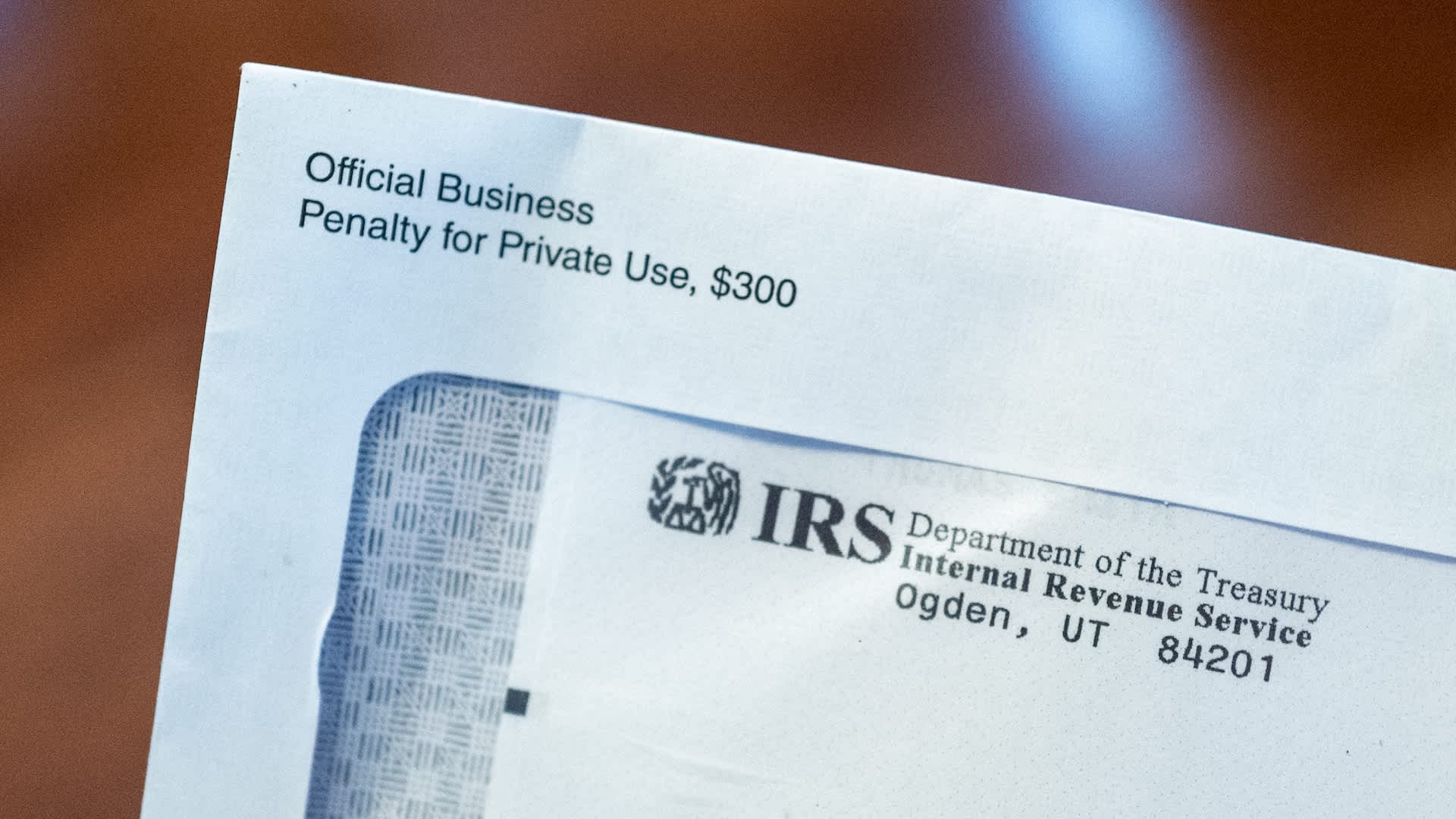
A new mail fraud scheme is targeting cryptocurrency holders with convincing, IRS-style notices and a fake "compliance portal" designed to steal sensitive financial information. The scam uses official-looking letters and QR codes to direct recipients to a fraudulent website, where they may be prompted to enter financial or personal details.

What happened?

According to AOL, a criminal investigation conducted by the IRS discovered that an international scam operation has been sending letters that resemble official IRS notices. The mailers tell recipients to register for a supposed "Digital Asset Compliance Portal."

The outlet noted that recipients who scan the QR code in those letters are sent to an imitation website that asks for personal and financial details, including crypto exchange account information and wallet data.

Once that information is submitted, the next step is often a follow-up call from someone posing as an IRS official and requesting a password, a two-factor authentication code, or a private key for the victim's crypto account.

The IRS has said that no legitimate Digital Asset Compliance Portal exists and that any message referring to one should be reported.

Jarod Koopman, the IRS's Criminal Investigation Chief, warned in a statement reported by AOL that "Criminals continue to exploit public trust in government agencies by creating convincing fake websites and official-looking correspondence."

Researchers working with Coinbase and cyber defense firm DarkTower traced the fake site's domain to a Hong Kong registrar and its hosting to a Romanian location associated with other impersonation schemes involving banks and FedEx.

Why does it matter?

This scam is emerging at a time when crypto-related fraud is already costing Americans enormous sums of money.
The FBI's Internet Crime Complaint Center said, as reported by AOL, complaints involving cryptocurrency were tied to more than $11 billion in losses in 2025, the report's costliest complaint category. Roughly 181,500 complaints that year involved cryptocurrency.

Not all crypto scams look the same. The IRS impostor letters appear designed to take wallet funds directly, while many commonly reported cases are investment scams that begin with trust-building messages in bogus investing groups before victims are pressured to send crypto.

A single QR code scan or hurried response to an official-looking letter can expose exchange accounts, wallet access, and broader personal information. If Social Security numbers or other sensitive data are shared, the harm can extend far beyond crypto holdings alone.

Crypto itself also comes with broader tradeoffs. While proponents claim crypto offers secure trading opportunities, some digital asset operations consume massive amounts of energy.

Scams like this can turn technical complexity and hype against consumers.

What can I do?

If you're in a situation that might be a financial scam, the first line of defense is simple: verify before responding.

The fake portal does not use the official IRS.gov domain, and the IRS would not ask for wallet addresses, exchange credentials, private keys, or seed phrases through this kind of outreach.

If you receive a letter referencing a Digital Asset Compliance Portal, do not scan the QR code or provide any information. Instead, stop communicating and report the incident to the IRS and the FBI's IC3 tipline. If a crypto exchange account may be affected, contact the exchange immediately as well.

If you have already responded, change passwords on potentially compromised accounts right away. If personal information such as a Social Security number was shared, consider freezing your credit.

Scam letters, texts, and emails often rely on panic to short-circuit good judgment, especially when they appear to come from a trusted government agency.

Get TCD's free newsletters for easy tips, smart advice, and a chance to earn $5,000 toward home upgrades. To see more stories like this one, change your Google preferences here.

Attribution

Originally reported by The Cool Down

Get stories like this, daily.

Daily crypto + regulation intelligence, straight to your inbox. Free.

相关报道