定期投资通常被认为是减少波动性影响的最简单方法之一。然而,2022 年以来的 DCA 结果表明,平均化买入价格无法弥补基础资产的长期表现不佳。
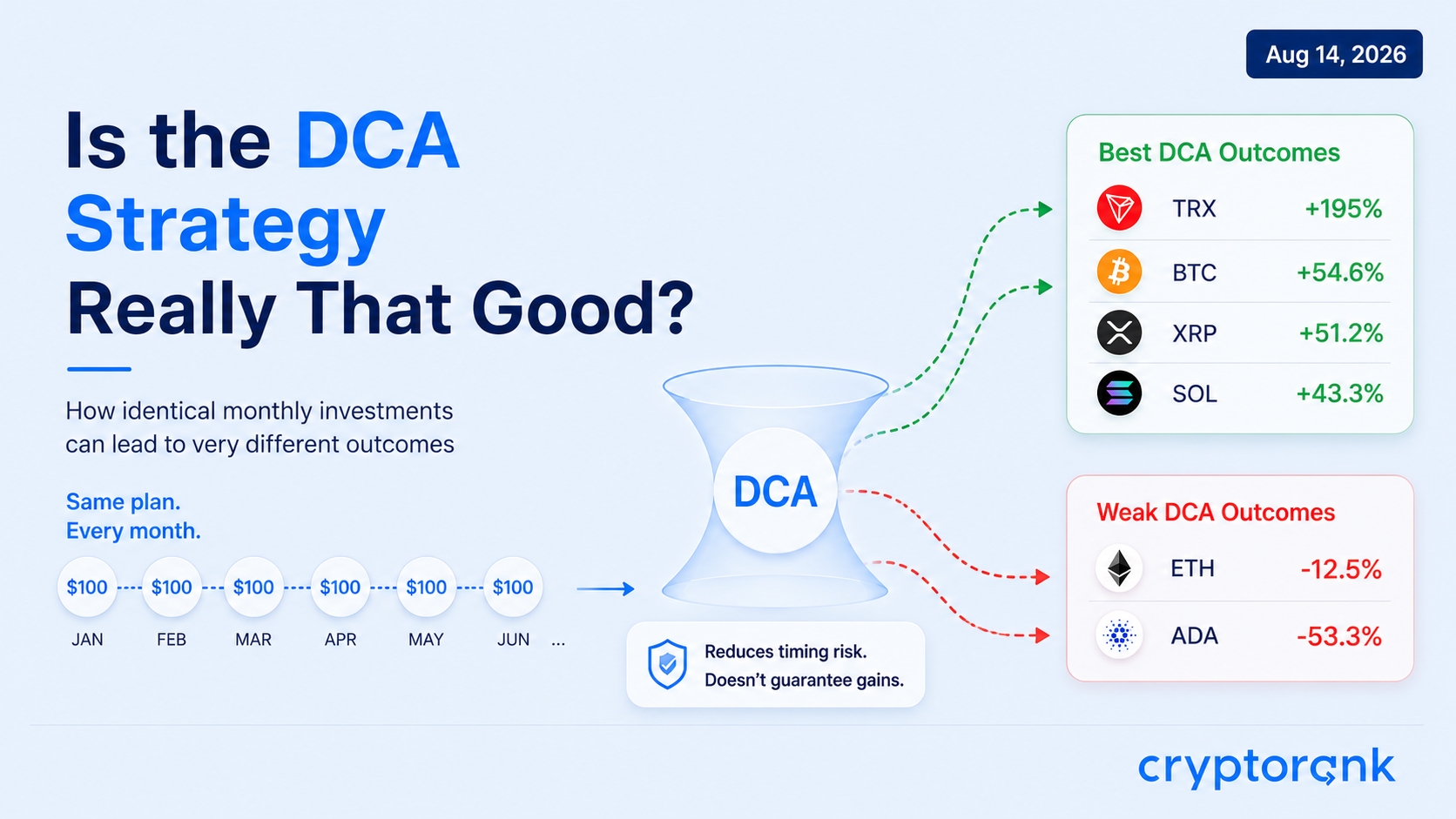
DCA 策略真的那么好吗?
DCA 策略真的那么好吗?CryptoRank
CryptoRank
Publisher
Aug 14, 2026 at 10:16 AM UTC · 1 分钟阅读
Key Signal
+195% TRX DCA return
Market Impact
Total MCap-0.17%
Last Updated
2 个月前
自 2022 年以来,每月 100 美元的 DCA 策略产生的结果从 TRX 的 +195% 到 ADA 的 −53.3% 不等,尽管每种策略使用的资金和时机完全相同。作为对比,假设我们在期初对以下每种代币投资了 5,600 美元。截至 2026 年 8 月 14 日,近似回报率为:
差异非常显著:即使在主要资产中,表现也从 TRX 超过 4 倍的收益到 ADA 86% 的亏损不等。这表明 DCA 主要降低了进入价格风险,但它并不能保护投资者免于选择结构性表现不佳的资产。
这对于山寨币尤其重要,因为代币通胀、需求下降、网络活动减弱或叙事丧失的影响可能超过摊薄成本的好处。换句话说,投资纪律可以改善执行,但资产选择仍然决定了长期结果的大部分。
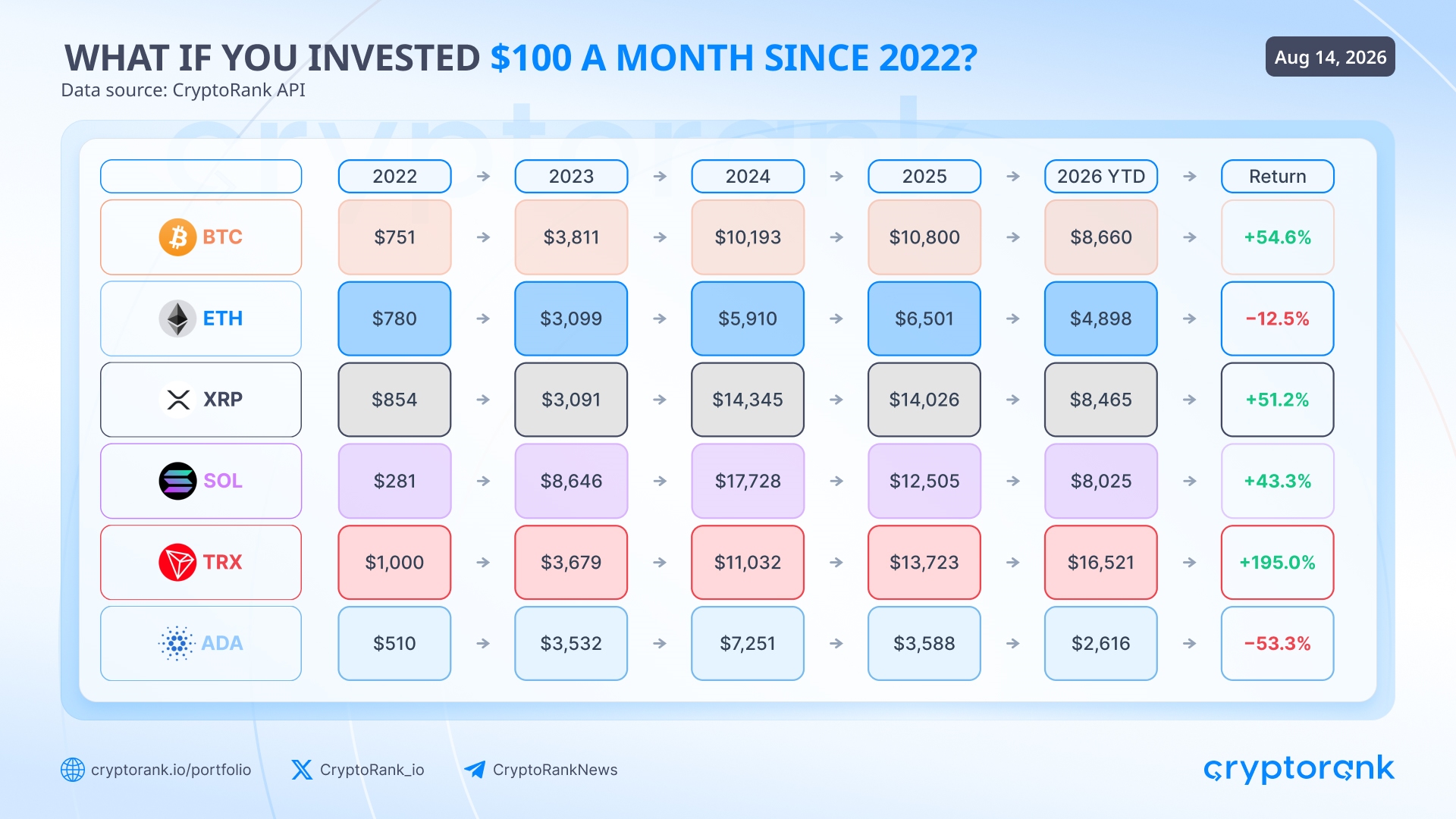
基于 CryptoRank API 构建
DCA 的效果也因资产在其更广泛的市场周期中所处的位置而异。当资产最终恢复并创下新高时,定期买入会非常有效,正如 TRX、 BTC、 SOL 和 XRP 所显示的那样。然而,在长期的结构性下跌中重复购买只会增加亏损仓位的风险敞口,ADA 的情况就是如此。因此,该策略最适合作为一种资金部署方法,而不是基本面资产选择的替代品。
Sourced by
Originally reported by CryptoRank
NewsLayer coverage based on externally reported material.
The Daily Brief
The onchain economy, before your day starts.
Curated markets, onchain insights, and key headlines — delivered every weekday morning.
Weekdays · Free · ~5 minute read
0
Applause
Was this article helpful?
Market Context
Cardano
ADA
$0.2432
-1.77% (24H)
Market Cap
$9.1B
Circulating Supply
37.5B ADA
24H Volume
$233M
24H High
$0.248
Article Intelligence
Topics
Sponsored
Ad
NewsLayerLearn more
NewsLayer Premium
Unlock deeper intelligence.
Ad-free reading, exclusive research, and real-time onchain insights.
Go Premium