



Insider Brief
NIST Researchers Supersize Quantum Technology to Help Detect Faint Photons
Insider Brief PRESS RELEASE — Our everyday life is flooded with photons, the quantum building blocks of light. For cutting-edge technology, from quantum computing to deep-tissue imaging, detecting every single photon counts. “Photons…
Matt Swayne
Publisher The Quantum Insider
Aug 25, 2026 at 7:44 AM UTC · 5 分钟阅读
翻译中…
- NIST researchers developed a new superconducting single-photon detector architecture that uses wires more than 100 times wider than conventional devices while improving current flow and sharply reducing false signals.
- The design uses superconducting “rails” to redistribute electrical current across the detector, allowing wider wires to operate closer to their intrinsic performance limits while remaining sensitive to low-energy photons.
- The researchers reported a billionfold reduction in dark counts, though further testing is needed to determine whether the wider detectors can match the roughly 98% detection efficiency of nanoscale devices.
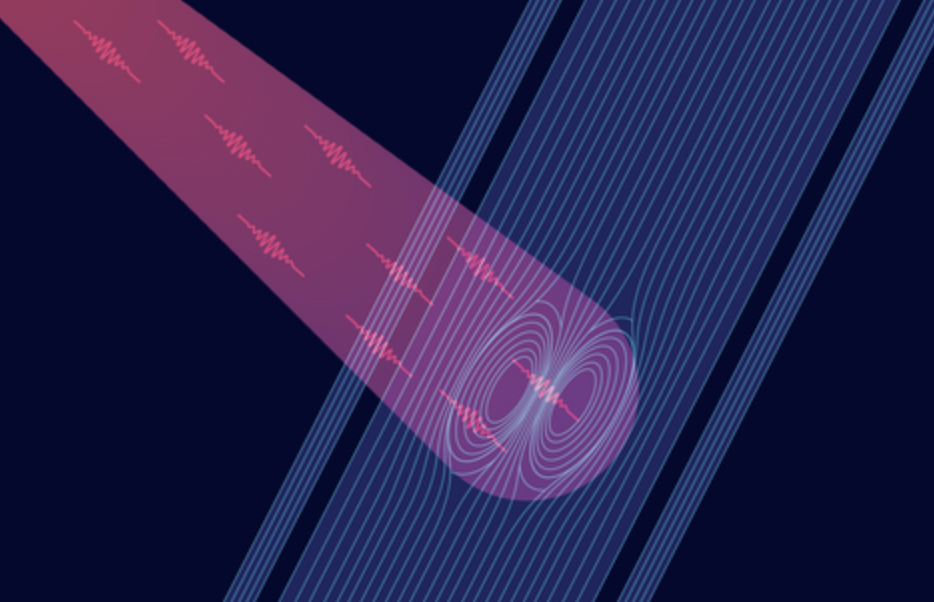
- Image: In this illustration, photons hit a strip of superconducting wire, disrupting the electric current and registering an electric pulse. Each pulse tells researchers about the light that has hit the detector, which is beneficial for applications like biomedical imaging and astronomy. (Natasha Hanacek/NIST)
PRESS RELEASE — Our everyday life is flooded with photons, the quantum building blocks of light. For cutting-edge technology, from quantum computing to deep-tissue imaging, detecting every single photon counts.
“Photons carry information,” said Kristen Parzuchowski, a postdoctoral researcher at the National Institute of Standards and Technology. “Whenever a photon comes into your measurement system, you need to be able to detect it.”
Article Intelligence
Related Coverage
 QuantumNations at the Quantum Table15 小时前 · 13 min read
 QuantumResearchers Achieve 99.915% Fidelity In Qubit Control Via Light18 小时前 · 3 min read
 QuantumJapanese Researchers Put Experimental Neutral Atom Quantum Computer Into Operation in Aichi1 小时前 · 1 min read
Sponsored
Ad
NewsLayerLearn more
NewsLayer Premium
Unlock deeper intelligence.
Ad-free reading, exclusive research, and real-time onchain insights.
Go Premium