
OpenAI Says It's Made Progress on a Second $1 Million Math Problem
Days after its disputed Navier-Stokes claim, OpenAI says it's made "substantial progress" on another Millennium Prize math problem—and won't say which one yet.
Jose Antonio Lanz
Publisher Decrypt
Sep 17, 2026 at 7:32 PM UTC · 3 分钟阅读

Key Signal
$1M Millennium Prize bounty
Last Updated
16 小时前
- OpenAI told the New York Times it has made "substantial progress" on a second Millennium Prize Problem since solving Navier-Stokes on September 8, without naming the problem or a disclosure timeline.
- Online speculation, unconfirmed by OpenAI, points to the Hodge Conjecture, a 76-year-old puzzle about counting the "holes" in complex geometric shapes.
- The Clay Mathematics Institute's review of OpenAI's Navier-Stokes proof is still pending, and a separate credit dispute with mathematician Tristan Buckmaster remains unresolved.
OpenAI isn't done cashing in on math's hardest open questions—at least not on the credit for solving them, since the company says it doesn't want the money.
Days after claiming a solution to the Navier-Stokes equations, OpenAI told the New York Times it has made "substantial progress" on another Millennium Prize Problem, one of seven grand puzzles the Clay Mathematics Institute has backed with a $1 million bounty since 2000.
OpenAI still hasn't said which problem it means, but experts, enthusiasts—and reporters—have their theories.
Chatter across social media has zeroed in on the Hodge Conjecture, a 1950 puzzle about how to count the "holes" in complex geometric shapes—the kind with so many dimensions nobody can actually picture them. Mathematician William Hodge proposed a shortcut using algebra instead of geometry to do it, but nobody has proven the shortcut always works.
Article Intelligence
Topics
Regulation Signal
in progressUpdated 1 个月前
SEC Crypto Asset Market Structure RulemakingRelated Coverage
 PolicySEC, CFTC Move Unilaterally on Crypto Rules Days After Clarity Act's Senate Defeat3 小时前 · 2 min read
 PolicyZcash surges by more than 45% this week as the $12 billion firm Paradigm discloses ZEC stake3 小时前 · 1 min read
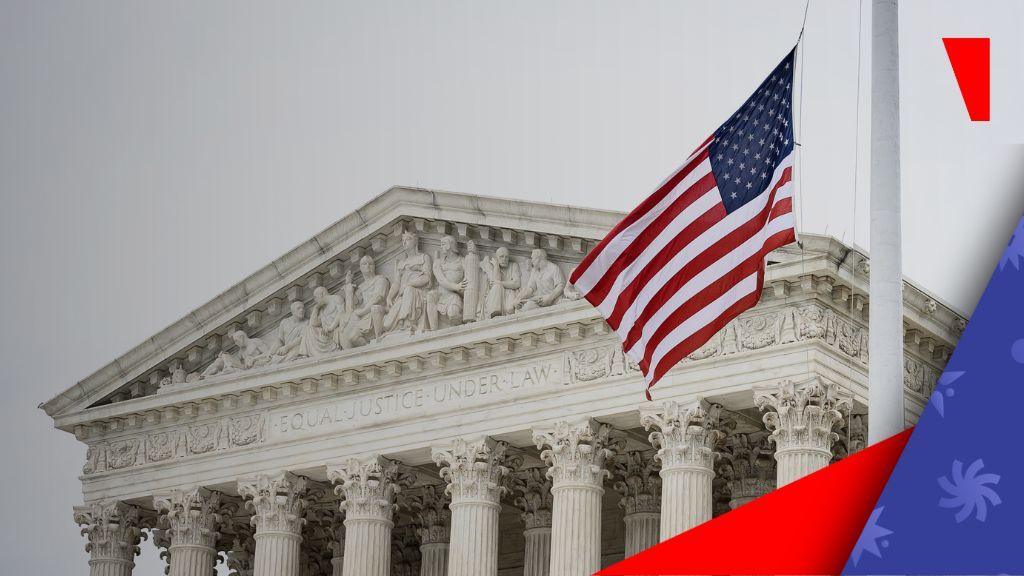 CryptoCrypto.com, Robinhood seek Supreme Court prediction market ruling4 小时前 · 1 min read
Sponsored
Ad
NewsLayerLearn more
NewsLayer Premium
Unlock deeper intelligence.
Ad-free reading, exclusive research, and real-time onchain insights.
Go Premium