
This website uses cookies
We use cookies to personalise content and ads, to provide social media features and to analyse our traffic. We also share information about your use of our site with our social media, advertising and analytics partners who may combine it with other information that you’ve provided to them or that they’ve collected from your use of their services.
Consent Selection
Details
  • Necessary cookies help make a website usable by enabling basic functions like page navigation and access to secure areas of the website. The website cannot function properly without these cookies.
  • Preference cookies enable a website to remember information that changes the way the website behaves or looks, like your preferred language or the region that you are in.
    • We do not use cookies of this type.

  • Statistic cookies help website owners to understand how visitors interact with websites by collecting and reporting information anonymously.
    • We do not use cookies of this type.

  • Marketing cookies are used to track visitors across websites. The intention is to display ads that are relevant and engaging for the individual user and thereby more valuable for publishers and third party advertisers.
    • We do not use cookies of this type.

  • Unclassified cookies are cookies that we are in the process of classifying, together with the providers of individual cookies.
    • __emg_sidPending
      Maximum Storage Duration: 1 dayType: HTTP Cookie
      __emg_vidPending
      Maximum Storage Duration: 1 yearType: HTTP Cookie
      nl-read-countPending
      Maximum Storage Duration: PersistentType: HTML Local Storage
Cookie declaration last updated on 8/12/26 by Cookiebot
[#IABV2_TITLE#]
[#IABV2_BODY_INTRO#]
[#IABV2_BODY_LEGITIMATE_INTEREST_INTRO#]
[#IABV2_BODY_PREFERENCE_INTRO#]
[#IABV2_BODY_PURPOSES_INTRO#]
[#IABV2_BODY_PURPOSES#]
[#IABV2_BODY_FEATURES_INTRO#]
[#IABV2_BODY_FEATURES#]
[#IABV2_BODY_PARTNERS_INTRO#]
[#IABV2_BODY_PARTNERS#]
About
Cookies are small text files that can be used by websites to make a user's experience more efficient.

The law states that we can store cookies on your device if they are strictly necessary for the operation of this site. For all other types of cookies we need your permission.

This site uses different types of cookies. Some cookies are placed by third party services that appear on our pages.

You can at any time change or withdraw your consent from the Cookie Declaration on our website.

Learn more about who we are, how you can contact us and how we process personal data in our Privacy Policy.

Please state your consent ID and date when you contact us regarding your consent.
NewsLayer.com
NewsLayer PulseLIVEBTC$78,417+1.20%ETH$2,491+1.32%SOL$95.15-0.24%XRP$1.5-1.61%DOGE$0.0911-2.72%ADA$0.2216-3.43%Total Cap$2.79T+1.50%Layer Index67 Greed

Researchers Build Parity-Check Circuits For 600-Qubit Error Correction

Constructing efficient circuits for syndrome extraction, a key step in utilising quantum low-density parity-check codes for scalable fault-tolerant computing, previously demanded bespoke designs tailored to individual code families. A…

Quantum Zeitgeist

Publisher

Aug 23, 2026 at 9:21 PM UTC · Updated 14 小时前 · 4 分钟阅读
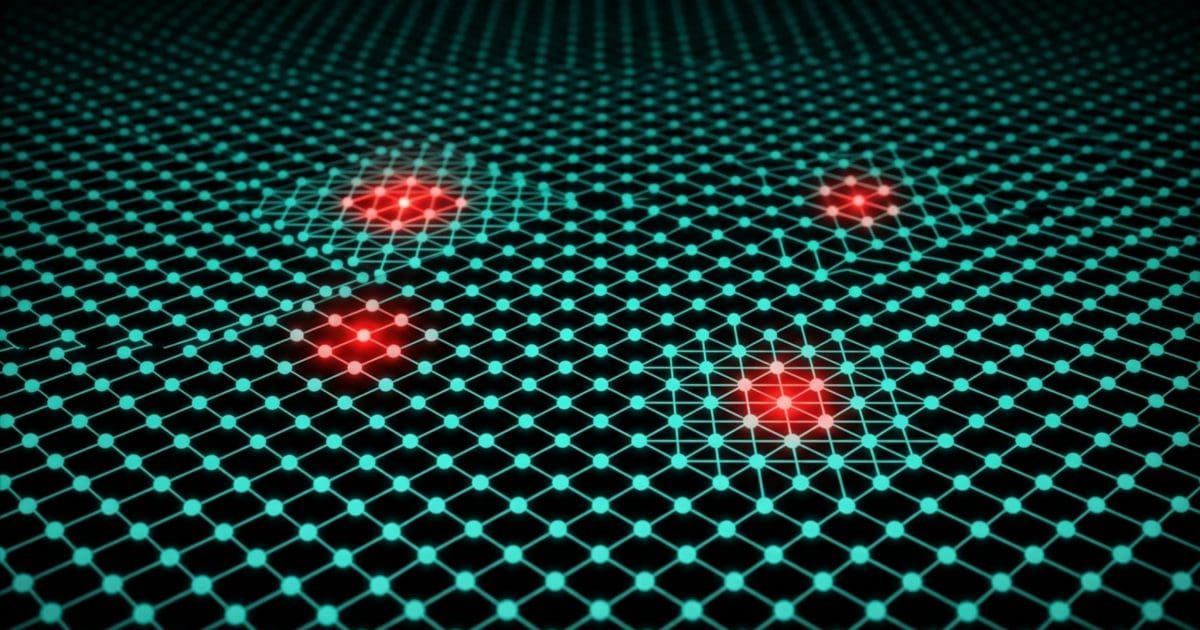
Researchers Build Parity-Check Circuits For 600-Qubit Error Correction
Image via Quantum Zeitgeist

Market Impact

Total MCap+1.50%

Last Updated

14 小时前

翻译中…

Constructing efficient circuits for syndrome extraction, a key step in utilising quantum low-density parity-check codes for scalable fault-tolerant computing, previously demanded bespoke designs tailored to individual code families. A method has been developed that builds these circuits by exploiting inherent symmetries within qLDPC code structures rather than designing them from scratch. The team devised a new technique for designing circuits within quantum computers that utilise quantum low-density parity-check, or qLDPC, codes; this simplifies a previously intricate process.

By recognising repeating patterns inherent in these codes’ structure, designs were created without needing to individually tailor solutions for different code types. This approach demonstrably optimises circuit construction allowing systems with nearly 600 data qubits to be handled, a sharp step towards scalable fault-tolerant computation. Delft University of Technology researchers introduced the new method for designing circuits within quantum computers utilising quantum low-density parity-check, or qLDPC, codes; these are error correction techniques similar to how redundant data on CDs or hard drives recovers information if damaged.

Market Context

Total Market Cap$2.79T+1.50%
24H Volume$190.0B
BTC Dominance56.8%

Updated 7 分钟前

View All Markets

Article Intelligence

Sponsored

Ad
House — Advertise on NewsLayer
NewsLayerLearn more

NewsLayer Premium

Unlock deeper intelligence.

Ad-free reading, exclusive research, and real-time onchain insights.

Go Premium
