

Quantum computers may one day tackle problems that overwhelm conventional machines, but getting enough quantum bits to work together remains a major challenge.
Scientists achieve 13-qubit genuine entanglement without destroying their photons
Quantum computers may one day tackle problems that overwhelm conventional machines, but getting enough quantum bits to work together remains a major challenge.
Interesting Engineering
Publisher
Oct 10, 2026 at 1:27 PM UTC · 3 分钟阅读
翻译中…
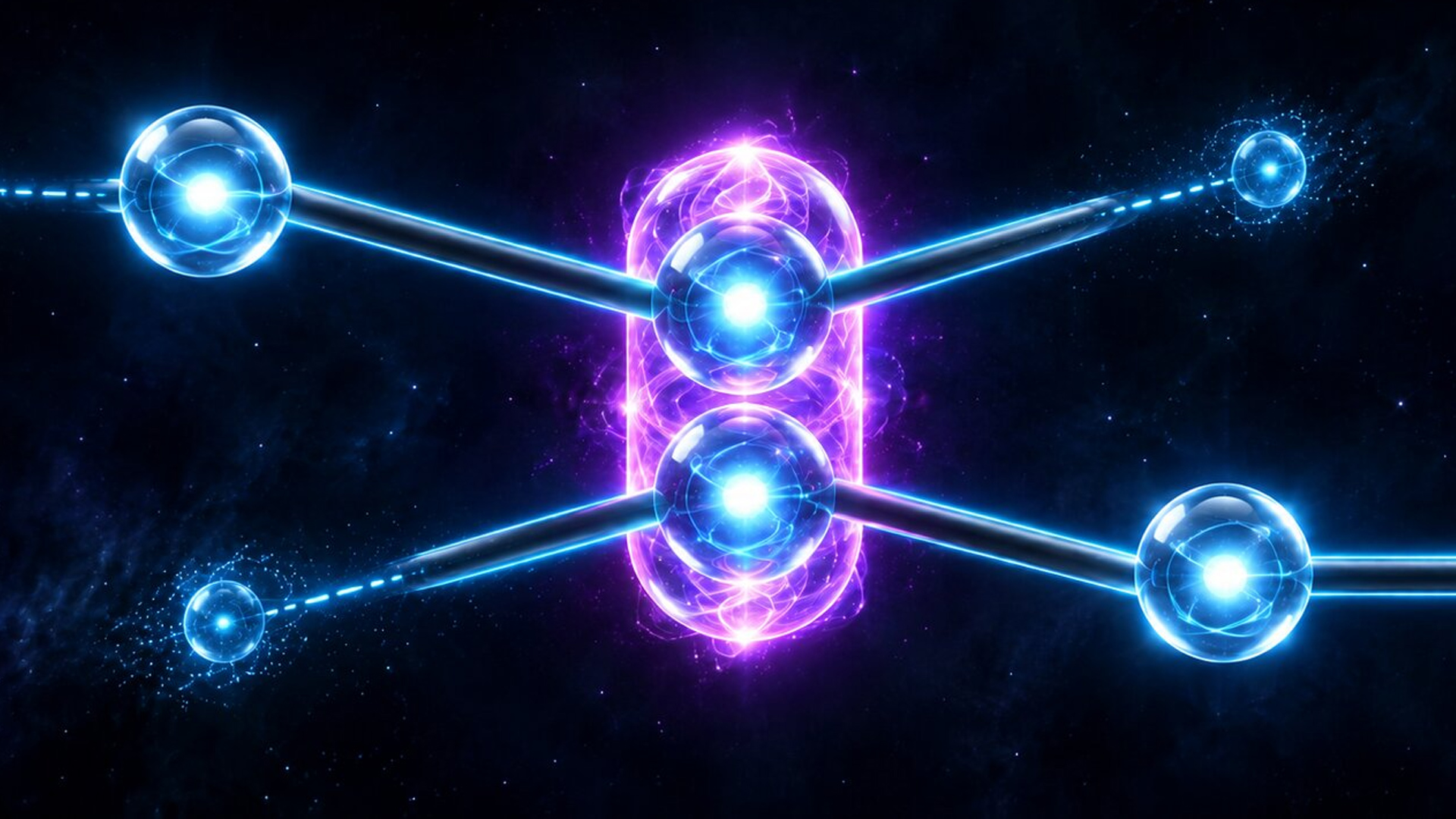
Now, in a new study, a team of Chinese researchers has demonstrated a way to join smaller groups of entangled microwave photons into larger, programmable quantum networks without destroying the photons during the connection process.
They showed genuine entanglement across 13 photonic qubits, offering a potential route toward more scalable quantum computing and communication systems. The challenge lies in making these connections reliably. Quantum bits, or qubits, can be linked through entanglement, a quantum phenomenon in which their shared state cannot be described independently.
Scientists can arrange these connections into structures called graph states, which act as resources for quantum computing and communication.
“Large photonic graph states are important resources for quantum communication, quantum networks and measurement-based quantum computing,” Hongyi Zhang, senior study author and a quantum researcher at Tsinghua University, told Phys.org.
One way to link smaller entangled states is through a process called fusion, which joins them to form a larger state. However, conventional fusion methods used in linear-optical systems often work probabilistically, meaning some attempts fail. Repeated attempts and additional hardware can make building larger states increasingly demanding.
Article Intelligence
Topics
Sponsored
Ad
NewsLayerLearn more
NewsLayer Premium
Unlock deeper intelligence.
Ad-free reading, exclusive research, and real-time onchain insights.
Go Premium