
This website uses cookies
We use cookies to personalise content and ads, to provide social media features and to analyse our traffic. We also share information about your use of our site with our social media, advertising and analytics partners who may combine it with other information that you’ve provided to them or that they’ve collected from your use of their services.
Consent Selection
Details
  • Necessary cookies help make a website usable by enabling basic functions like page navigation and access to secure areas of the website. The website cannot function properly without these cookies.
  • Preference cookies enable a website to remember information that changes the way the website behaves or looks, like your preferred language or the region that you are in.
    • We do not use cookies of this type.

  • Statistic cookies help website owners to understand how visitors interact with websites by collecting and reporting information anonymously.
    • We do not use cookies of this type.

  • Marketing cookies are used to track visitors across websites. The intention is to display ads that are relevant and engaging for the individual user and thereby more valuable for publishers and third party advertisers.
    • We do not use cookies of this type.

  • Unclassified cookies are cookies that we are in the process of classifying, together with the providers of individual cookies.
    • __emg_sidPending
      Maximum Storage Duration: 1 dayType: HTTP Cookie
      __emg_vidPending
      Maximum Storage Duration: 1 yearType: HTTP Cookie
      nl-read-countPending
      Maximum Storage Duration: PersistentType: HTML Local Storage
Cookie declaration last updated on 8/12/26 by Cookiebot
[#IABV2_TITLE#]
[#IABV2_BODY_INTRO#]
[#IABV2_BODY_LEGITIMATE_INTEREST_INTRO#]
[#IABV2_BODY_PREFERENCE_INTRO#]
[#IABV2_BODY_PURPOSES_INTRO#]
[#IABV2_BODY_PURPOSES#]
[#IABV2_BODY_FEATURES_INTRO#]
[#IABV2_BODY_FEATURES#]
[#IABV2_BODY_PARTNERS_INTRO#]
[#IABV2_BODY_PARTNERS#]
About
Cookies are small text files that can be used by websites to make a user's experience more efficient.

The law states that we can store cookies on your device if they are strictly necessary for the operation of this site. For all other types of cookies we need your permission.

This site uses different types of cookies. Some cookies are placed by third party services that appear on our pages.

You can at any time change or withdraw your consent from the Cookie Declaration on our website.

Learn more about who we are, how you can contact us and how we process personal data in our Privacy Policy.

Please state your consent ID and date when you contact us regarding your consent.
NewsLayer

Install NewsLayer

Get the app experience — one tap from your home screen, instant loads and breaking-news alerts.

NewsLayer.com

Understanding SEC’s crypto guidance

发布于 3 天前 3 分钟阅读
Understanding SEC’s crypto guidance

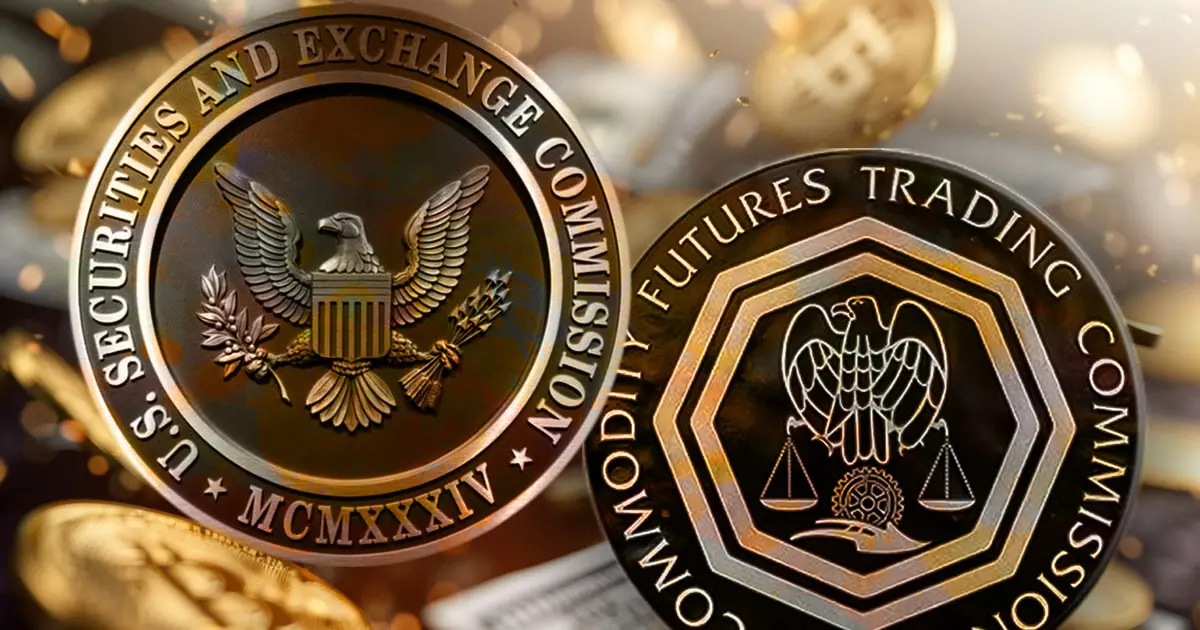
An AZ Big Media article titled “Understanding SEC’s crypto guidance” examines guidance from the U.S. Securities and Exchange Commission related to cryptocurrency. The provided excerpt does not include details on the specific guidance, assets, or regulatory implications discussed.

要点速览

  • 01 The article focuses on SEC guidance concerning cryptocurrency.
  • 02 The story is published by AZ Big Media.
  • 03 No specific SEC rules, deadlines, or enforcement actions are included in the provided excerpt.

What the SEC’s latest interpretation means for businesses, investors and crypto assets

In March 2026, the Securities and Exchange Commission (SEC) issued an interpretation clarifying when and how federal securities laws apply to crypto assets and related transactions. Before the SEC’s release, guidance tailored to the unique features of the crypto market was murky at best. Even with greater clarity about how federal laws apply to different types of digital tokens, businesses and investors should fully understand their differentiators. Failing to do so can complicate compliance efforts, impact investment decisions and lead to serious legal and financial ramifications.

Five digital token categories every business leader and investor should understand

Guillaume J. Aimé is a shareholder at Gallagher & Kennedy in Phoenix.

One of the SEC’s most important takeaways is that not all crypto assets are treated the same way. Each has its own individual characteristics, uses and functions. This new roadmap lists five crypto asset categories to determine which are considered securities or nonsecurities, including digital commodities, digital collectibles, digital tools, stablecoins, and digital securities.

Here’s where and how federal securities laws apply to the five classifications of crypto assets, and how the SEC defines them:

Digital commodities (not securities): For a crypto asset to be a digital commodity, it must be used as part of the blockchain’s consensus mechanism, or it must convey governance rights over technical or governance matters to the crypto asset holders.

Digital collectibles (typically not securities): Digital collectibles examples include digital artwork, music, video clips, trading cards, in-game items, or tokenized representations of memes, characters and cultural moments. Owning a digital collectible typically isn’t considered a security unless it’s fractionalized into tradable shares and/or marketed as a profit-generating opportunity.

Digital tools (not securities): These crypto assets perform a practical function, such as a membership, ticket, credential, title instrument or identity badge. Digital tools are not usually securities and include Ethereum Name Service (ENS) domain names, attestations (witnessing, verifying and officially confirming the authenticity of a document, signature or statement) and event tickets.

Stablecoins (likely not securities but can be): Stablecoins are designed to maintain a stable value, often tied to an asset like the U.S. dollar. If marketed and sold as an investment with the expectation of earning profits, stablecoins could fall under SEC regulation.

Digital securities (considered “Tokenized securities”): Traditional financial assets such as stocks or bonds can be represented as digital tokens on a blockchain. This process is referred to as tokenization. It’s important to note that changing the format of a security doesn’t alter what it is. If a token represents ownership of a traditional security or is marketed as an investment — buyers anticipate profits based on the efforts of others — it remains subject to federal securities laws.

The SEC’s interpretation of digital tokens may better explain how federal securities laws apply to crypto assets and related transactions, but distinguishing between securities and nonsecurities (or somewhere in between) remains highly nuanced. Additionally, business leaders and investors should recognize that the SEC is still considering public feedback in response to the interpretation release. Because of this, seeking legal guidance is imperative to ensure compliance with evolving federal securities laws.


Author: Guillaume J. Aimé is a shareholder at Gallagher & Kennedy in Phoenix. He advises companies of all sizes across diverse industries in securities and business transactions, including public and private offerings, SEC reporting, and mergers and acquisitions. Aimé also advises companies and venture capital firms in VC funding and helps companies with their corporate governance, entity formation, and commercial contracts.

Attribution

Originally reported by AZ Big Media

Reader Poll

Will SEC crypto guidance lead to new enforcement actions in the near term?

快速问答

What is the article about?

The article is about understanding cryptocurrency-related guidance from the U.S. Securities and Exchange Commission.

Who published “Understanding SEC’s crypto guidance”?

The provided excerpt identifies AZ Big Media as the publisher.

Does the excerpt specify what SEC crypto guidance is covered?

No. The provided excerpt does not identify specific SEC guidance, rules, or affected crypto assets.

Get stories like this, daily.

Daily crypto + regulation intelligence, straight to your inbox. Free.

相关报道