
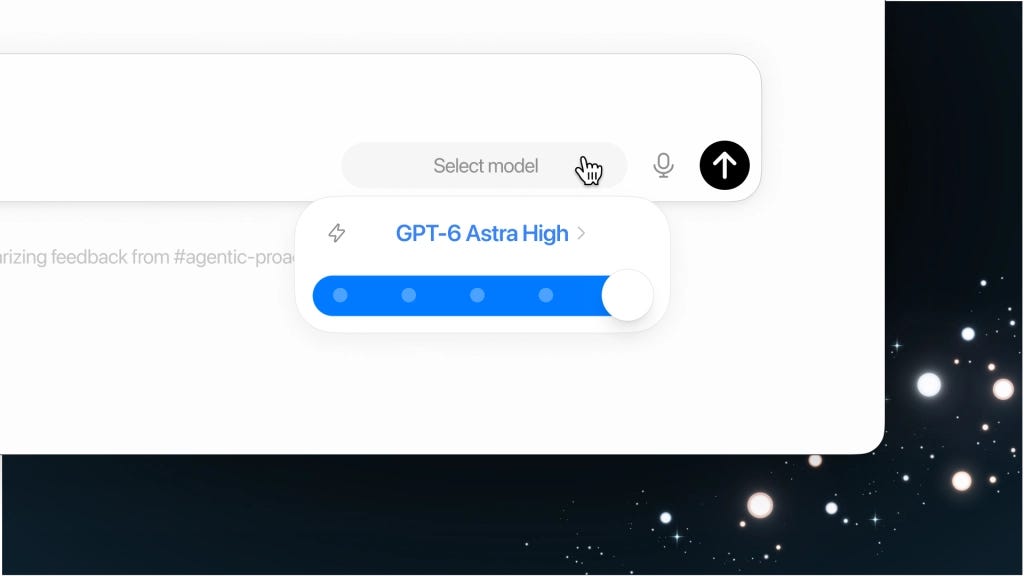
“Welcome to the era of artificial general intelligence.” The phrase had seemingly fallen out of favor—Sam Altman himself recently dismissed it as a “marketing term with no real relevance.” Yet it has now been thrust back into the spotlight by Greg Brockman, OpenAI’s president, at the launch of GPT-6 Astra, the new generation of large language model powering ChatGPT.
With Astra, OpenAI tries to reclaim the AI throne
“Welcome to the era of artificial general intelligence.” The phrase had seemingly fallen out of favor—Sam Altman himself recently dismissed it as a “marketing term with no real relevance.” Yet it has now been thrust back into the…
Substack
Publisher
Sep 8, 2026 at 12:31 PM UTC · 3 分钟阅读
翻译中…
According to Brockman, Astra is capable of matching — or even surpassing — humans at any cognitive task. OpenAI itself is considerably more cautious, describing it simply as the “smartest model ever created.”
Whatever the terminology, Astra’s launch is intended to mark OpenAI’s return to prominence after months of turmoil and uncertainty. Challenged by Google and, above all, Anthropic, the generative AI pioneer declared a “code red” in late 2025 to reclaim its technological and commercial leadership.
Those efforts are beginning to pay off. In the benchmark race, the performance gap with competitors has reversed. And the growth of OpenAI’s enterprise revenue has once again surpassed Anthropic’s, according to an analysis of transactions conducted by Ramp, a financial platform for businesses.
Astra arrives just over a year after the low-key release of GPT-5, which was criticized for delivering gains that were considered relatively modest. This new version, by contrast, represents a “generational leap,” Greg Brockman says.
Article Intelligence
Topics
Sponsored
Ad
NewsLayerLearn more
NewsLayer Premium
Unlock deeper intelligence.
Ad-free reading, exclusive research, and real-time onchain insights.
Go Premium