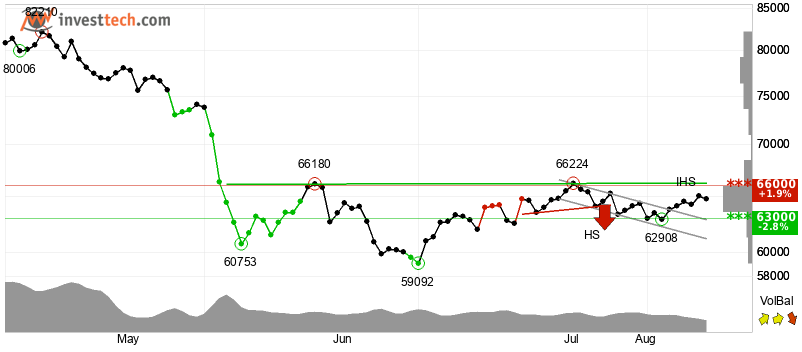
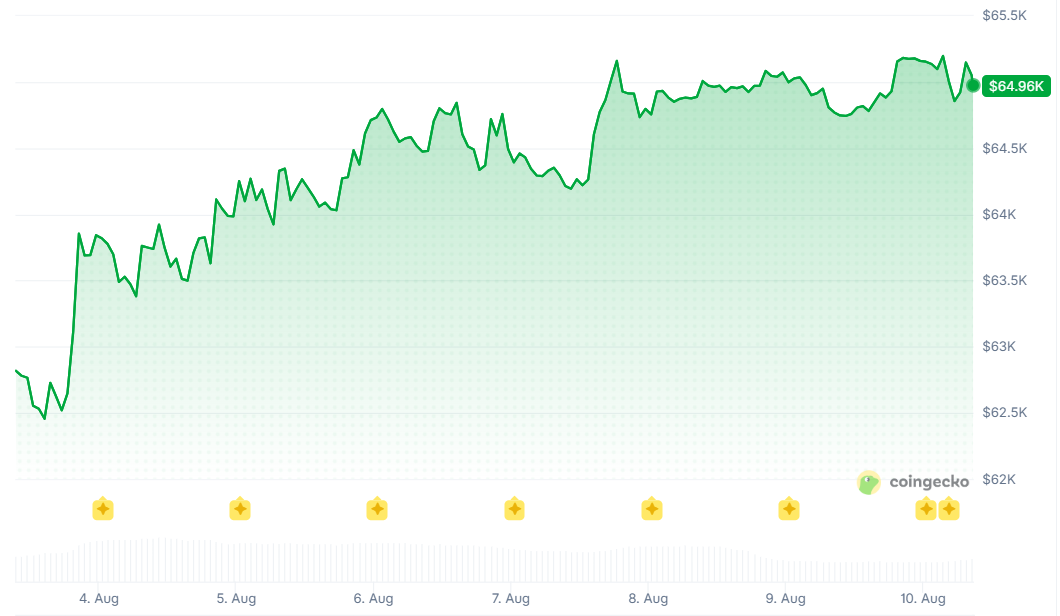
The total crypto market has barely moved this week — up 0.31% to $2.21 trillion, with Bitcoin pinned between $64,730 and $65,193, according to CoinGecko data. Underneath that flatness, three separate signals are pulling in the same direction: capital is starting to rotate out of Bitcoin's shadow, options markets are pricing in far less risk than bond markets are, and speculative leverage in small-cap tokens is at levels that typically precede a broader repricing.
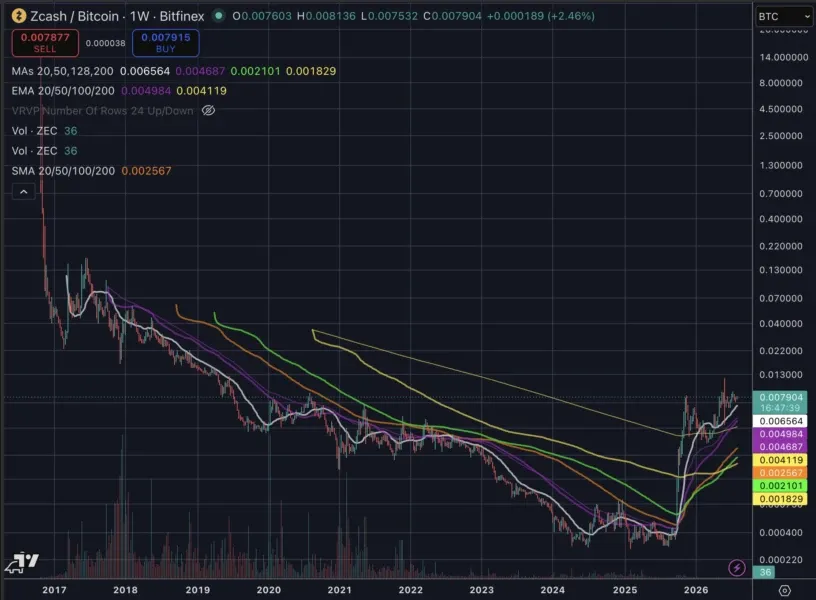
The clearest of the three is technical. The ZEC/BTC pair broke a nine-year downtrend this week, consolidating at 0.007904 BTC — comfortably above its 200-period simple moving average of 0.002567 BTC. Placeholder co-founder Chris Burniske called it evidence that the old pattern, in which short-term Zcash rallies preceded broader altcoin capitulation, no longer applies. Digital Currency Group founder Barry Silbert has floated a further reading: that the pace of inflows into Zcash could push its market cap toward 10% of Bitcoin's, a roughly $130 billion benchmark, if the current move sustains. Burniske has cautioned that Bitcoin still sets the market's overall liquidity conditions, meaning any Zcash-led rotation remains vulnerable to a Bitcoin-driven correction.
That caution matters more given what's happening in Bitcoin's own options market. Bitwise's head of alpha strategies, Jeff Park, wrote on X on Aug. 8 that Bitcoin's implied volatility has hit a year-to-date low at the same time Treasury yields have climbed to a year-to-date high — a divergence he said "can only end one way." The logic is straightforward: bond markets are pricing in more macro stress, but Bitcoin options traders are pricing in less price movement than at any other point in 2026. Compressed volatility of this kind has historically preceded sharp breakouts rather than sustained calm, though the direction of that break is not something implied volatility alone can predict.