This website uses cookies
We use cookies to personalise content and ads, to provide social media features and to analyse our traffic. We also share information about your use of our site with our social media, advertising and analytics partners who may combine it with other information that you’ve provided to them or that they’ve collected from your use of their services.
Consent Selection
Details
  • Necessary cookies help make a website usable by enabling basic functions like page navigation and access to secure areas of the website. The website cannot function properly without these cookies.
  • Preference cookies enable a website to remember information that changes the way the website behaves or looks, like your preferred language or the region that you are in.
    • We do not use cookies of this type.

  • Statistic cookies help website owners to understand how visitors interact with websites by collecting and reporting information anonymously.
    • We do not use cookies of this type.

  • Marketing cookies are used to track visitors across websites. The intention is to display ads that are relevant and engaging for the individual user and thereby more valuable for publishers and third party advertisers.
    • We do not use cookies of this type.

  • Unclassified cookies are cookies that we are in the process of classifying, together with the providers of individual cookies.
    • __emg_sidPending
      Maximum Storage Duration: 1 dayType: HTTP Cookie
      __emg_vidPending
      Maximum Storage Duration: 1 yearType: HTTP Cookie
      nl-read-countPending
      Maximum Storage Duration: PersistentType: HTML Local Storage
Cookie declaration last updated on 8/12/26 by Cookiebot
[#IABV2_TITLE#]
[#IABV2_BODY_INTRO#]
[#IABV2_BODY_LEGITIMATE_INTEREST_INTRO#]
[#IABV2_BODY_PREFERENCE_INTRO#]
[#IABV2_BODY_PURPOSES_INTRO#]
[#IABV2_BODY_PURPOSES#]
[#IABV2_BODY_FEATURES_INTRO#]
[#IABV2_BODY_FEATURES#]
[#IABV2_BODY_PARTNERS_INTRO#]
[#IABV2_BODY_PARTNERS#]
About
Cookies are small text files that can be used by websites to make a user's experience more efficient.

The law states that we can store cookies on your device if they are strictly necessary for the operation of this site. For all other types of cookies we need your permission.

This site uses different types of cookies. Some cookies are placed by third party services that appear on our pages.

You can at any time change or withdraw your consent from the Cookie Declaration on our website.

Learn more about who we are, how you can contact us and how we process personal data in our Privacy Policy.

Please state your consent ID and date when you contact us regarding your consent.
NewsLayer

Install NewsLayer

Get the app experience — one tap from your home screen, instant loads and breaking-news alerts.

NewsLayer.com
NewsLayer PulseLIVEBTC$64,693+0.50%ETH$1,913+0.25%SOL$77.06+1.61%XRP$1-0.02%DOGE$0.0703-0.02%ADA$0.1741+0.06%Total Cap$2.30T+0.36%Layer Index50 Neutral
External Reporting公開 1時間前

Blockchain Group Asks SCOTUS to Review Fed’s Denial of Crypto Bank’s Bid for Master Account

In an amicus brief supporting Custodia’s petition for Supreme Court review, the cryptocurrency industry trade group argued that the 10th U.S. Circuit Court of Appeals went too far when it ruled that Federal Reserve banks have discretion…

Blockchain Group Asks SCOTUS to Review Fed’s Denial of Crypto Bank’s Bid for Master Account
Publisher PYMNTS.com 3 分で読める
Image via PYMNTS.com
翻訳中…

Regulation Context

Track live crypto policy developments across jurisdictions.

Layer Index

50

↑ 6 pts in 24h

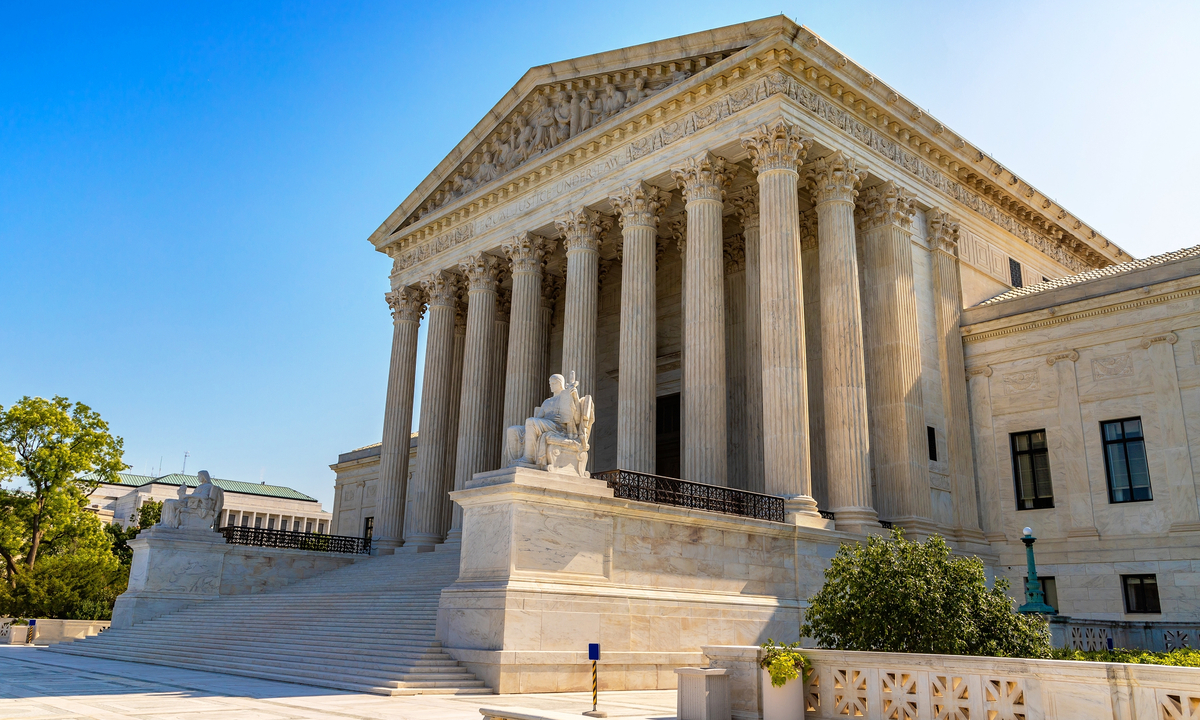
In an amicus brief supporting Custodia’s petition for Supreme Court review, the cryptocurrency industry trade group argued that the 10th U.S. Circuit Court of Appeals went too far when it ruled that Federal Reserve banks have discretion to deny master accounts even to institutions legally eligible for them.

“The decision ratifies the Fed’s misuse of its payment services to further an impermissible policy goal—debanking the digital asset industry,” the association said.

It warned that the ruling could give the Fed “veto power over chartering judgments by state regulators.”

Custodia, a Wyoming-chartered special-purpose depository institution focused on digital assets, has spent years seeking a Fed master account. Such accounts allow banks to settle payments directly through the central bank rather than relying on an intermediary institution. Custodia provides digital asset custody, payments and settlement infrastructure, and stablecoin-related products to institutional clients.

The Kansas City Fed rejected Custodia’s application after determining that its crypto-focused business model posed undue risks to the banking system. In October 2025, a divided 10th Circuit panel upheld that decision, concluding that eligibility for a master account does not create an entitlement to one.

“We conclude the plain language of the relevant statutes grants Federal Reserve Banks discretion to reject master account access requests from eligible entities,” Judge David Ebel wrote for the 2-1 majority.

The court said accepting Custodia’s position would impair the Fed’s ability to protect the financial system.

The Blockchain Association is now asking the Supreme Court to embrace the reasoning of dissenting Judge Timothy Tymkovich, who said federal law provides that Fed payment services “shall” be available to eligible nonmember depository institutions. The association contended that language imposes a command on the Fed rather than leaving access entirely to its discretion.

However, the brief framed the case as involving more than statutory interpretation. The association said allowing the Fed to deny payment-system access to state-chartered banks undermines the traditional dual banking system by enabling federal regulators to effectively override decisions by state banking authorities.

“Whether federal regulators, based on their own discretionary whims, can intrude on state prerogatives and debank lawful businesses is a question of exceptional importance with broad consequences for the national economy,” the brief said.

The association also placed Custodia’s experience within what the crypto industry has labeled “Operation Choke Point 2.0,” alleging that federal banking agencies under the previous administration used supervisory pressure to discourage regulated banks from serving digital asset businesses. It said the Custodia ruling could extend similar leverage to state-chartered institutions by making access to the Fed’s payment infrastructure discretionary.

That argument gives the case potentially broader implications beyond crypto. According to the association, the 10th Circuit’s approach “provides a blueprint for federal regulators to debank disfavored industries or companies in the future without interference from state regulators.”

The regulatory backdrop has shifted since the 10th Circuit ruling. Fed officials were already considering specialized “skinny” master accounts that could provide more limited payment system access to crypto and other innovation-focused institutions.

The Blockchain Association said such policy changes do not resolve the underlying legal issue of whether access ultimately remains subject to the Fed’s discretion. The Supreme Court has not agreed to hear Custodia’s case. If it does, the dispute could determine not only the future of crypto banks’ access to Fed infrastructure, but the balance of power between state banking charters and federal control over the nation’s payment rails.

速報

速報を見逃さない

Advertisement

House — Advertise on NewsLayer
NewsLayerAd

Sourced by

Originally reported by PYMNTS.com

NewsLayer coverage based on externally reported material.

The Daily Brief

The onchain economy, before your day starts.

Curated markets, onchain insights, and key headlines — delivered every weekday morning.

Weekdays · Free · ~5 minute read

関連記事