This website uses cookies
We use cookies to personalise content and ads, to provide social media features and to analyse our traffic. We also share information about your use of our site with our social media, advertising and analytics partners who may combine it with other information that you’ve provided to them or that they’ve collected from your use of their services.
Consent Selection
Details
  • Necessary cookies help make a website usable by enabling basic functions like page navigation and access to secure areas of the website. The website cannot function properly without these cookies.
  • Preference cookies enable a website to remember information that changes the way the website behaves or looks, like your preferred language or the region that you are in.
    • We do not use cookies of this type.

  • Statistic cookies help website owners to understand how visitors interact with websites by collecting and reporting information anonymously.
    • We do not use cookies of this type.

  • Marketing cookies are used to track visitors across websites. The intention is to display ads that are relevant and engaging for the individual user and thereby more valuable for publishers and third party advertisers.
    • We do not use cookies of this type.

  • Unclassified cookies are cookies that we are in the process of classifying, together with the providers of individual cookies.
    • __emg_sidPending
      Maximum Storage Duration: 1 dayType: HTTP Cookie
      __emg_vidPending
      Maximum Storage Duration: 1 yearType: HTTP Cookie
      nl-read-countPending
      Maximum Storage Duration: PersistentType: HTML Local Storage
Cookie declaration last updated on 8/12/26 by Cookiebot
[#IABV2_TITLE#]
[#IABV2_BODY_INTRO#]
[#IABV2_BODY_LEGITIMATE_INTEREST_INTRO#]
[#IABV2_BODY_PREFERENCE_INTRO#]
[#IABV2_BODY_PURPOSES_INTRO#]
[#IABV2_BODY_PURPOSES#]
[#IABV2_BODY_FEATURES_INTRO#]
[#IABV2_BODY_FEATURES#]
[#IABV2_BODY_PARTNERS_INTRO#]
[#IABV2_BODY_PARTNERS#]
About
Cookies are small text files that can be used by websites to make a user's experience more efficient.

The law states that we can store cookies on your device if they are strictly necessary for the operation of this site. For all other types of cookies we need your permission.

This site uses different types of cookies. Some cookies are placed by third party services that appear on our pages.

You can at any time change or withdraw your consent from the Cookie Declaration on our website.

Learn more about who we are, how you can contact us and how we process personal data in our Privacy Policy.

Please state your consent ID and date when you contact us regarding your consent.
NewsLayer

Install NewsLayer

Get the app experience — one tap from your home screen, instant loads and breaking-news alerts.

NewsLayer.com

Bluefors Dilution Refrigerator Market Expands With Quantum Computer Scaling

The Bluefors dilution refrigerator market is expanding alongside the scaling of quantum computers. The growth reflects rising demand for ultra-low-temperature systems used in quantum computing development.

quantumzeitgeist.com

Publisher

Aug 17, 2026 at 7:33 PM UTC · Updated 3日前 · 2 分で読める

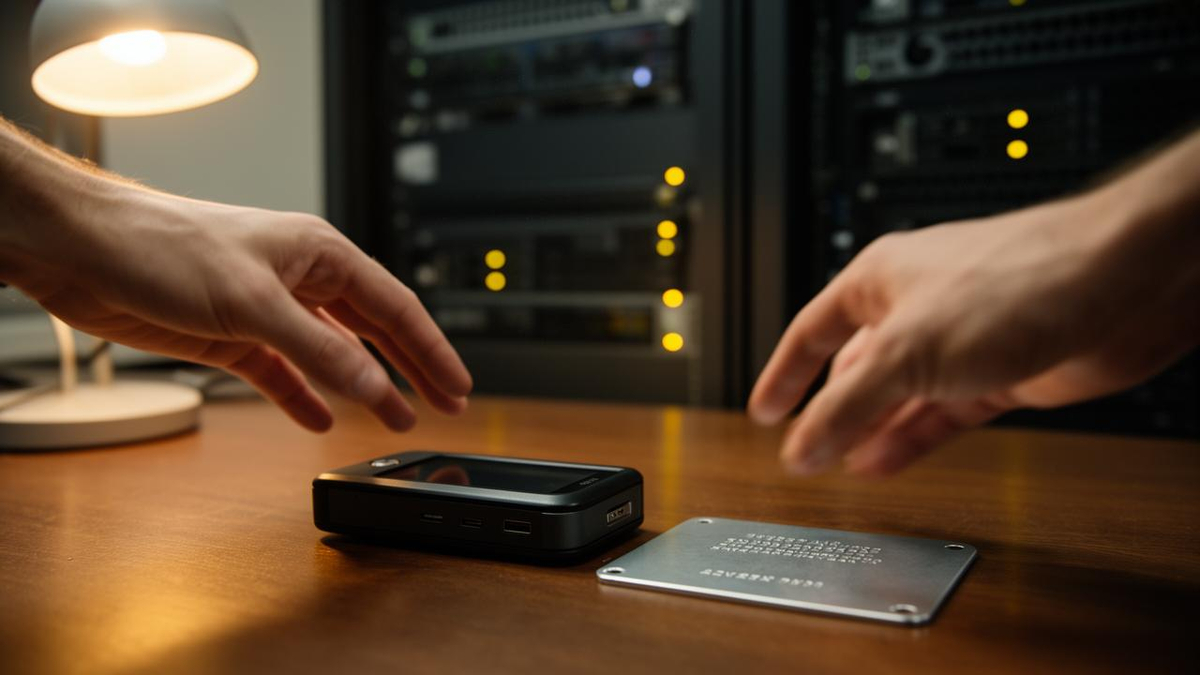
Bluefors Dilution Refrigerator Market Expands With Quantum Computer Scaling
Image via quantumzeitgeist.com
翻訳中…

Quantum computers aiming for 1,000 qubits will demand between 3,000 and 5,000 individual cryogenic connections, creating a significant challenge and spurring innovation in how signals reach quantum processors. Superconducting quantum computers from companies like IBM, Google, and Rigetti rely on operating temperatures below 10 millikelvin, establishing a critical dependence on dilution refrigerators and their associated cryogenic infrastructure. A new market study details these growth trends, analyzing technologies and companies involved in supplying cryogenic solutions for quantum computing through 2036. The report provides intelligence for those evaluating opportunities in this rapidly expanding segment of quantum technology.

Demand for dilution refrigerators is increasing alongside the ambitious scaling plans of superconducting quantum computer developers. This dependence extends beyond simply achieving low temperatures; it also encompasses maintaining the integrity of the quantum states within these processors. This is not just a logistical hurdle, but a catalyst for innovation in high-density cryogenic interconnects and integrated assemblies. Researchers are actively exploring alternative control architectures, including cryogenic CMOS and Single Flux Quantum electronics, to manage this increasing complexity and minimize signal degradation.

Article Intelligence

Sponsored

Ad
House — Advertise on NewsLayer
NewsLayerLearn more

NewsLayer Premium

Unlock deeper intelligence.

Ad-free reading, exclusive research, and real-time onchain insights.

Go Premium