Original Author: Glassnode
Original Translation: AididiaoJP, Foresight News
The Trigger Has Been Pulled
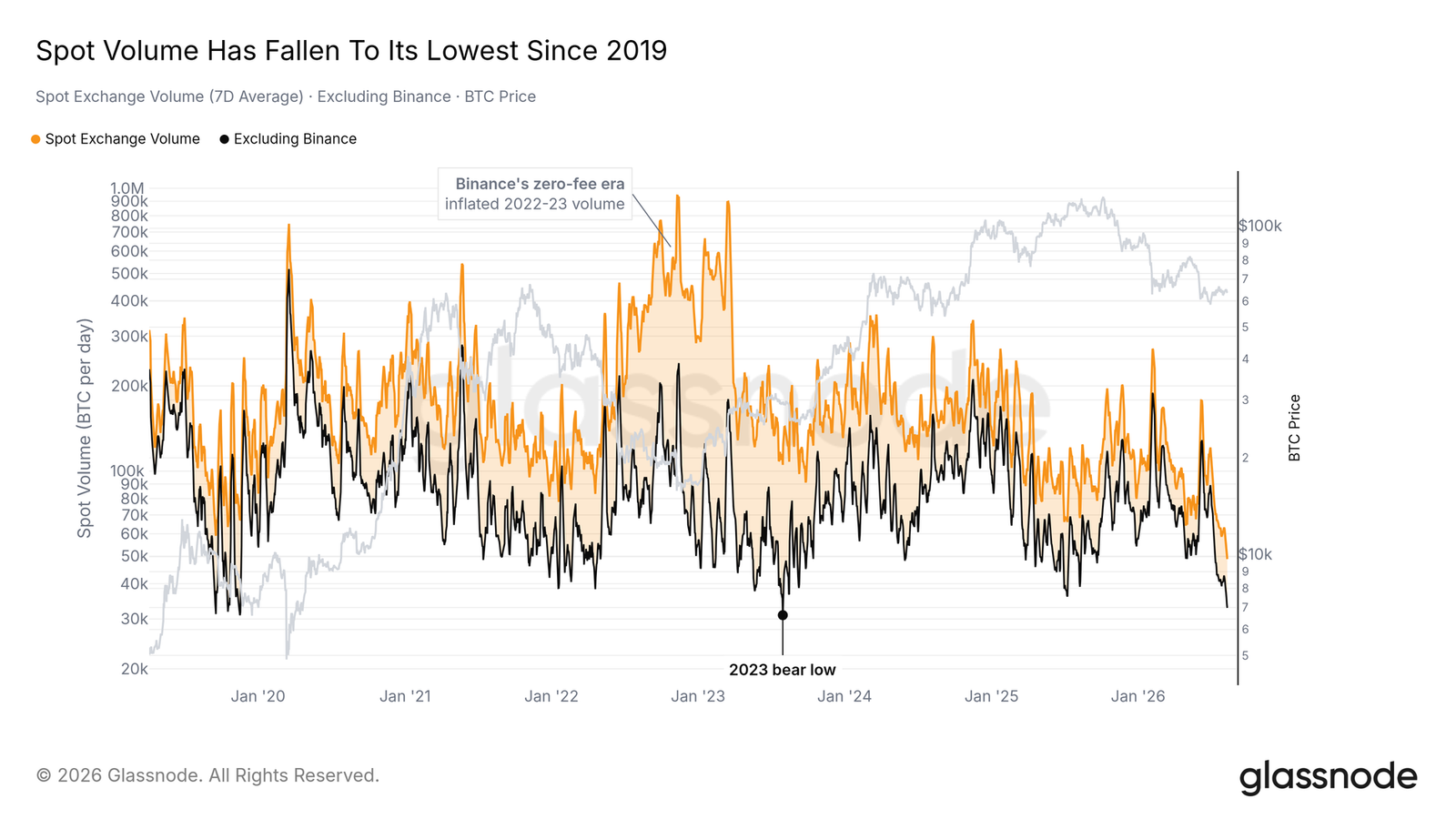
Bitcoin is caught between two cost bases, unable to move. Spot trading volume has fallen to its lowest level since 2019. Sellers are exhausting, buyers are waiting on the sidelines, but leveraged capital has already pulled the recovery trigger — the data just hasn't caught up yet.
Key Takeaways
- July core CPI fell to 2.5%, U.S. stocks hit new highs, yet Bitcoin weakened against the trend. Being indifferent to positive news is itself a warning.
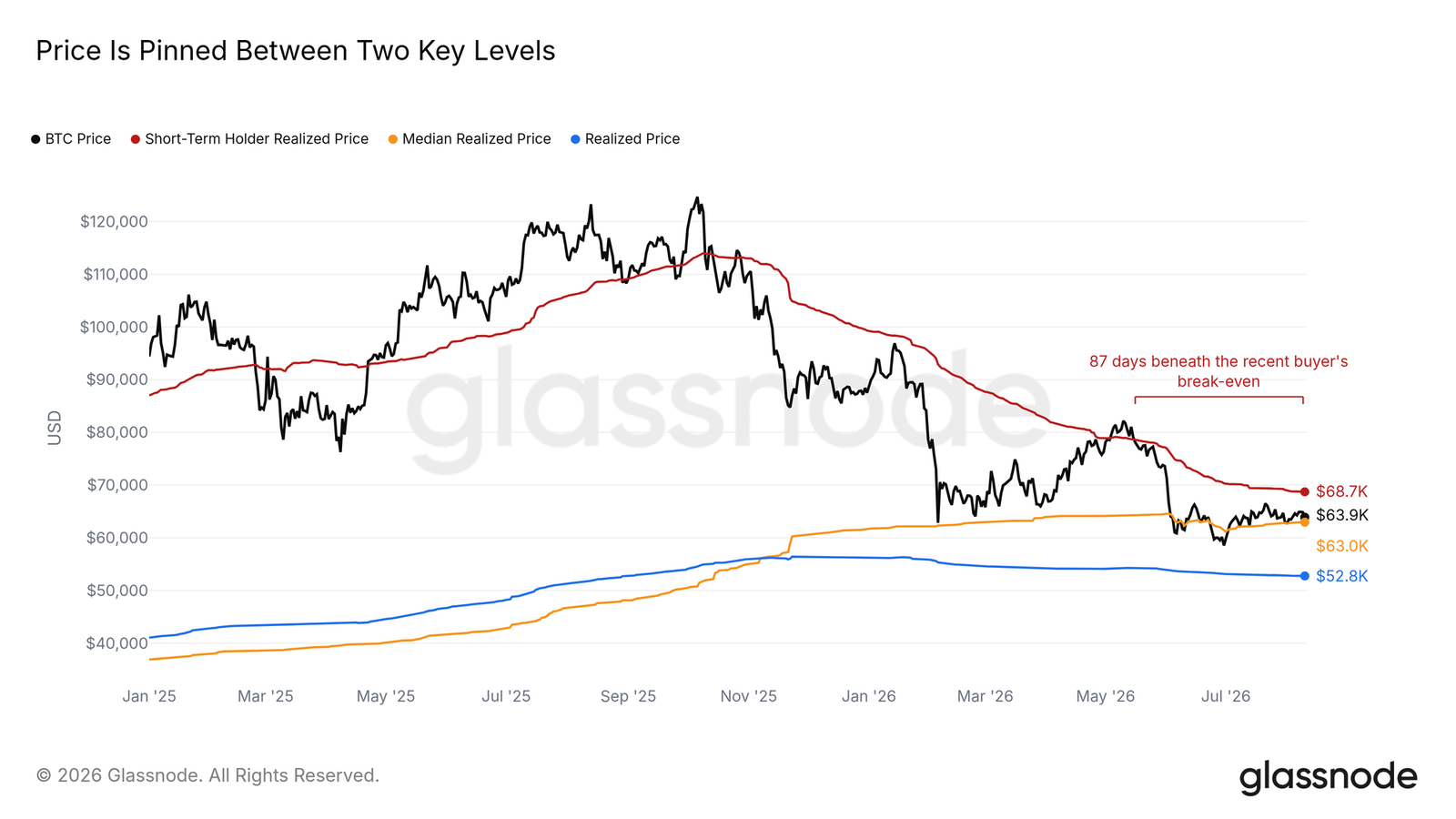
- Price is trapped between $63,000 (median realized price) and $68,700 (short-term holder cost basis), with spot trading volume at its lowest since 2019.
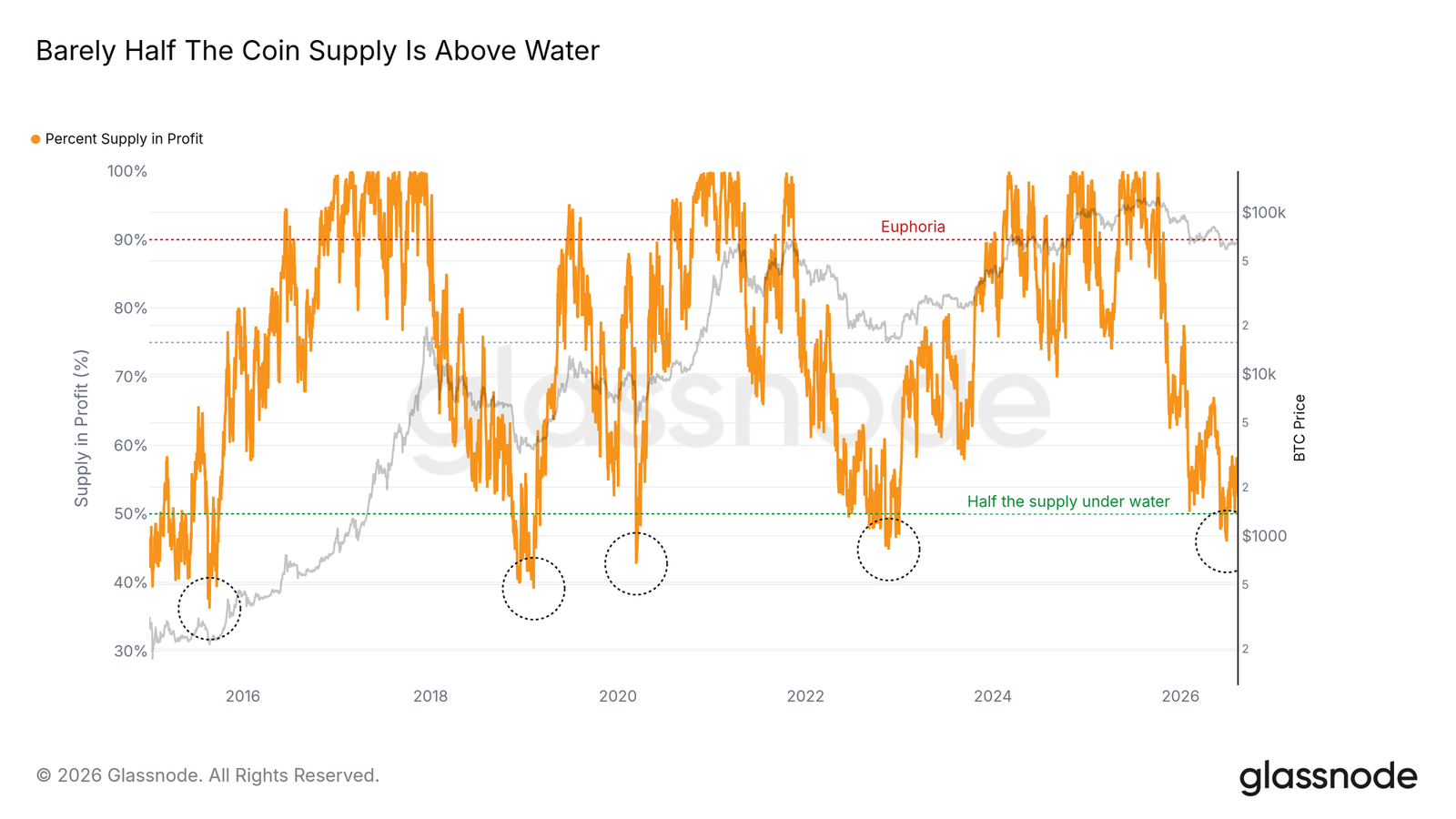
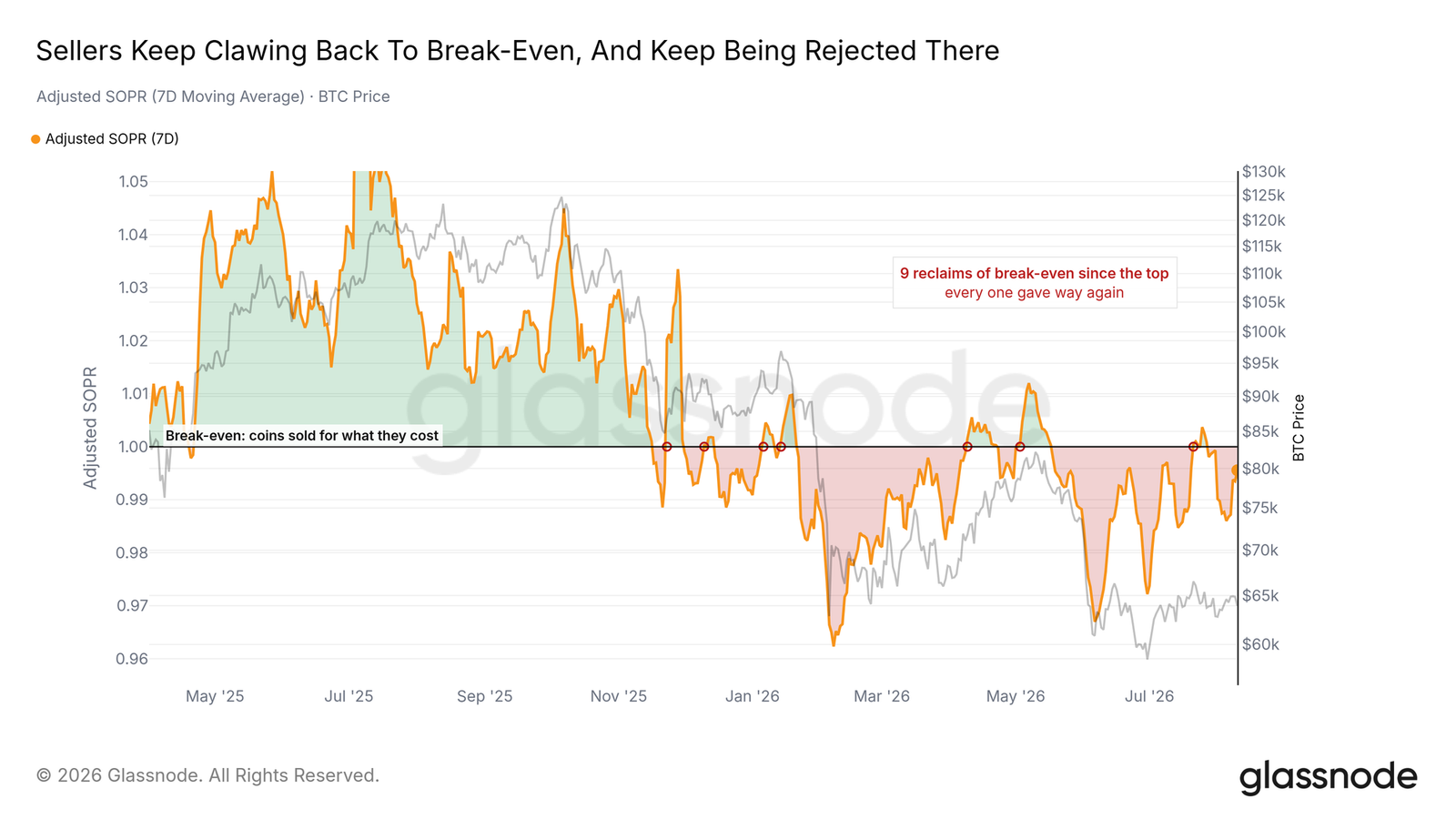
- Sellers are trending toward exhaustion: the proportion of supply in profit is approaching historical bear market bottom territory, and the breakeven line has rejected rebounds nine times.
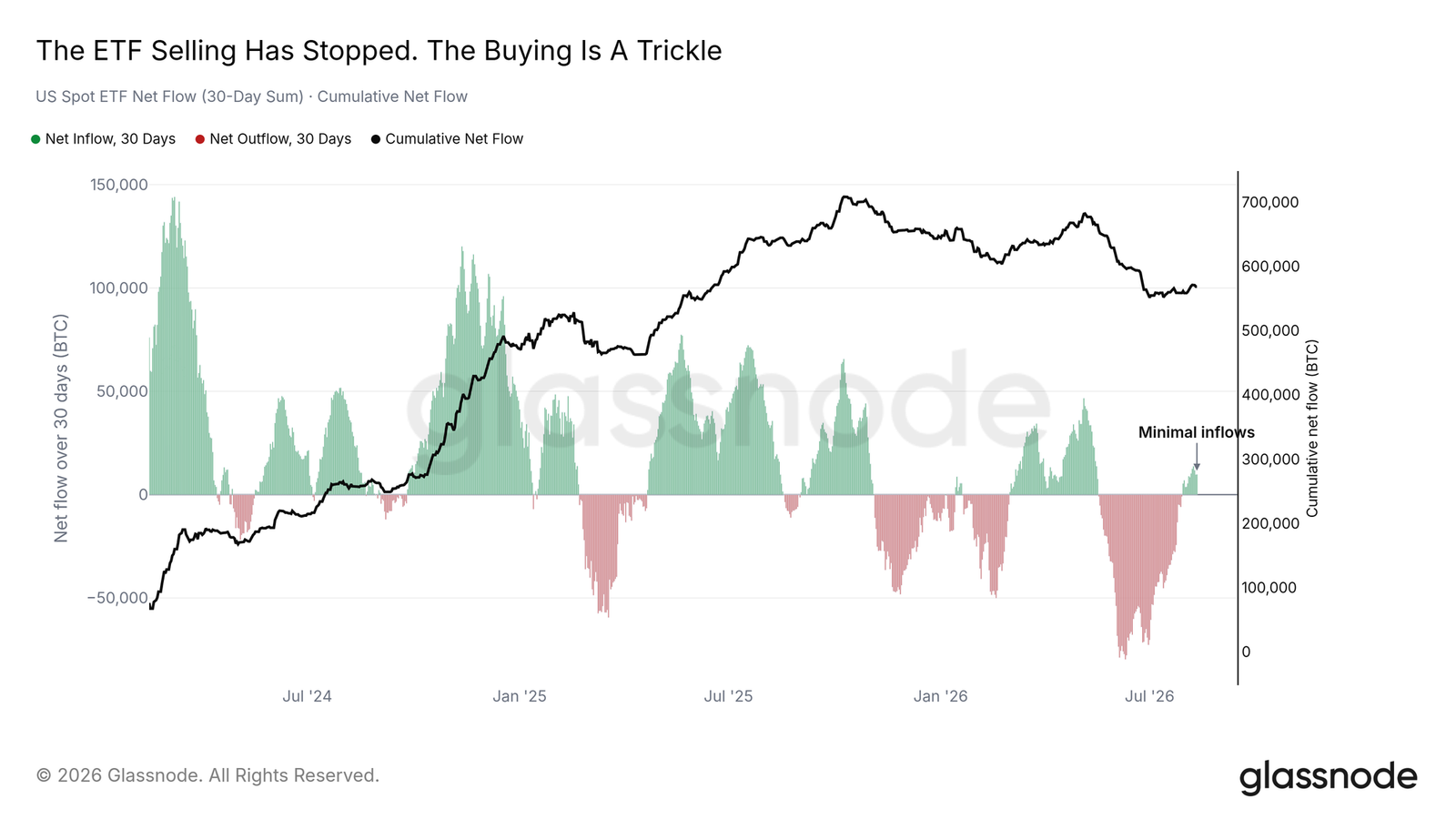
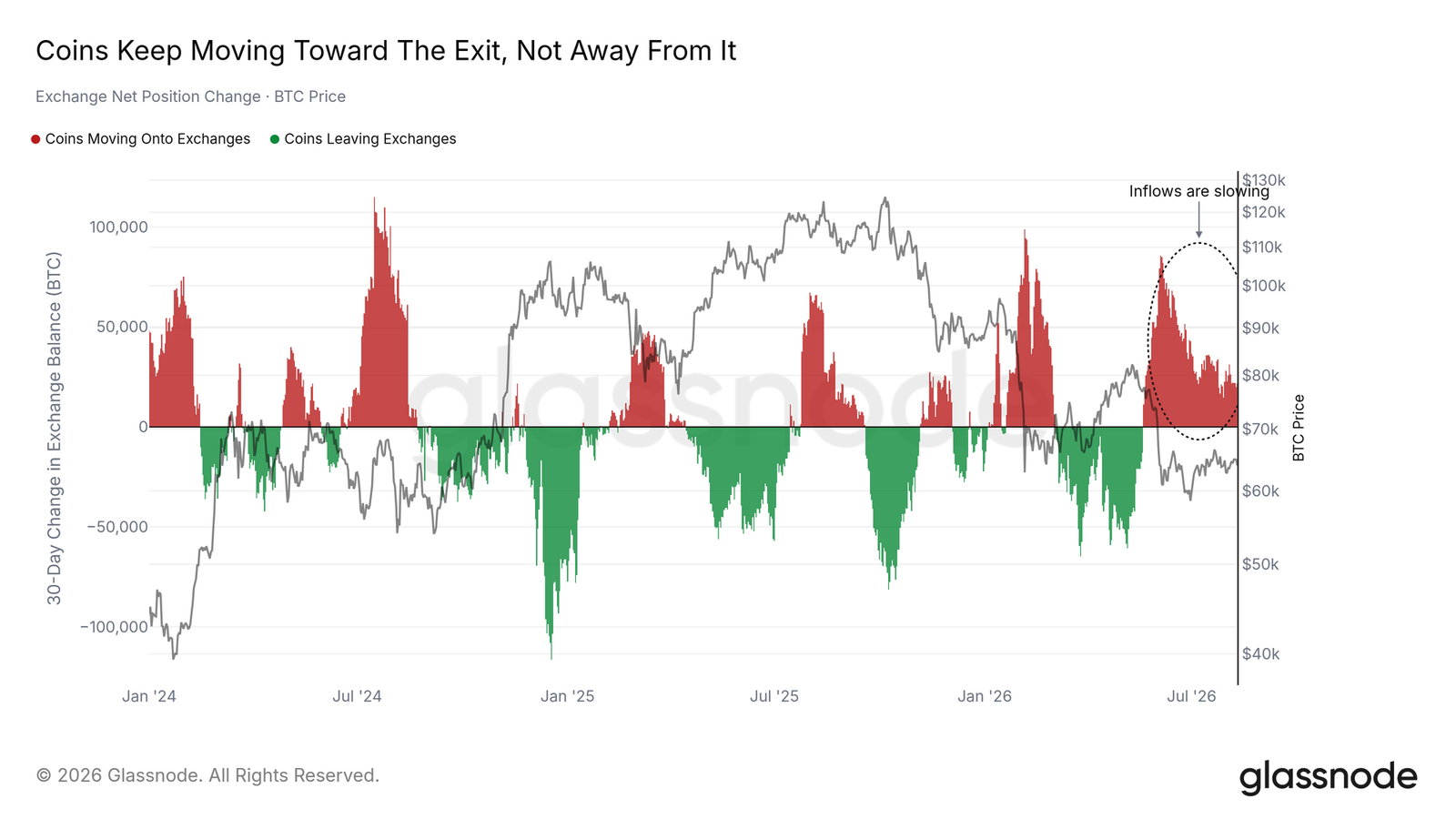
- Buyers remain absent: ETF inflows are negligible, and coins continue to flow into exchanges.
- Leveraged capital is excessively long on top of razor-thin buy-side liquidity. Resistance above is at $68,700, support below is at $58,500.
Good News Keeps Coming, the Market Isn't Buying It
Cooling Inflation, Cold Market Response
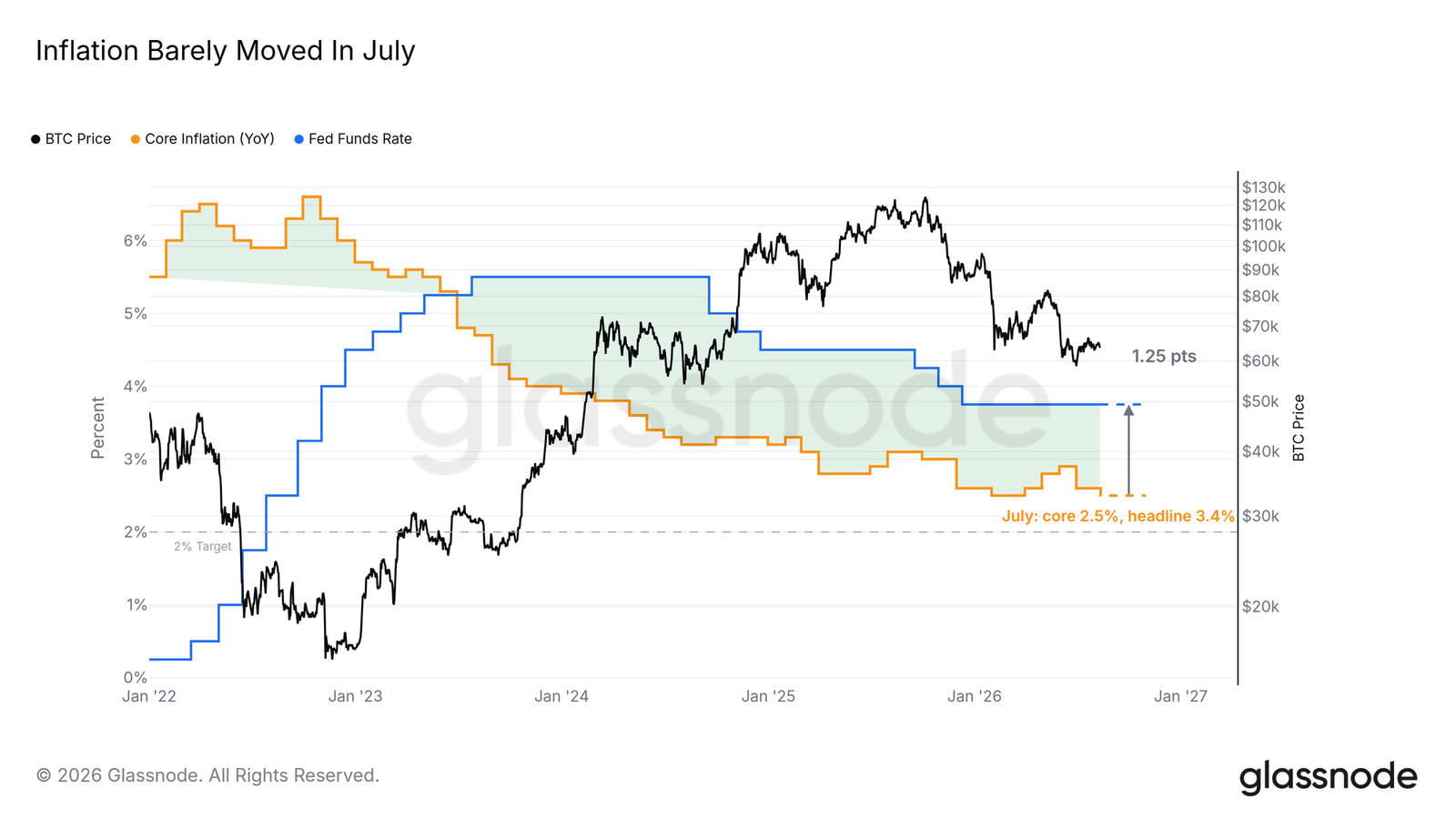
This morning's July CPI data barely disturbed the market: core inflation fell 0.1 percentage points to 2.5%, while headline inflation held steady. With the policy rate unchanged since December last year, real rates remain in restrictive territory, and as inflation slowly declines, this gap is widening.
What's more concerning than the data itself is the market's reaction — hours after the release, Bitcoin saw almost no rebound, and U.S. stocks even slipped slightly. Steady inflation and unchanged policy should have provided a benign backdrop, and a healthy market should have interpreted this as a positive signal. If prices still cannot gain strength from this in the coming days, we will view it as confirmation of persistently absent demand. The same concern applies to the equity market.
Capital Flows into Assets, Not Bitcoin
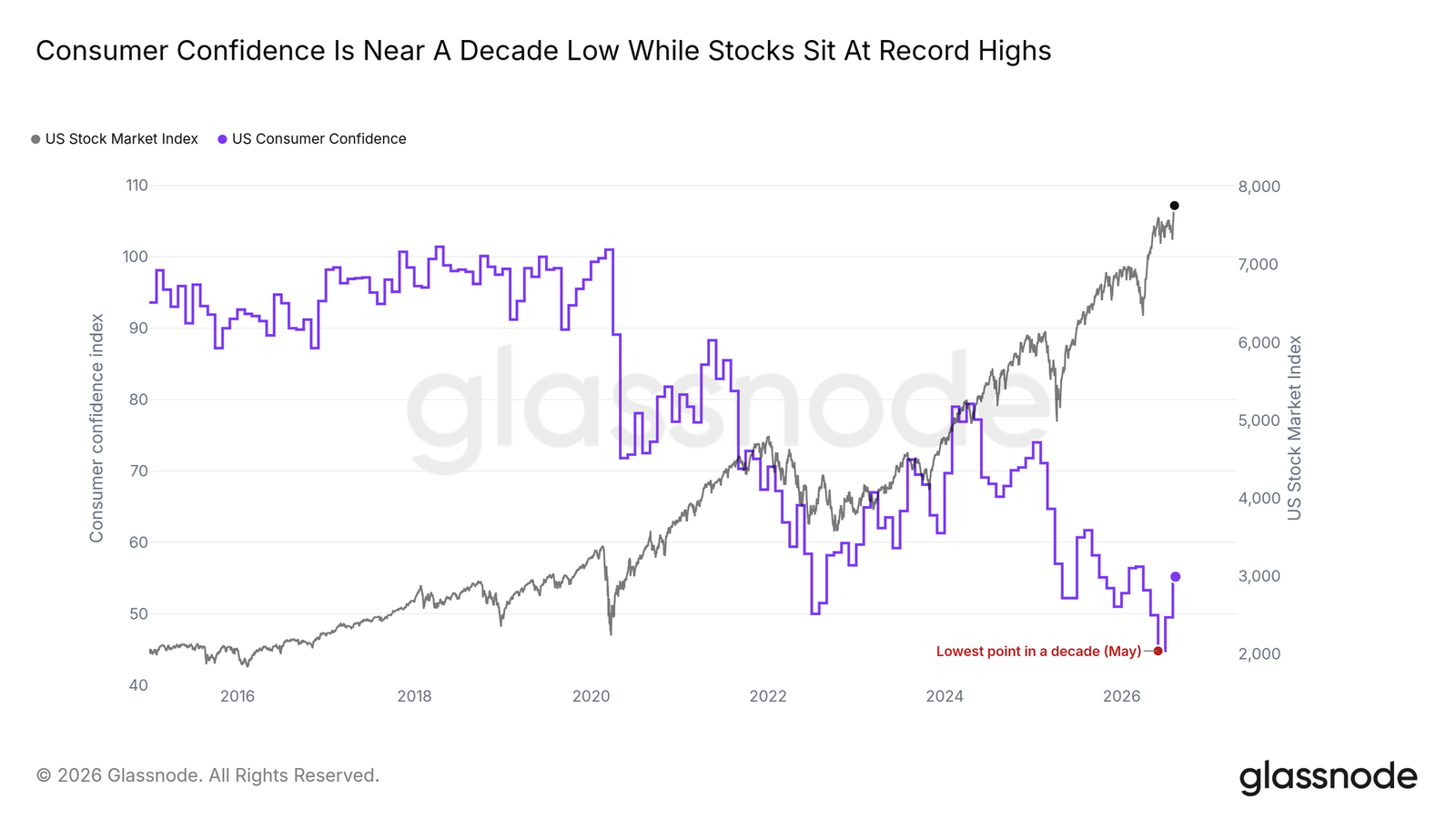
Consumer confidence has recovered for two consecutive weeks but remains in its weakest range of the past decade. Meanwhile, U.S. stocks hit an all-time high on August 7 and have held near those levels. The divergence between weak confidence and record prices is rooted in this: households, anticipating higher living costs and a weakening economic outlook, are shifting cash into assets — and the AI-trade-dominated U.S. stock market is the primary destination for these funds.
Bitcoin has been excluded from this rotation. Spot prices sit at roughly half of the October 2025 peak, and Bitcoin has consistently underperformed U.S. equities throughout the summer, despite its long-term narrative being built precisely on the logic of "capital flowing into scarce assets." Capital chases assets with existing momentum, and until some flows back, record-high U.S. stocks offer little support for Bitcoin. A turning signal will first appear in ETF flows — and the data below shows no signs of that yet.
The Market Is Compressed to the Limit
Trapped Between Two Cost Lines
The cost basis ladder is framing the current stalemate. Spot prices are barely holding above $63,000 (the median realized price) — the midpoint of the network-wide cost basis — while remaining below $68,700 (the short-term holder cost basis), the average entry price for recent buyers. This cohort is already underwater and has historically sold quickly on any rebound; the median level has absorbed multiple top-down tests over the past month or so.
Price has been oscillating within this range for nearly three months, with the two cost lines gradually converging as volatility contracts. Below, the network-wide realized price sits at approximately $52,800, indicating that the average coin still holds considerable profit, and the overall market in this cycle has never been fully underwater. Sustained reclaim of $68,700 would return recent buyers to profitability and pose the first real test of overhead supply pressure; losing the median level would leave virtually no structural support before the June lows.