This website uses cookies
We use cookies to personalise content and ads, to provide social media features and to analyse our traffic. We also share information about your use of our site with our social media, advertising and analytics partners who may combine it with other information that you’ve provided to them or that they’ve collected from your use of their services.
Consent Selection
Details
  • Necessary cookies help make a website usable by enabling basic functions like page navigation and access to secure areas of the website. The website cannot function properly without these cookies.
  • Preference cookies enable a website to remember information that changes the way the website behaves or looks, like your preferred language or the region that you are in.
    • We do not use cookies of this type.

  • Statistic cookies help website owners to understand how visitors interact with websites by collecting and reporting information anonymously.
    • We do not use cookies of this type.

  • Marketing cookies are used to track visitors across websites. The intention is to display ads that are relevant and engaging for the individual user and thereby more valuable for publishers and third party advertisers.
    • We do not use cookies of this type.

  • Unclassified cookies are cookies that we are in the process of classifying, together with the providers of individual cookies.
    • __emg_sidPending
      Maximum Storage Duration: 1 dayType: HTTP Cookie
      __emg_vidPending
      Maximum Storage Duration: 1 yearType: HTTP Cookie
      nl-read-countPending
      Maximum Storage Duration: PersistentType: HTML Local Storage
Cookie declaration last updated on 8/12/26 by Cookiebot
[#IABV2_TITLE#]
[#IABV2_BODY_INTRO#]
[#IABV2_BODY_LEGITIMATE_INTEREST_INTRO#]
[#IABV2_BODY_PREFERENCE_INTRO#]
[#IABV2_BODY_PURPOSES_INTRO#]
[#IABV2_BODY_PURPOSES#]
[#IABV2_BODY_FEATURES_INTRO#]
[#IABV2_BODY_FEATURES#]
[#IABV2_BODY_PARTNERS_INTRO#]
[#IABV2_BODY_PARTNERS#]
About
Cookies are small text files that can be used by websites to make a user's experience more efficient.

The law states that we can store cookies on your device if they are strictly necessary for the operation of this site. For all other types of cookies we need your permission.

This site uses different types of cookies. Some cookies are placed by third party services that appear on our pages.

You can at any time change or withdraw your consent from the Cookie Declaration on our website.

Learn more about who we are, how you can contact us and how we process personal data in our Privacy Policy.

Please state your consent ID and date when you contact us regarding your consent.
NewsLayer

Install NewsLayer

Get the app experience — one tap from your home screen, instant loads and breaking-news alerts.

NewsLayer.com
NewsLayer PulseLIVEBTC$63,787+0.59%ETH$1,894+0.86%SOL$76.33+1.02%XRP$1.01+0.80%DOGE$0.0705+1.38%ADA$0.185+1.46%Total Cap$2.29T+0.34%Layer Index41 Neutral
External Reporting发布于 2 天前

Kazakhstan offers tax amnesty as it seeks to bring billions in crypto and digital assets home

When Kazakhstan became one of the world's largest crypto mining hubs five years ago, the boom strained the country's power grid, and the government's response resulted in most miners either leaving the country or going underground.

Kazakhstan offers tax amnesty as it seeks to bring billions in crypto and digital assets home
Source Yahoo News Canada 5 分钟阅读
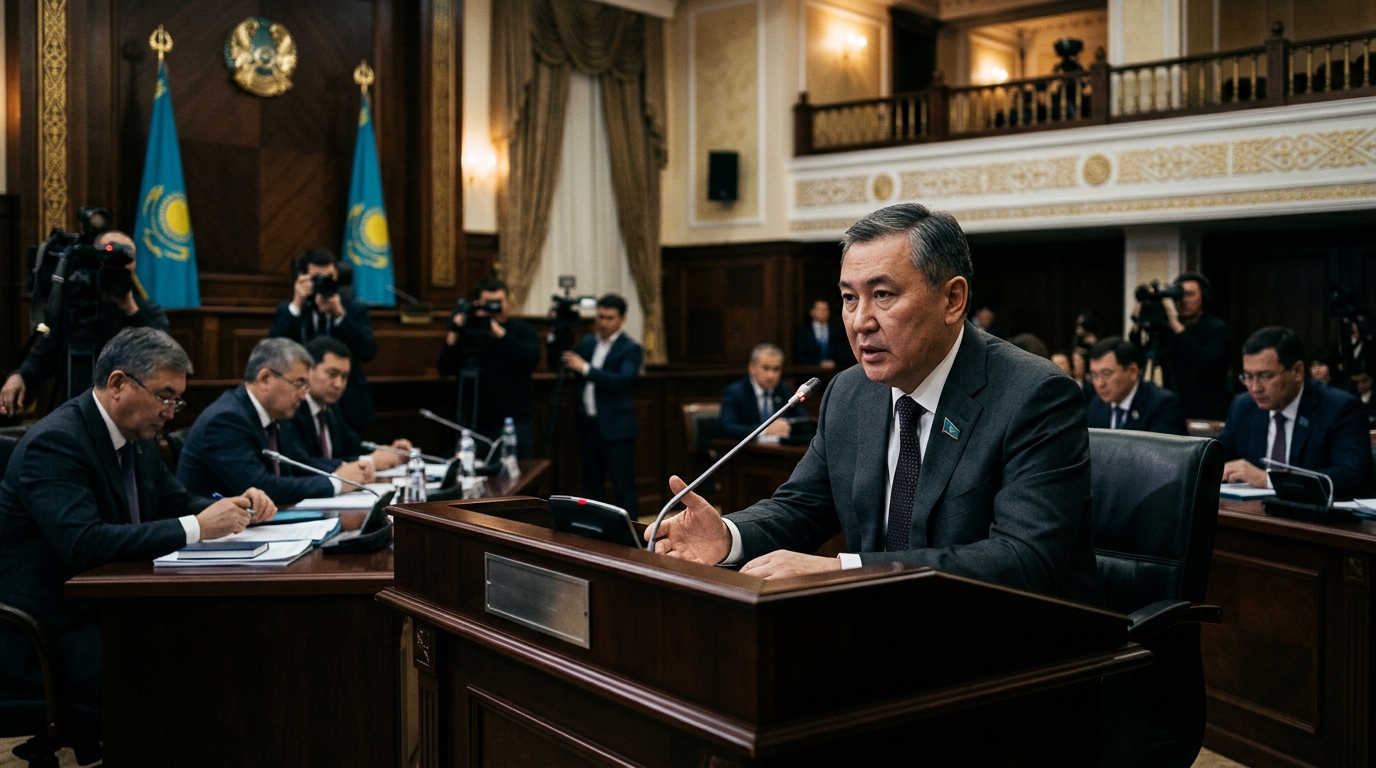
Image via Yahoo News Canada

Market Context

Cardano

ADA

$0.185

+1.46% 24h

Layer Index

41

↑ 6 pts in 24h

When Kazakhstan became one of the world's largest crypto mining hubs five years ago, the boom strained the country's power grid, and the government's response resulted in most miners either leaving the country or going underground.

Now the Kazakh government is looking to bring it all back home by offering tax breaks and legal certainty.

The Kazakh government signed a decree designed to encourage citizens to declare cryptocurrency holdings, move them onto regulated domestic platforms and integrate digital assets into the country's economy.

The authorities are offering private investors a tax break on personal income from digital asset transactions for three years, provided the assets were not connected to fraud, money laundering or linked to unlicensed crypto services.

The decision has opened the door to making it easier for miners to operate in the country — and for everyone to profit.

Crypto boom cut short

Cryptocurrency mining uses powerful computers to solve complex mathematical problems in order to verify and add transactions to a blockchain — the ledger on which a cryptocurrency's transaction history is recorded.

Miners who successfully complete them are rewarded with cryptocurrency deposited directly to their personal crypto wallets, which in some cases like Bitcoin can bring in significant profits.

The downside is that the process consumes a large amount of power because the computations require sustained processing.

After China banned Bitcoin mining in 2021, many miners began looking for new locations with low-cost energy.

At that point Kazakhstan rapidly became the second-largest Bitcoin mining location after the US. Many tried to get in on the profits, with people even putting mining equipment on their balconies.

Some went so far as to masquerade the mining farms as vegetable storage facilities, greenhouses or AI data centres at abandoned Soviet-era industrial sites to conceal their massive electricity consumption.

Aeral view of Alem Crypto Mining, a legal mining company in the north of Kazakhstan. - Copyright: Alem Crypto Mining company

The country did not get to enjoy the crypto bloom for too long. The rapid influx of miners placed an enormous burden on the country's ageing electricity grid.

In October 2021, surging electricity demand contributed to outages at three power plants in northeastern Kazakhstan, while rolling blackouts affected several regions. At peak, cryptocurrency miners were consuming an estimated 8% of Kazakhstan's total electricity output.

Authorities responded by repeatedly tightening regulations on electricity consumption and digital asset legalisation, leading to miners' departure abroad and the proliferation of illegal operations.

Kazakhstan never outright banned crypto mining, keeping its options open to potentially harness its potential in the future.

According to Kazakhstan's financial regulator, Astana International Financial Centre (AIFC), Kazakh citizens own approximately 1 million crypto wallets.

The AIFC, modelled on Dubai's DIFC financial free zone, has functioned as Kazakhstan's sandbox for financial innovation and serves as the regulatory home for digital asset companies operating in the country.

This figure is nearly four times the number of users registered on authorised local exchanges, which in March reached 256,900.

Bringing crypto assets back onshore

Attracting crypto owners back to their home countries with incentives and simplified legal frameworks has turned into a global trend in recent years, experts say.

The UAE, Hong Kong and Singapore have implemented similar tax measures alongside clear licensing, regulations and access to banking services, bringing in additional revenue.

The decree also addresses the energy question that triggered Kazakhstan's earlier mining crisis.

Under the plan, associated gas from oil fields not required for state use can be used to generate electricity for mining operations, broadening miners' options beyond the main national grid.

General Manager of Binance Kazakhstan Nurkhat Kushimov believes the tax incentive is the most important measure in the decree.

"This is a strong incentive for users to choose regulated jurisdictions and platforms operating within them," Kushimov told Euronews.

"This approach makes working in a licensed environment more attractive, fosters trust in the market and creates the conditions for its further development," he said.

Chairman of Kazakhstan's Association of Fintech, AI and Crypto Industry Bakhytzhan Kenzhebayev believes that the tax incentive removes one of the main uncertainties for the private investor, namely the question of when and on what basis the obligation arises. But the measure in itself is not sufficient.

"Users choose a platform not based on the tax rate, but on a combination of factors: how easy it is to deposit and withdraw (the local currency), the liquidity, and how clear the rules are," Kenzhebayev told Euronews.

"For a licensed participant, the predictability of the rule is more valuable than the benefit itself."

President of Kazakhstan's Blockchain and Digital Mining Association Daniyar Mubarakov told Euronews that any government support is welcome, but wonders how long this measure will work.

"For certain categories of entrepreneurs preferential tax regimes mean not only a reduction in taxes in the current period, but also a possible several-fold increase in taxes in the future due to increased volumes," Mubarakov said.

Vice Minister of AI and Digital Development Gizzat Baitursynov said that his department is working on a proposal for a simplified tax regime following the expiration of the exemption in three years' time.

He added that the department is also working on cancelling tax audits for private investors covering the previous three years.

Beyond tax incentives

Experts say that Kazakh private investors' return to domestic platforms will depend on their competitiveness.

"For most users, convenience of service, liquidity, availability of instruments, speed of transactions, and the ability to seamlessly interact with the banking system remain the key factors," Kushimov said.

According to Kenzhebayev, the main risks now lie in the legal definitions and terminology used. If the exemption is defined too broadly, it could create space to abuse the system and avoid paying taxes on other assets unrelated to crypto.

"This creates the risk of a reversal of the norm in a year or two, and that causes more damage to the market than an initially high but stable rate," Kenzhebayev explained.

Related

He also warned that the same digital asset can be treated as two different things depending on whether it falls under the AIFC or Kazakhstan's national rules, which would in turn mean companies would have to comply with two separate legal structures at once.

"The difficulty arises at the intersection. As a result, the participant builds two parallel infrastructures for one business, which reflects on the costs," he said.

Kenzhebayev said tax breaks alone would not be enough to draw users to licensed Kazakh platforms.

What would make the difference, he said, is reliable access to banking, clear rules for converting crypto into the local currency, straightforward requirements for keeping client assets safe, and a regulatory environment that does not put licensed operators at a disadvantage.

Follow the Story

  1. Aug 11Crypto Market Update August 11: Chainlink Tops Gains as XRP and Cardano Retest Support Levels
  2. Aug 11Kazakhstan offers tax amnesty as it seeks to bring billions in crypto and digital assets home
  3. Aug 11Grayscale Drops Cardano ETF Filing Just as ADA Clears a Key Hurdle
  4. Aug 12Best Crypto Presale to Buy in 2026 While Cardano Opens Its ETF Path and Pepeto Keeps Adding Wallets

Attribution

Originally reported by Yahoo News Canada

Get stories like this, daily.

Daily crypto + regulation intelligence, straight to your inbox. Free.

相关报道