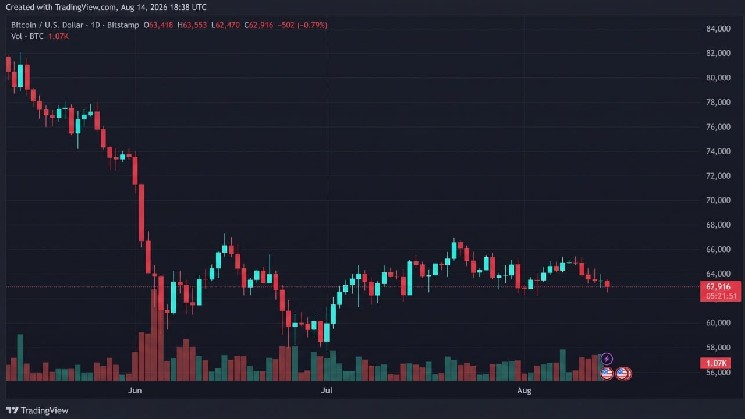
In the derivatives market, the volatility triggered significant liquidations for overleveraged long positions. According to Coinglass data, out of $32 million in leveraged bitcoin positions liquidated in 24 hours, long positions accounted for $26 million—about $8 million less than on Thursday. Across the broader cryptocurrency market, long liquidations totaled $94 million, compared to $72.5 million in short liquidations.
Bitcoin’s underwhelming performance was further pressured by spot exchange-traded fund (ETF) data showing over $131 million in outflows. Thursday marked the second consecutive day—and the third time during the week—that ETFs experienced net redemptions. The sustained outflows suggest institutional investors may be retreating, contradicting signs of renewed interest seen the previous week.
Adding to market headwinds were reports that index provider MSCI has proposed new “non-operating company” screens for its Global Investable Market Indexes. Although the framework does not explicitly target cryptocurrency, it evaluates whether a company’s core operating assets constitute more than 50% of its total holdings.
Strategy Responds to MSCI’s Proposal
Market observers note that heavy digital asset treasury adopters, including Strategy and Metaplanet, fail the proposed criteria and face potential removal during upcoming index rebalancings. While inclusion in major equity benchmarks previously allowed passive index funds and ETFs to automatically acquire these stocks, their removal could trigger forced institutional selling.
In response, Strategy issued a statement on X strongly opposing the proposal:
“Digital assets are assets. Index providers should measure markets, not decide which assets companies are allowed to own. MSCI’s proposal puts it out of step with regulators, markets, and its own customers. Bitcoin doesn’t need MSCI. Neither does Strategy,” the company stated.
MSCI’s public consultation runs through Sept. 30, with a final decision slated for Oct. 16. If approved, index removals would begin as early as November—a timeline that could unleash sustained institutional selling and sever a critical bridge for corporate adoption, effectively dimming bitcoin’s prospects for a year-end rally.